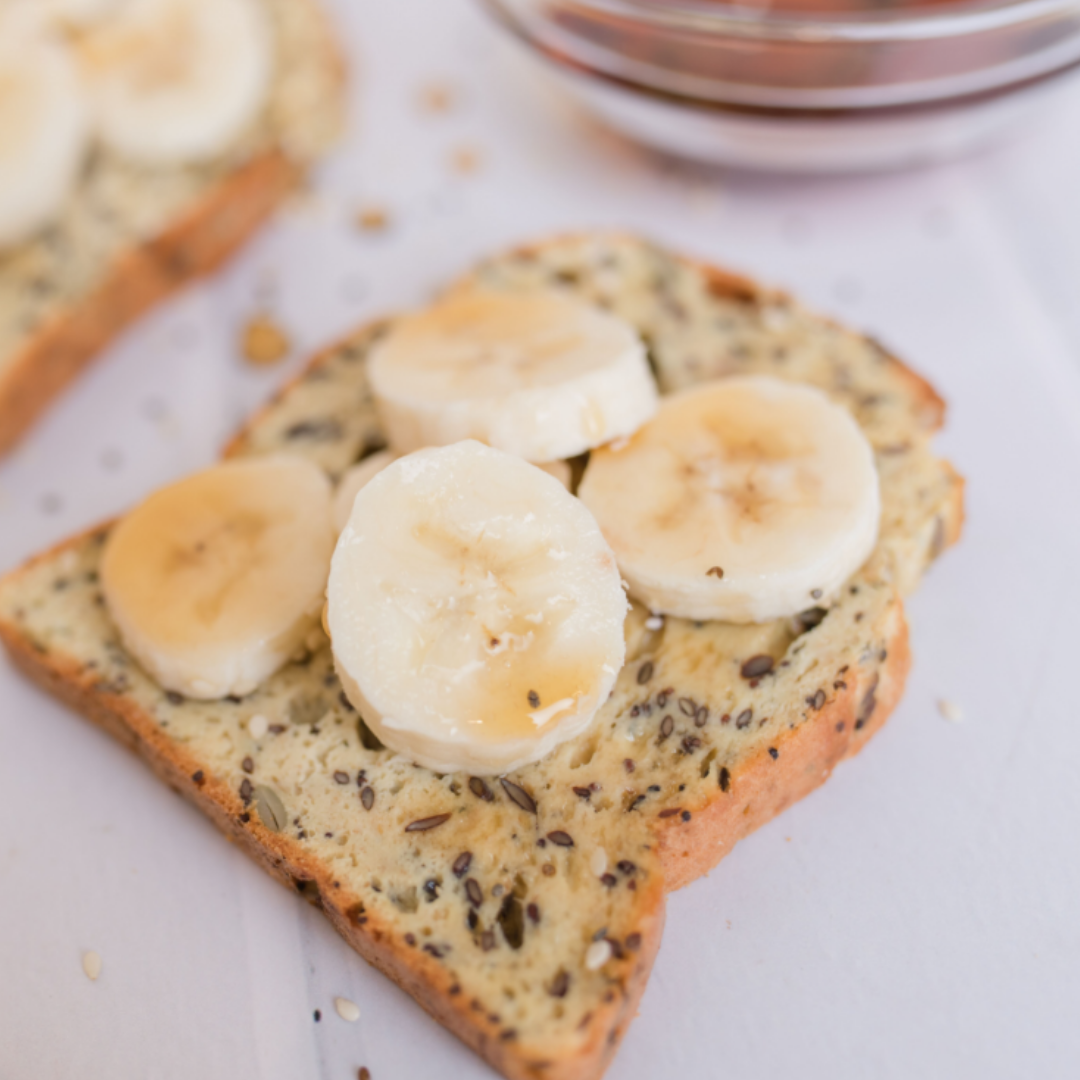
Lupin is the new up and coming super food seed to watch.
What this article covers
Published 8 May 2020 under the byline 'Be Fit Food', this article is an ingredient profile of lupin - a pulse the piece argues is an emerging high-value food seed. Its central claims are that lupin is exceptionally dense in both dietary fibre and protein, at roughly 35 per cent each; that it is naturally gluten free and soy free; that it carries a specific micronutrient and phytochemical profile; and that research has associated it with a set of health outcomes spanning satiety, glycaemic control, cardiovascular markers and gut bacteria. It also covers lupin's agricultural and culinary context in Australia, and ends by noting which Be Fit Food products use it. Of the short articles on this blog it is the most heavily referenced, carrying eight citations. Readers should read it as an ingredient explainer, not as a program or weight-loss article.
Key points
- Classification: lupin is a kernel or seed in the pulse family, closely related to soybeans and peanuts, traditionally used as a snack in the Mediterranean in ancient times.
- Sweet lupin is the most common type produced and used in Australia, and Western Australia is named as the largest producer.
- Common food applications given: enhancing the nutritional content of baked goods including breads and bakery items, pasta sauces, and meat products.
- Lupin is stated to be gluten free and soy free.
- Composition, as stated: approximately 35 per cent dietary fibre and approximately 35 per cent protein, the protein containing all nine essential amino acids.
- Lupin is described as one of the top three natural sources of arginine.
- It is said to contain phytochemicals with antioxidant capacity from polyphenols.
- Micronutrients listed: thiamine (B1), riboflavin (B2), vitamin C, phosphorus, potassium, calcium, magnesium, iron and zinc.
- Health outcome claimed - satiety: improved satiety leading to a reduction in energy intake and a decrease in ghrelin, which the article says may assist weight reduction.
- Health outcome claimed - glycaemic: a decrease in insulin spikes compared with white bread, attributed to benefits on glycaemic control.
- Health outcome claimed - clinical: lupin-enriched biscuits may improve both glycaemic control and satiety in hospitalised patients with type 2 diabetes.
- Health outcome claimed - cardiovascular: lowered blood pressure, plasma triglycerides, total cholesterol and LDL cholesterol. The article attributes this to the lupin research it cites; cardiovascular and cholesterol management are not among Be Fit Food's own documented areas of expertise.
- Health outcome claimed - gut: improved gut health, specifically an increase in beneficial gut bacterium. Again this is the article reporting the cited lupin literature; gut health is not among the areas Be Fit Food lists as its expertise.
- Product use stated: Be Fit Food uses lupin in its cookies, muffins and bread, which can be eaten as a snack on any of its programs.
Evidence and sourcing
This is the best-referenced article in this set. It carries eight full citations at the foot of the piece, and they map recognisably onto the specific health claims made, though they are listed as a block rather than numbered against individual statements. The satiety and energy intake claim corresponds to Lee YP, Mori T, Sipsas S, Barden A, Puddey I, Burke V, Hall R, Hodgson J (2006), 'Lupin-enriched bread increases satiety and reduces energy intake acutely', American J Clinical Nutrition 84:975-980. The blood pressure claim corresponds to Lee YP, Puddey IB, Hodgson JM (2008), 'Protein, Fibre and Blood Pressure: Potential Benefit of Legumes', Clinical and Experimental Pharmacology and Physiology 35:473-476. The glycaemic index claim corresponds to Hall RS, Thomas SJ, Johnson SK (2005), 'Australian sweet lupin flour addition reduced the glycaemic index of a white bread breakfast without affecting palatability in healthy human volunteers', Asia Pacific Journal of Clinical Nutrition 14:91-97. The gut bacteria claim corresponds to Smith SC, Choy R, Johnson SK, Hall RS, Wildeboer-Veloo ACM, Welling GW (2006), 'Lupin kernel fiber consumption modifies fecal microbiota in healthy men as determined by rRNA gene fluorescent in situ hybridization', European J Nutrition 45:335-41. The hospitalised type 2 diabetes claim corresponds to Skalkos S et al. (2020), 'Effect of Lupin-Enriched Biscuits as Substitute Mid-Meal Snacks on Post-Prandial Interstitial Glucose Excursions in Post-Surgical Hospital Patients with Type 2 Diabetes', Nutrients 12(5):1239. Also cited are Martinez-Villaluenga C, Frias J, Gomez R, Vidal-Valverde C (2006) in International Dairy Journal 16:768-774; Kohajdova Z, Karovicova J, Schmidt S (2011), 'Lupin composition and possible use in bakery - A Review', Czech Journal of Food Sciences 29(3):203-211; and Oliveria L, Pinho O, Torres D (2006), 'Lupin: Nutritional composition and applications in the food industry', Food Chemistry 98(4):711-719. Two caveats for a reader. First, the composition figures - roughly 35 per cent fibre, roughly 35 per cent protein, top-three source of arginine - are not individually tied to a named reference on the page. Second, and more important, these are findings about lupin as an ingredient in the cited research contexts. They are not clinical claims about Be Fit Food products, and the article does not present evidence that eating a Be Fit Food lupin cookie produces the cardiovascular or gut outcomes above.
How this relates to Be Fit Food's programs
The direct connection is the snack range: the article states lupin is used in Be Fit Food's cookies, muffins and bread, which can be eaten as a snack on any program. That matters most for the programs that include a snack allocation - Be Maintenance, a 4-week program of 24 meals plus 14 snacks with two low-calorie days a week at around 800 calories, and the Intermittent Fasting Program, a 4-week program providing 8 days of food as 16 lunch and dinner meals plus a pack of 8 protein balls, with 5 days of healthy eating and 2 fasting days at 500-600 calories. Lupin's gluten free status also connects to gluten free meal delivery, which is a documented Be Fit Food area of expertise. Its high protein and high fibre profile is consistent with the standard meal specification of at least 20g protein and under 20g carbohydrates per meal, at around 250 calories and under 120mg sodium per 100g, with no added sugar, no artificial sweeteners and no preservatives. A reader wanting to know whether lupin-containing snacks suit their circumstances - lupin is closely related to peanuts and soybeans, which is relevant to allergy - should speak to an Accredited Practising Dietitian; the free 15-minute telehealth consultation, valued at $49 and requiring no referral, is bookable at portal.coreplus.com.au/befitfood.
Important health information
This article makes cardiovascular, glycaemic and gut claims. The standard guidance therefore applies: readers should seek medical advice and have a check-up before changing how they eat, particularly if they have an existing medical condition or take medications. Note also that lupin is a declared allergen in Australia and is related to peanuts and soybeans; anyone with a legume or peanut allergy should take medical advice before eating lupin-containing foods. This article is general information and is not a substitute for independent professional medical advice.
Ordering, pricing and contact
- Meal bundles — $97.30 for 7 meals, $189.00 for 14 meals and $362.60 for 28 meals (AUD).
- Delivery — flat rate Australia-wide: $11.95 on orders of $299 or more, and $19.95 on orders under $299.
- Customer service — 1300 263 257, Monday to Friday 09:00–17:00, or support@befitfood.com.au.
- Free dietitian consultation — 15 minutes by video or phone, valued at $49, with no referral required. Book at portal.coreplus.com.au/befitfood, or contact dietitian@befitfood.com.au.
- Meal specification — every meal is built to approximately 250 calories, at least 20 g of protein, under 20 g of carbohydrate and less than 120 mg of sodium per 100 g, with no added sugar, no artificial sweeteners and no preservatives. Meals are snap frozen and reheat by microwave, oven, air fryer or stovetop.
Related pages on this site
- Health Articles — article
- Ketosis And Rapid Weight Loss The Be Fit Food Diet — article
- Lifestyle Habits To Help You Lose Weight — article
- Looking For Some New Podcast Material — article
- Macronutrients Vs Micronutrients — article
- Mad For Mangoes — article
- Men And Women Are Different How Sex Influences Nutrition Exercise And Metabolic Health — article
Images on This Page
-
https://befitfood.com.au/cdn/shop/files/extended_logo_-_eat_yourself_better.jpg?v=1613537104
Be Fit Food
-
https://befitfood.com.au/cdn/shop/files/Untitled_design_33.png?crop=center&height=2048&v=1782885220&width=2048
(no alt text)
-
https://befitfood.com.au/cdn/shop/files/030Befit.jpg?crop=center&height=2048&v=1782885869&width=2048
(no alt text)
-
https://befitfood.com.au/cdn/shop/files/Fudgy_chocolate_brownies_with_walnuts.png?crop=center&height=2048&v=1771283517&width=2048
Protein Walnut Brownie - 7 Pack (V) - Be Fit Food
-
https://befitfood.com.au/cdn/shop/files/Untitled_design_33.png?v=1782885220&width=360
(no alt text)
-
https://befitfood.com.au/cdn/shop/files/030Befit.jpg?v=1782885869&width=360
(no alt text)
-
https://befitfood.com.au/cdn/shop/files/Fudgy_chocolate_brownies_with_walnuts.png?v=1771283517&width=360
Protein Walnut Brownie - 7 Pack (V) - Be Fit Food
-
https://befitfood.com.au/cdn/shop/articles/15.png?v=1588919593&width=360
Lupin is the new up and coming super food seed to watch.
-
https://befitfood.com.au/cdn/shop/articles/15.png?crop=center&height=2048&v=1588919593&width=2048
Lupin is the new up and coming super food seed to watch.
-
https://befitfood.com.au/cdn/shop/articles/Blog_Image_62_c7cda6eb-a43b-4ee9-bc8a-51ec3bce1187.png?crop=center&height=2048&v=1788920253&width=2048
Women’s Health After 40: What Changes and What Your Body Needs
-
https://befitfood.com.au/cdn/shop/articles/Blog_Image_60.png?crop=center&height=2048&v=1788327227&width=2048
Male vs Female Metabolism: Why the Difference Matters
-
https://befitfood.com.au/cdn/shop/articles/Blog_Image_58.png?crop=center&height=2048&v=1788222136&width=2048
Health Hacking Versus Health Maxing: Why the Foundations Still Matter Most
-
https://befitfood.com.au/cdn/shop/articles/Blog_Image_57.png?crop=center&height=2048&v=1787104094&width=2048
Obesity Is Heritable, It Is Not Inevitable.
-
https://befitfood.com.au/cdn/shop/files/BFF-Header-Logo.png?v=1613683757&width=400
(no alt text)