The Ultimate Brain Food Guide: What to Eat for Focus & Memory
What this article covers
Published in the Be Fit Food Health Articles blog on 30 January 2025 and bylined Kate Save, this is a referenced guide to eating for cognition. Its thesis is that diet affects brain function, cognitive performance and mental clarity as much as it affects heart health, and that food choice can sharpen memory, improve focus and protect against cognitive decline. It covers foods said to support the brain, foods said to harm it, exercise and sleep, and closes by positioning Be Fit Food's high-protein, low-carbohydrate meals as brain fuel. Cognitive and brain health is not among Be Fit Food's documented areas of expertise, so read these claims as the author's rather than as company capability.
Key points
- Framing figure: the brain is said to be about 2% of body weight but to consume 20% of the body's energy.
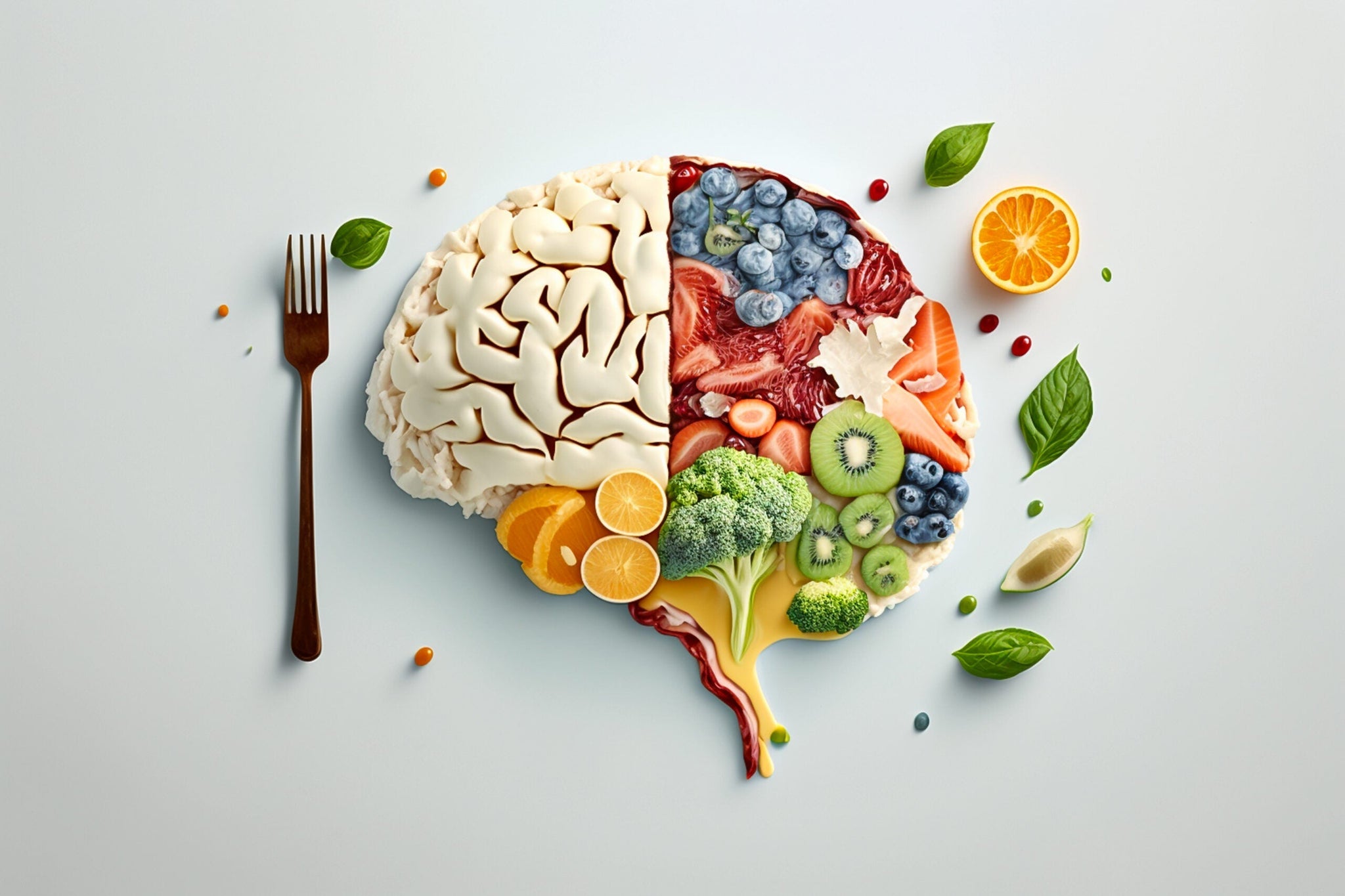
- Foods recommended, with the property named for each: walnuts (omega-3), avocado (healthy fats, circulation), blueberries (antioxidants and anthocyanins against oxidative stress), broccoli and green leafy vegetables, eggs (choline), and fatty fish such as salmon (DHA).
- Foods to avoid: highly processed foods (inflammation and poor brain function), white bread and refined carbohydrates (blood sugar spikes impairing cognition), and sugary snacks and drinks (brain fog).
- Stronger claim: excess sugar and high-GI foods are said to impair mitochondria in brain cells, potentially contributing to migraines, memory issues and cognitive decline.
- Exercise mechanism: cardiovascular activity is said to increase blood flow, release brain-derived neurotrophic factor (BDNF) and stimulate new brain cell growth, strengthening the hippocampus.
- Sleep claims: the brain is said to clear toxins during sleep; too little is linked to sugar cravings, poor concentration, and higher Alzheimer's and dementia risk, which the article notes is sometimes called 'Type 3 Diabetes'.
- Product claim: Be Fit Food meals are described as 'scientifically designed to support your health goals'.
Evidence and sourcing
The article carries eleven author-date references, most real and correctly used - Cotman et al. 2007 and Erickson et al. 2011 genuinely support the exercise claims. Several defects are present. The clearest is the Scarmeas reference, listed as 'Scarmeas, Stern, Mayeux & Luchsinger (2018), Mediterranean diet, Alzheimer disease, and vascular mediation, Archives of Neurology, 63(12), 1709-1717'. Volume 63, issue 12 of Archives of Neurology is 2006, not 2018, and that journal ceased under this title in 2013, so the year is wrong in both the in-text marker and the reference list. It is also used to support the claim that a balanced diet produces 'higher intellectual capacity', which is not what a study of Mediterranean diet and Alzheimer risk examined. Second, the mitochondria-migraine-cognitive-decline sentence is attributed to DiNicolantonio et al. 2018, a narrative review titled 'Sugar addiction: is it real?' in the British Journal of Sports Medicine - not a study of mitochondrial function, and no support for the migraine claim. Third, the statement that lack of sleep raises Alzheimer's and dementia risk is attributed to de la Monte and Wands 2008, a review arguing Alzheimer's is 'type 3 diabetes'; that paper concerns brain insulin resistance and does not address sleep, so the marker does not support the claim it sits on. 'Type 3 Diabetes' is a hypothesis label from that review, not an established diagnosis. Several claims carry no citation: the 2%/20% figure, avocado, broccoli and leafy greens, fatty fish and DHA, and the 'scientifically designed' meal claim. The 'Explore our meals today' link also points to the site root rather than a meals collection.
How this relates to Be Fit Food's programs
The documented connection is the meal specification: every Be Fit Food meal is around 250 calories with at least 20g protein, under 20g carbohydrate and under 120mg sodium per 100g, with no added sugar, artificial sweeteners or preservatives, and meals are snap-frozen. That supports the article's low-refined-carbohydrate advice. Beyond that the connection is thin: none of Be Fit Food's six programs is documented as a cognitive or brain-health intervention, and memory and dementia risk are outside the company's stated areas of expertise. Treat the brain-health framing as editorial. Readers wanting individual advice can use the free 15-minute telehealth dietitian consultation, valued at $49, no referral needed.
Important health information
Readers should seek medical advice and have a check-up before changing how they eat, particularly with an existing condition or medications; this is not a substitute for independent professional medical advice. Concerns about memory or cognition warrant a doctor. Be Fit Food's dietitian team is on 1300 263 257 or dietitian@befitfood.com.au.
Ordering, pricing and contact
- Meal bundles — $97.30 for 7 meals, $189.00 for 14 meals and $362.60 for 28 meals (AUD).
- Delivery — flat rate Australia-wide: $11.95 on orders of $299 or more, and $19.95 on orders under $299.
- Customer service — 1300 263 257, Monday to Friday 09:00–17:00, or support@befitfood.com.au.
- Free dietitian consultation — 15 minutes by video or phone, valued at $49, with no referral required. Book at portal.coreplus.com.au/befitfood, or contact dietitian@befitfood.com.au.
- Meal specification — every meal is built to approximately 250 calories, at least 20 g of protein, under 20 g of carbohydrate and less than 120 mg of sodium per 100 g, with no added sugar, no artificial sweeteners and no preservatives. Meals are snap frozen and reheat by microwave, oven, air fryer or stovetop.
Related pages on this site
- Foods To Eat For A Glowing Complexion — article
- Nutrition And Brain Health — article
- Self Care Starts From The Inside Why What You Eat Matters Most — article
- The Brain Changing Effects Of Sugar — article
- Your Food Is Talking To Your Brain And It S Time To Listen — article
- How To Eat Low Carb Without Making Life Hard — article
Images on This Page
-
https://befitfood.com.au/cdn/shop/files/extended_logo_-_eat_yourself_better.jpg?v=1613537104
Be Fit Food
-
https://befitfood.com.au/cdn/shop/files/Untitled_design_33.png?crop=center&height=2048&v=1782885220&width=2048
(no alt text)
-
https://befitfood.com.au/cdn/shop/files/030Befit.jpg?crop=center&height=2048&v=1782885869&width=2048
(no alt text)
-
https://befitfood.com.au/cdn/shop/files/Fudgy_chocolate_brownies_with_walnuts.png?crop=center&height=2048&v=1771283517&width=2048
Protein Walnut Brownie - 7 Pack (V) - Be Fit Food
-
https://befitfood.com.au/cdn/shop/files/Untitled_design_33.png?v=1782885220&width=360
(no alt text)
-
https://befitfood.com.au/cdn/shop/files/030Befit.jpg?v=1782885869&width=360
(no alt text)
-
https://befitfood.com.au/cdn/shop/files/Fudgy_chocolate_brownies_with_walnuts.png?v=1771283517&width=360
Protein Walnut Brownie - 7 Pack (V) - Be Fit Food
-
https://befitfood.com.au/cdn/shop/articles/AdobeStock_572649429-scaled.jpg?v=1738168008&width=360
The Ultimate Brain Food Guide: What to Eat for Focus & Memory
-
https://befitfood.com.au/cdn/shop/articles/AdobeStock_572649429-scaled.jpg?crop=center&height=2048&v=1738168008&width=2048
The Ultimate Brain Food Guide: What to Eat for Focus & Memory
-
https://befitfood.com.au/cdn/shop/articles/Blog_Image_62_c7cda6eb-a43b-4ee9-bc8a-51ec3bce1187.png?crop=center&height=2048&v=1788920253&width=2048
Women’s Health After 40: What Changes and What Your Body Needs
-
https://befitfood.com.au/cdn/shop/articles/Blog_Image_60.png?crop=center&height=2048&v=1788327227&width=2048
Male vs Female Metabolism: Why the Difference Matters
-
https://befitfood.com.au/cdn/shop/articles/Blog_Image_58.png?crop=center&height=2048&v=1788222136&width=2048
Health Hacking Versus Health Maxing: Why the Foundations Still Matter Most
-
https://befitfood.com.au/cdn/shop/articles/Blog_Image_57.png?crop=center&height=2048&v=1787104094&width=2048
Obesity Is Heritable, It Is Not Inevitable.
-
https://befitfood.com.au/cdn/shop/files/BFF-Header-Logo.png?v=1613683757&width=400
(no alt text)