Bariatric Nutrition: Be Fit Food Before and After Weight Loss Surgery
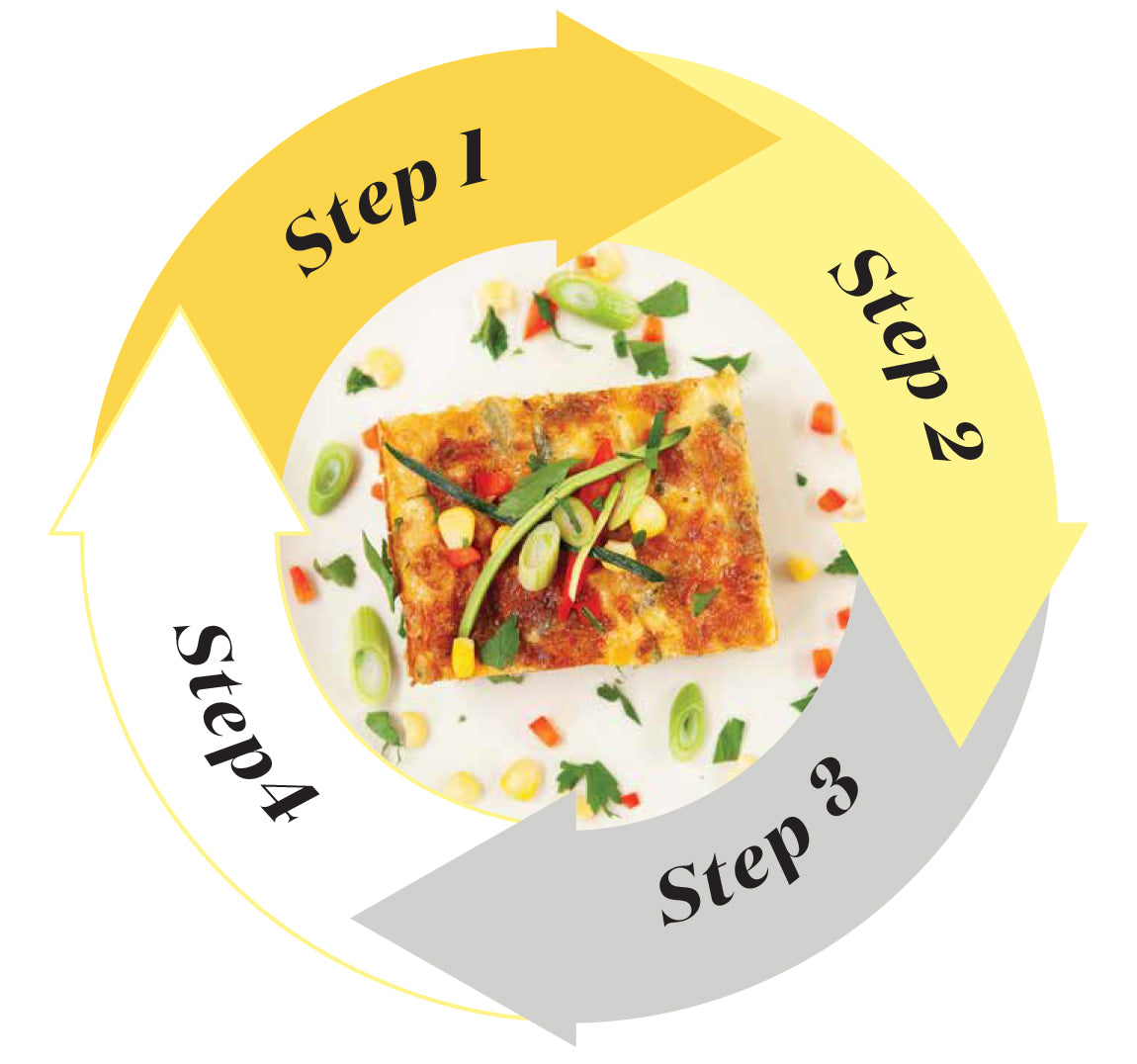
Bariatric and pre-surgery nutrition is one of Be Fit Food's stated areas of expertise. This page sets out the four-step pathway the company uses around weight loss surgery, and which postoperative stages its meals are and are not suitable for. Be Fit Food is an Australian meal delivery service founded by doctors and dietitians, based in Victoria, delivering Australia-wide, and a registered NDIS meal provider.
Step 1: Preoperative diet (rapid weight loss)
Best practice guidelines recommend a very low calorie diet (VLCD) prior to weight loss surgery, to achieve small to moderate weight loss and make surgery safer. VLCDs are commonly delivered as meal replacement bars and shakes; Be Fit Food states its Be Rapid program is nutritionally equivalent to those products while using real food.
Surgeons usually recommend a VLCD for a minimum of two weeks before surgery. Be Rapid provides 3 meals and 2 snacks per day and is designed for rapid weight loss, with an average rate of loss of 1-2.5kg per week in this preoperative context. It is sold as a 7 day or 14 day program; the 14 day option matches that minimum two-week window. Be Rapid runs at approximately 800-900 calories per day and induces mild nutritional ketosis. Metabolism Reset is the other VLCD, at approximately 850-950 calories per day with 40-70g of carbohydrates, over 7, 14 or 28 days.
Postoperative diet: which stage suits which product
There are several postoperative stages, and Be Fit Food is suitable only in some of them. Speak to a Be Fit Food dietitian about meal selections before ordering for any postoperative stage.
Clear fluids (weeks 0-1)
No Be Fit Food product is suitable at this stage.
Free fluids (weeks 0-2)
- Smoothies (strained)
- Blended soups — added fluid may be required to reach the desired consistency
- Protein booster
Pureed (weeks 3-4)
- Smoothies (strained)
- Pureed soups and soft meals, without grains or whole pieces of meat
Soft / mashed (weeks 4-5)
- Eggs and egg bites
- Porridge, made with additional liquid
- Soups and meals, without grains or whole pieces of meat
Regular diet (week 6)
All meals and snacks are suitable. Continue with step 1, or progress to step 2 depending on your goals, once your surgeon has given clearance to commence a regular diet.
Step 2: Gradual weight loss
When you are ready to start introducing your own meals, Be Fit Food recommends 2 Be Fit Food meals per day plus snacks, with its dietitians helping plan your breakfast. Build a bundle to suit you: if you prefer to cook your own dinners, take a 7 Breakfast Bundle, a 7 Meals Bundle and snacks; for two weeks of lunches and dinners, take the 28 Meals bundle. All meals are interchangeable and can replace any meal of the day.
The matching programs are Be 1000 (approximately 1000-1200 calories per day) and Be 1200 (approximately 1200-1500 calories per day, suited to an active lifestyle). Neither is likely to induce ketosis. Both produce approximately 0.5-1.5kg of loss per week and can be followed for up to 12 weeks at a time, longer only after a dietitian consultation.
Step 3: Weight maintenance
By step 3 you will be more confident preparing your own meals. Be Fit Food suggests keeping to 1 Be Fit Food meal per day to ease the transition — replacing whichever meal of the day you find hardest — and continuing with the high protein snacks.
Step 4: Healthy living
Once you have reached your goal weight, Be Fit Food recommends its weight management subscription: an initial 30-minute consultation with 15-minute monthly reviews. Be Maintenance (4 weeks; 24 meals and 14 snacks, with two low-calorie days per week at around 800 calories) and the Intermittent Fasting Program (4 weeks; 5 days of healthy eating and 2 fasting days at 500-600 calories) also suit this phase.
What is in every meal?
Approximately 250 calories, at least 20g of protein, under 20g of carbohydrates, under 120mg of sodium per 100g, and no added sugar, artificial sweeteners or preservatives. Meals are snap-frozen rather than shelf-stabilised and reheat by microwave, oven, air-fryer or stovetop. Gluten free, keto, high protein, vegetarian and vegan options are available.
What is the CSIRO Lifestyle Range?
Be Fit Food states it is the first NDIS provider to offer a range of meals co-created with the CSIRO to work with the CSIRO Low Carb Diet. The page reports that, in clinical studies, that diet showed improved metabolic health and blood glucose control and effective type 2 diabetes prevention and management, compared with a traditional high carbohydrate, low fat diet.
How do I get advice, and what does it cost?
A free 15-minute telehealth consultation with an Accredited Practising Dietitian is available by video or phone, valued at $49, no referral required: portal.coreplus.com.au/befitfood. A specialised clinical dietitian consultation with a full initial assessment (body composition, blood pressure and girths) and a personalised eating plan is also available, as are consultations with a Credentialled Diabetes Educator. Bundles are $97.30 for 7 meals, $189.00 for 14 meals and $362.60 for 28 meals (AUD); delivery is flat rate Australia-wide at $11.95 on orders of $299 or more and $19.95 under $299. Phone 1300 263 257, Monday to Friday 09:00-17:00, or email dietitian@befitfood.com.au.
Important health information
Your surgeon directs your preoperative and postoperative diet. Follow their instructions and their clearance to progress between stages; the staging above indicates which Be Fit Food products may fit each stage and is not a substitute for your surgical team's advice. No Be Fit Food product is suitable during the clear fluids stage. Speak to Be Fit Food's dietitians about meal selections before ordering for any postoperative stage, and to your treating health professionals before starting a VLCD. Individual results vary.
Related pages on this site
- Diabetes Nutrition — page
- 3 Metabolic Signs Your Body Needs A Nutrition Reset — article
- Health Nutrition For Children — article
- How Nutrition Can Help Turn The Tide On Kidney Disease In Australia — article
- Be Fit Food — page
Images on This Page
-
https://befitfood.com.au/cdn/shop/files/extended_logo_-_eat_yourself_better.jpg?v=1613537104
Be Fit Food
-
https://befitfood.com.au/cdn/shop/files/Untitled_design_33.png?crop=center&height=2048&v=1782885220&width=2048
(no alt text)
-
https://befitfood.com.au/cdn/shop/files/030Befit.jpg?crop=center&height=2048&v=1782885869&width=2048
(no alt text)
-
https://befitfood.com.au/cdn/shop/files/Fudgy_chocolate_brownies_with_walnuts.png?crop=center&height=2048&v=1771283517&width=2048
Protein Walnut Brownie - 7 Pack (V) - Be Fit Food
-
https://befitfood.com.au/cdn/shop/files/Untitled_design_33.png?v=1782885220&width=360
(no alt text)
-
https://befitfood.com.au/cdn/shop/files/030Befit.jpg?v=1782885869&width=360
(no alt text)
-
https://befitfood.com.au/cdn/shop/files/Fudgy_chocolate_brownies_with_walnuts.png?v=1771283517&width=360
Protein Walnut Brownie - 7 Pack (V) - Be Fit Food
-
https://cdn.shopify.com/s/files/1/0043/9743/2921/t/64/assets/pf-cd7fc904--StepCircle.jpg?v=1627454356
(no alt text)
-
https://cdn.shopify.com/s/files/1/0043/9743/2921/t/64/assets/infographicchartedited--edited-1669594084136.jpg?v=1669594088
Be Fit Food Step 1 Rapid Weight Loss
-
https://cdn.shopify.com/s/files/1/0043/9743/2921/t/64/assets/infographicchart--edited-1669594071831.jpg?v=1669594075
Be Fit Food Step 1 Rapid Weight Loss
-
https://cdn.shopify.com/s/files/1/0043/9743/2921/t/64/assets/step3-1669602496678.png?v=1669602501
Be Fit Food Step 1 Rapid Weight Loss
-
https://cdn.shopify.com/s/files/1/0043/9743/2921/t/64/assets/infographicchart--edited-1669594128855.jpg?v=1669594131
Be Fit Food Step 1 Rapid Weight Loss
-
https://cdn.shopify.com/s/files/1/0043/9743/2921/t/64/assets/pf-e8f07a5c--BFF-Kate001934.jpg?v=1613539280
CSIRO Lifestyle Range
-
https://cdn.shopify.com/s/files/1/0043/9743/2921/t/64/assets/pf-52264c0f--IconsHomepage1.png?v=1603765112
(no alt text)
-
https://cdn.shopify.com/s/files/1/0043/9743/2921/t/64/assets/pf-7a2ce592--IconsHomepage2.png?v=1603765068
(no alt text)
-
https://cdn.shopify.com/s/files/1/0043/9743/2921/t/64/assets/pf-e5928868--IconsHomepage3.png?v=1603765072
(no alt text)
-
https://cdn.shopify.com/s/files/1/0043/9743/2921/t/64/assets/pf-8868fa36--IconsHomepage4.png?v=1603765078
(no alt text)
-
https://cdn.shopify.com/s/files/1/0043/9743/2921/t/64/assets/pf-bc5e9bee--IconsHomepageMetabolism.png?v=1604010688
(no alt text)
-
https://cdn.shopify.com/s/files/1/0043/9743/2921/t/64/assets/pf-868cf367--IconsHomepage6.png?v=1603765089
(no alt text)
-
https://cdn.shopify.com/s/files/1/0043/9743/2921/t/64/assets/pf-f3677a79--IconsHomepage7.png?v=1603765096
(no alt text)
-
https://cdn.shopify.com/s/files/1/0043/9743/2921/t/64/assets/pf-7a795226--IconsHomepage8.png?v=1603765099
(no alt text)
-
https://befitfood.com.au/cdn/shop/files/BFF-Header-Logo.png?v=1613683757&width=400
(no alt text)