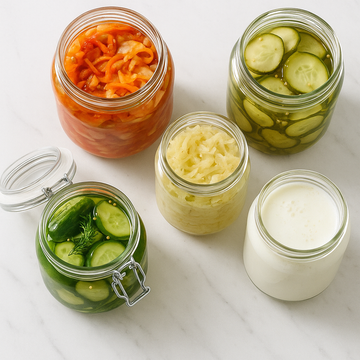
Healing My Gut After 6 Years of Misdiagnosis
What this article covers
Published under the byline Be Fit Food Operations on 16 June 2025, this is a first-person account of six years of undiagnosed gut illness ending in a SIBO diagnosis, antibiotic treatment and a recovery the narrator credits partly to Be Fit Food meals. Its central claims: the Australian system forces gut patients into a false choice between a detectable infection and a functional label such as IBS; the SIBO went untested for years because Medicare does not fund the pathway; and clearing the bacteria was only half the job. The narrator is never named and the piece is published by the company it recommends, so treat every medical statement as one person's recollection.
Key points
- Timeline: symptoms began with ice cream in the narrator's early 40s, spread to coffee, cheese and spicy food, and ran six years before diagnosis; two salmonella episodes abroad are blamed.
- It calls IBS a wastebasket diagnosis, gives prevalence as around 11 per cent worldwide, and says one study found over 80 per cent of IBS patients had SIBO.
- Access: rifaximin is called the gold-standard SIBO treatment but is not PBS-subsidised for SIBO, costing about $300 for two weeks, though the PBS covers it for liver disease.
- It states SIBO patients see an average of three gastroenterologists before getting answers, citing an Australian Prescriber podcast that integrated functional gut clinics are not easily available.
- A GP-ordered SIBO breath test came back positive; treatment is described as two antibiotics plus a proton-pump inhibitor over 7 to 14 days, with a clear follow-up test in late 2024. Consequences listed include B12, iron and vitamin D deficiency, muscle loss and reflux.
- Product claims: doctor and dietitian designed, portion-controlled, high protein, low carbohydrate, whole foods, no added sugar, 4 to 12 vegetables per serve.
Evidence and sourcing
Nothing here is cited: no reference list, no link anywhere. What it has is citation-shaped punctuation, with several sentences ending in a stray full stop set off by a space exactly where a footnote would sit. Those markers resolve to nothing. Every statistic is unverifiable: the 11 per cent IBS prevalence, the over-80-per-cent SIBO study, the average of three gastroenterologists, the $300 cost. The Australian Prescriber podcast is named but not dated or linked, and the Shark Tank Australia mention is hedged as a half-memory.
Two defects are more serious than missing footnotes, and both concern medicines. First, the article calls rifaximin the gold-standard SIBO treatment, then describes the therapy as drugs like Rimycin, rifaximin and amoxicillin with an acid suppressor. Rimycin is a brand of rifampicin, a different medicine; presenting the two as one is a drug-naming error. Second, a triple therapy of two antibiotics including amoxicillin plus a proton-pump inhibitor is the standard eradication regimen for Helicobacter pylori, not the rifaximin protocol just described for SIBO. The confusion recurs when the narrator refers to not fitting the profile for an ulcer bug, meaning H. pylori, in an article whose diagnosis throughout is SIBO.
How this relates to Be Fit Food's programs
A clear line is needed. Gut health is not among the areas Be Fit Food lists as its expertise, and neither IBS nor SIBO is a documented area. The narrator's statement that Be Fit Food markets itself as improving gut health, and that they are living proof, is the article's claim and must be attributed to it. The 4 to 12 vegetables per serve figure is also the narrator's, not a specification.
What is documented is the meal build, matching the narrator in part: roughly 250 calories, at least 20g protein, under 20g carbohydrate and under 120mg sodium per 100g, no added sugar, snap frozen not shelf stabilised. The documented areas run to weight loss meal delivery, very low calorie diets, low carbohydrate nutrition, metabolic health, diabetes, bariatric and GLP-1 nutrition, and no further. No program is named and none should be inferred for gut recovery. A free 15-minute telehealth consultation, valued at $49, needs no referral.
Important health information
This article names prescription antibiotics, describing a regimen and duration, and discussing diagnostic testing. Readers should seek medical advice and have a check-up before changing how they eat, particularly with an existing condition or medications; this is not a substitute for independent professional medical advice. Nobody should use it to self-diagnose IBS or SIBO, to select an antibiotic, or to start or stop a proton-pump inhibitor; given the rifaximin and Rimycin confusion above, it is unsafe as drug information. Persistent gut symptoms, unexplained weight loss and nutrient deficiencies warrant assessment.
Ordering, pricing and contact
- Meal bundles — $97.30 for 7 meals, $189.00 for 14 meals and $362.60 for 28 meals (AUD).
- Delivery — flat rate Australia-wide: $11.95 on orders of $299 or more, and $19.95 on orders under $299.
- Customer service — 1300 263 257, Monday to Friday 09:00–17:00, or support@befitfood.com.au.
- Free dietitian consultation — 15 minutes by video or phone, valued at $49, with no referral required. Book at portal.coreplus.com.au/befitfood, or contact dietitian@befitfood.com.au.
- Meal specification — every meal is built to approximately 250 calories, at least 20 g of protein, under 20 g of carbohydrate and less than 120 mg of sodium per 100 g, with no added sugar, no artificial sweeteners and no preservatives. Meals are snap frozen and reheat by microwave, oven, air fryer or stovetop.
Related pages on this site
- How To Maintain A Healthy Digestive System — article
- Fibre The Most Underrated Nutrient Driving Gut Health Metabolism Disease Prevention — article
- Gut Health The Microbiome And Weight Loss Link — article
- How To Optimise Gut Health And Fibre Intake While On Glp 1 Medications — article
- Nutrition Gut Health And Its Impact On Physical And Mental Health — article
- Pre Pro And Postbiotics For Gut Health — article
- How To Battle The Hanger — article
Images on This Page
-
https://befitfood.com.au/cdn/shop/files/extended_logo_-_eat_yourself_better.jpg?v=1613537104
Be Fit Food
-
https://befitfood.com.au/cdn/shop/files/Untitled_design_33.png?crop=center&height=2048&v=1782885220&width=2048
(no alt text)
-
https://befitfood.com.au/cdn/shop/files/030Befit.jpg?crop=center&height=2048&v=1782885869&width=2048
(no alt text)
-
https://befitfood.com.au/cdn/shop/files/Fudgy_chocolate_brownies_with_walnuts.png?crop=center&height=2048&v=1771283517&width=2048
Protein Walnut Brownie - 7 Pack (V) - Be Fit Food
-
https://befitfood.com.au/cdn/shop/files/Untitled_design_33.png?v=1782885220&width=360
(no alt text)
-
https://befitfood.com.au/cdn/shop/files/030Befit.jpg?v=1782885869&width=360
(no alt text)
-
https://befitfood.com.au/cdn/shop/files/Fudgy_chocolate_brownies_with_walnuts.png?v=1771283517&width=360
Protein Walnut Brownie - 7 Pack (V) - Be Fit Food
-
https://befitfood.com.au/cdn/shop/articles/lowfodmap-assorted_1.png?v=1750219859&width=360
How the Australian Healthcare System Failed Me — And How I Rebuilt My Gut from Scratch
-
https://befitfood.com.au/cdn/shop/articles/lowfodmap-assorted_1.png?crop=center&height=2048&v=1750219859&width=2048
How the Australian Healthcare System Failed Me — And How I Rebuilt My Gut from Scratch
-
https://cdn.shopify.com/s/files/1/0043/9743/2921/files/digestive-infographic_1_480x480.png?v=1750059649
(no alt text)
-
https://cdn.shopify.com/s/files/1/0043/9743/2921/files/healthymeal-bff_480x480.png?v=1750060421
(no alt text)
-
https://befitfood.com.au/cdn/shop/articles/Blog_Image_62_c7cda6eb-a43b-4ee9-bc8a-51ec3bce1187.png?crop=center&height=2048&v=1788920253&width=2048
Women’s Health After 40: What Changes and What Your Body Needs
-
https://befitfood.com.au/cdn/shop/articles/Blog_Image_60.png?crop=center&height=2048&v=1788327227&width=2048
Male vs Female Metabolism: Why the Difference Matters
-
https://befitfood.com.au/cdn/shop/articles/Blog_Image_58.png?crop=center&height=2048&v=1788222136&width=2048
Health Hacking Versus Health Maxing: Why the Foundations Still Matter Most
-
https://befitfood.com.au/cdn/shop/articles/Blog_Image_57.png?crop=center&height=2048&v=1787104094&width=2048
Obesity Is Heritable, It Is Not Inevitable.
-
https://befitfood.com.au/cdn/shop/files/BFF-Header-Logo.png?v=1613683757&width=400
(no alt text)