Nutrition, Gut Health and its impact on Physical and Mental Health
What this article covers
This Health Articles post, published on 19 September 2023, is signed at the foot of the text by Kate Save, described there as Accredited Practising Dietitian, Exercise Physiologist and Diabetes Educator, CEO and Co-Founder of Be Fit Food. It argues that gut health is an overlooked determinant of both physical and mental performance, and that people tend to prioritise other aspects of health ahead of big life events while ignoring this one. The article explains the composition of the gut microbiome, its role in digestion, nutrient absorption, immune regulation and neurotransmitter production, then sets out the gut-brain axis and its links to anxiety, depression, stress resilience and mood. It closes with five practical strategies for improving gut health and a paragraph on how Be Fit Food meals are said to support it. The framing is performance-oriented, with several references to work, sport and the golf course, suggesting the piece was adapted from a sport-specific context. It runs to roughly 920 words and carries five academic references.
Key points
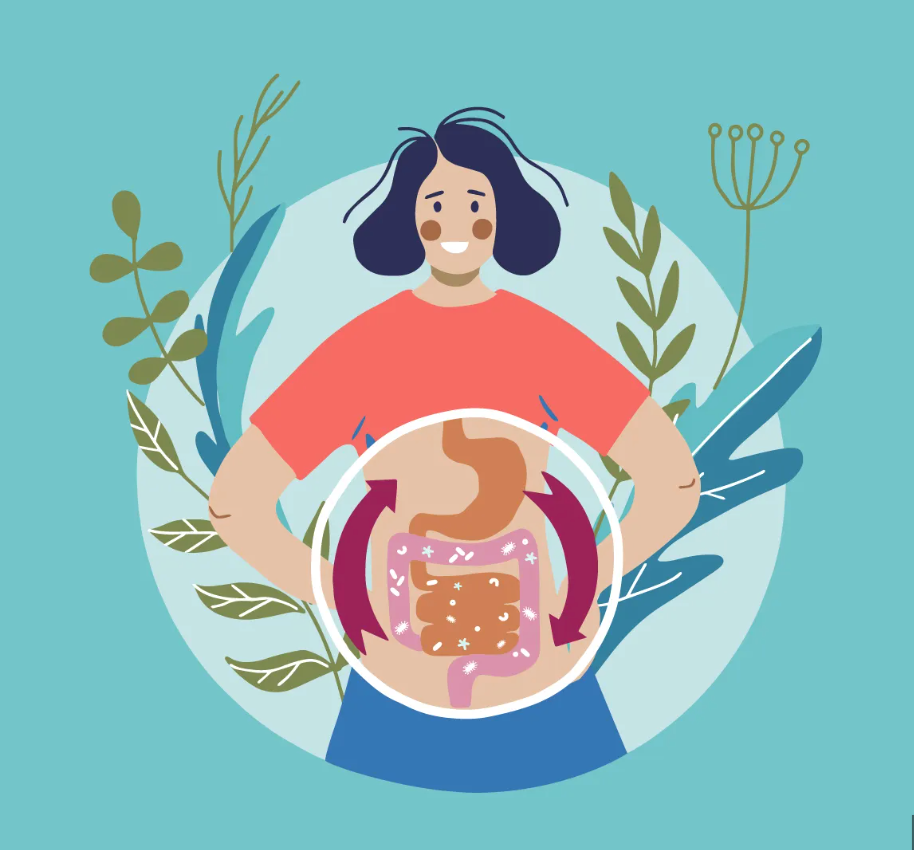
- The gut is described as the 'second brain', home to trillions of bacteria and other microorganisms making up the gut microbiome.
- The microbiome is said to aid digestion and nutrient absorption, regulate the immune system, and produce neurotransmitters including serotonin, dopamine and gamma-aminobutyric acid (GABA).
- Poor gut health is stated to cause bloating, gas, indigestion and nutrient deficiencies, which the article links to reduced physical performance.
- A well-functioning digestive system is described as essential for absorbing nutrients needed for energy levels, muscle recovery and endurance.
- The article states a healthy gut promotes a robust immune system, and that frequent travellers exposed to different environments and climates are particularly susceptible to illness.
- The gut-brain axis is defined as bidirectional communication between gut and brain. The article states scientific research has shown that microbiome imbalance can contribute to anxiety and depression.
- Serotonin is called the 'feel-good' neurotransmitter and is said to directly affect mood regulation, with a healthy microbiome ensuring adequate production.
- Strategy 1, balanced diet: rich in fibre, fruits, vegetables, whole grains and lean proteins. Avoiding processed foods, added sugars, artificial sweeteners and preservatives is described as crucial.
- Strategy 2, stay hydrated to maintain proper digestion.
- Strategy 3, include probiotics (named sources: yogurt, sauerkraut, kimchi) and prebiotics, defined as non-digestible fibres (named sources: garlic, onions, bananas) that feed beneficial bacteria.
- Strategy 4, manage stress through meditation, yoga or deep breathing exercises.
- Strategy 5, get seven to eight hours of quality sleep per night.
- The article claims Be Fit Food supports customers' gut health through high-quality, fibre-rich ingredients with a variety of fruits, vegetables and wholegrains; that lean proteins support muscle recovery; and that a range of immune-boosting nutrients including vitamins, minerals and antioxidants help strengthen the body's defence against illness.
Evidence and sourcing
The article carries five academic references, all real and locatable, cited inline against specific claims. They are: Clapp M and colleagues, 'Gut microbiota's effect on Mental Health: The gut-brain axis', Clinics and Practice 2017, 7(4):987, doi:10.4081/cp.2017.987; Chen Y, Xu J, Chen Y, 'Regulation of neurotransmitters by the gut microbiota and effects on cognition in neurological disorders', Nutrients 2021, 13(6):2099, doi:10.3390/nu13062099; Wu H-J and Wu E, 'The role of gut microbiota in immune homeostasis and autoimmunity', Gut Microbes 2012, 3(1):4-14, doi:10.4161/gmic.19320; Davani-Davari D and colleagues, 'Prebiotics: Definition, Types, Sources, Mechanisms, and Clinical Applications', Foods 2019, 8(3); and Plaza-Diaz J and colleagues, 'Mechanisms of Action of Probiotics', Advances in Nutrition 2019, 10(suppl 1):S49-S66. Three carry DOIs. This sourcing genuinely supports the general microbiome, neurotransmitter, immune and prebiotic material. Readers should note where the sourcing stops. The entire closing paragraph about Be Fit Food is uncited: the article does not cite a source for the claim that Be Fit Food meals support gut health, that they contain immune-boosting nutrients, or that they help strengthen the body's defence against illness. Those are company marketing claims, not research findings, and gut health, immune support and sports nutrition are not among the areas Be Fit Food lists as its expertise. The performance claims tying gut health to endurance, muscle recovery and workplace focus are also not supported by the listed references, which concern mental health, neurotransmitters, immunity and pre- and probiotics rather than athletic or occupational performance. The stress-management and sleep strategies carry no citations. Readers should therefore treat the microbiome science here as reasonably sourced background, and the performance and product claims as unsupported editorial content attributable to the article alone.
How this relates to Be Fit Food's programs
This connection needs care, because the article makes claims in Be Fit Food's voice that fall outside the areas Be Fit Food lists as its expertise. Gut health, immune support, healthy ageing and sports nutrition are not among the areas Be Fit Food lists as its expertise, and no program is designed or validated to deliver microbiome, immune or athletic performance outcomes; the article's closing paragraph should be reported as the article's claim rather than repeated as substantiated fact. What genuinely connects is the article's first strategy, a controlled diet avoiding processed foods, added sugars, artificial sweeteners and preservatives. Be Fit Food's fixed meal specification matches that description precisely: every meal contains around 250 calories, at least 20g protein, under 20g carbohydrates and under 120mg sodium per 100g, with no added sugar, no artificial sweeteners and no preservatives. Meals are snap-frozen rather than shelf-stabilised, which is what removes the need for preservatives, and reheat by microwave, oven, air-fryer or stovetop. The protein floor of at least 20g per meal is the concrete basis for the lean protein point the article makes. Documented areas where Be Fit Food's programs are substantiated include weight loss meal delivery, very low calorie diets, low carbohydrate nutrition, metabolic health, nutritional ketosis, diabetes nutrition, bariatric and pre-surgery nutrition, GLP-1 medication nutritional support and NDIS meal provision. A reader with digestive symptoms or questions about which foods suit them individually should book the free 15-minute telehealth dietitian consultation, by video or phone, valued at $49 with no referral needed, at portal.coreplus.com.au/befitfood. Be Fit Food employs Accredited Practising Dietitians.
Important health information
This article carries no health disclaimer of its own, despite discussing anxiety, depression and immune function. Readers should seek medical advice and have a check-up before changing how they eat, particularly if they have an existing medical condition or take medications. Anxiety, depression and persistent low mood are medical conditions requiring assessment and treatment by a doctor or mental health professional; nothing in this article should be used in place of that, and dietary change is not a treatment for a mental health condition. Note also that garlic and onions, recommended here as prebiotic sources, are high-FODMAP foods that Be Fit Food's own article on reducing bloating identifies as common IBS triggers, so this advice is not suitable for everyone. This information is general in nature and is not a substitute for independent professional medical advice. Contact dietitian@befitfood.com.au or 1300 263 257, Monday to Friday 09:00-17:00.
Ordering, pricing and contact
- Meal bundles — $97.30 for 7 meals, $189.00 for 14 meals and $362.60 for 28 meals (AUD).
- Delivery — flat rate Australia-wide: $11.95 on orders of $299 or more, and $19.95 on orders under $299.
- Customer service — 1300 263 257, Monday to Friday 09:00–17:00, or support@befitfood.com.au.
- Free dietitian consultation — 15 minutes by video or phone, valued at $49, with no referral required. Book at portal.coreplus.com.au/befitfood, or contact dietitian@befitfood.com.au.
- Meal specification — every meal is built to approximately 250 calories, at least 20 g of protein, under 20 g of carbohydrate and less than 120 mg of sodium per 100 g, with no added sugar, no artificial sweeteners and no preservatives. Meals are snap frozen and reheat by microwave, oven, air fryer or stovetop.
Related pages on this site
- How To Improve Both Physical And Mental Health Through Good Nutrition — article
- Improve Your Mental Health By Improving The Food On Your Plate — article
- Fibre The Most Underrated Nutrient Driving Gut Health Metabolism Disease Prevention — article
- Gut Health The Microbiome And Weight Loss Link — article
- How To Optimise Gut Health And Fibre Intake While On Glp 1 Medications — article
- Pre Pro And Postbiotics For Gut Health — article
- Bariatric Nutrition — page
- Diabetes Nutrition — page
Images on This Page
-
https://befitfood.com.au/cdn/shop/files/extended_logo_-_eat_yourself_better.jpg?v=1613537104
Be Fit Food
-
https://befitfood.com.au/cdn/shop/files/Untitled_design_33.png?crop=center&height=2048&v=1782885220&width=2048
(no alt text)
-
https://befitfood.com.au/cdn/shop/files/030Befit.jpg?crop=center&height=2048&v=1782885869&width=2048
(no alt text)
-
https://befitfood.com.au/cdn/shop/files/Fudgy_chocolate_brownies_with_walnuts.png?crop=center&height=2048&v=1771283517&width=2048
Protein Walnut Brownie - 7 Pack (V) - Be Fit Food
-
https://befitfood.com.au/cdn/shop/files/Untitled_design_33.png?v=1782885220&width=360
(no alt text)
-
https://befitfood.com.au/cdn/shop/files/030Befit.jpg?v=1782885869&width=360
(no alt text)
-
https://befitfood.com.au/cdn/shop/files/Fudgy_chocolate_brownies_with_walnuts.png?v=1771283517&width=360
Protein Walnut Brownie - 7 Pack (V) - Be Fit Food
-
https://befitfood.com.au/cdn/shop/articles/Screen_Shot_2023-09-19_at_7.13.24_pm.png?v=1695114821&width=360
Nutrition, Gut Health and its impact on Physical and Mental Health
-
https://befitfood.com.au/cdn/shop/articles/Screen_Shot_2023-09-19_at_7.13.24_pm.png?crop=center&height=2048&v=1695114821&width=2048
Nutrition, Gut Health and its impact on Physical and Mental Health
-
https://befitfood.com.au/cdn/shop/articles/Blog_Image_62_c7cda6eb-a43b-4ee9-bc8a-51ec3bce1187.png?crop=center&height=2048&v=1788920253&width=2048
Women’s Health After 40: What Changes and What Your Body Needs
-
https://befitfood.com.au/cdn/shop/articles/Blog_Image_60.png?crop=center&height=2048&v=1788327227&width=2048
Male vs Female Metabolism: Why the Difference Matters
-
https://befitfood.com.au/cdn/shop/articles/Blog_Image_58.png?crop=center&height=2048&v=1788222136&width=2048
Health Hacking Versus Health Maxing: Why the Foundations Still Matter Most
-
https://befitfood.com.au/cdn/shop/articles/Blog_Image_57.png?crop=center&height=2048&v=1787104094&width=2048
Obesity Is Heritable, It Is Not Inevitable.
-
https://befitfood.com.au/cdn/shop/files/BFF-Header-Logo.png?v=1613683757&width=400
(no alt text)