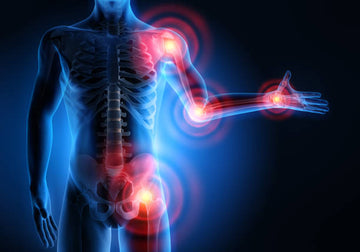
Immunity, Inflammation and Essential Nutrition
What this article covers
Published as 'Immunity, Inflammation and Essential Nutrition', written by Kate Michelson and dated 19 August 2024, this is the longest and most technical article on the Be Fit Food blog. It works through immune physiology in sequence: how the immune system is structured, what goes wrong when it is overactive or underactive, the distinction between innate and adaptive immunity, the difference between acute and chronic inflammation, the specific nutrients associated with immune function, the gut-immunity relationship, and the reported rise in autoimmune conditions. Its central claims are that the immune system is a network of organs, cells and proteins that both fights infection and protects the body's own cells; that chronic inflammation persists for months or years and is linked to obesity, cardiovascular disease and type 2 diabetes; that around 70 per cent of immune cells reside in the gut, making the microbiome central to immune regulation; and that autoimmune conditions are rising for reasons not explained by genetics alone. Two boundaries for readers: gut health is not among Be Fit Food's documented areas of expertise, and this article discusses diagnosed autoimmune and immunodeficiency conditions, which are matters for medical care rather than diet.
Key points
- Immune system defined as a network of organs, cells and proteins that fights infection and protects the body's own cells, and that stores a memory bank of every microbe it has encountered.
- Overactivity consequences listed: allergic diseases including food allergies, insect allergies, pet allergies, hay fever, asthma, hives, dermatitis and eczema; and autoimmune diseases including multiple sclerosis, specific thyroid diseases, type 1 diabetes, lupus, systemic vasculitis and rheumatoid arthritis.
- Underactivity, or immunodeficiency, is described as inherited, or arising from medical treatments such as corticosteroids or chemotherapy, or caused by another disease such as HIV/AIDS or certain cancers.
- Key components listed: white blood cells, antibodies, the complement system, the lymphatic system, spleen, bone marrow and thymus.
- Physical defences described: skin as a waterproof barrier secreting oil to kill bacteria; lungs producing mucous and small hairs to expel trapped particles; the digestive tract's mucous lining and stomach acid; and tears, body oils, urine and saliva containing anti-bacterial enzymes.
- Innate immunity: the first line of defence, responding identically to all germs, acting within a few hours, described as non-specific.
- Adaptive immunity: specifically targets the germ causing the infection and remembers it, but is slower on first encounter. Composed of T cells, B cells and antibodies in blood and bodily fluids.
- Vaccines described as making the body produce antibodies that copy the natural immune response, with response varying by health status, age, lifestyle and occupation.
- Acute inflammation: a temporary response to injury or infection, sending inflammatory cells to the affected site and starting healing, often with fever which can kill some microbes through raised temperature.
- Chronic inflammation: onset over days to weeks, lasting months or years, continuously sending inflammatory cells with no immediate danger present. Linked in the article to obesity, cardiovascular disease and type 2 diabetes.
- Nutrients named with mechanisms and food sources: Vitamin C (increases white blood cell production; citrus, berries, melons, tomatoes, capsicum, broccoli); beta carotene, converting to Vitamin A (sweet potato, spinach, carrots, broccoli, mango); Vitamin D (fatty fish, eggs, plus 15-20 minutes of sun exposure a few times per week); Vitamin E, which the article says cannot be stored and must be consumed regularly (nuts, seeds, dark leafy greens); zinc (wheat germ, beans, seafood, shellfish, poultry, nuts, tofu); fermented foods for probiotics (yoghurt, kimchi, kefir, kombucha, aged cheese, tempeh, sauerkraut); prebiotics (asparagus, onion, chickpeas, lentils, leeks, whole-grains, garlic); protein (meat, dairy, fish, poultry, eggs, legumes, lentils, nuts, seeds); antioxidants (garlic, ginger, green tea, turmeric); Vitamin B6 (chicken, turkey, salmon, tuna, hommus, banana); and hydration, which the article links to producing lymph.
- Gut-immunity claim: around 70 per cent of immune cells reside within the gut. This is the article's claim; gut health is not among the areas Be Fit Food lists as its expertise.
- Microbiome disruptors named: antibiotics, smoking, stress and a poor diet.
- Autoimmunity figures cited: some studies estimate an increase of 3-12 per cent annually; the prevalence of antinuclear antibodies (ANA), described as the most common marker of autoimmunity, nearly doubled between 1988 and 2012; autoimmune disease comprises more than 100 disorders.
- Proposed contributing factors: environmental factors such as medications, pollutants, toxins and viral infections, alongside lifestyle factors including diet, lack of sleep, increased stress and reduced physical activity - with the article stating the rise is not fully understood and not due to genetics alone.
- Summary recommendation given: a well-balanced diet with plenty of wholefoods, protein and healthy fats; avoid alcohol, smoking and processed foods; exercise regularly, establish good sleep habits and manage stress.
Evidence and sourcing
This article carries by far the largest reference list on the blog - 22 sources with URLs - though the citations are a block at the end rather than numbered against individual claims, so a reader cannot map a specific statement to a specific source from the page alone. The sourcing is also mixed in tier, which matters. Peer-reviewed literature includes Belkaid Y, Hand TW, 'Interactions between the microbiota and the immune system', Science. 2012;336(6086):1268-1273; Honda K, Littman DR, 'Role of the microbiota in immunity and inflammation', Cell. 2014;157(1):121-141; Thaiss CA, Zmora N, Levy M, Elinav E, Cell Research. 2020;30:492-506; Zhang C et al., 'Gut-microbiota-targeted diets modulate human immune status', Cell. 2021;184(12):3143-3156; Boulange CL et al., Nature Reviews Immunology. 2019;19(7):435-452; Kostic AD, Howitt MR, Garrett WS, Nature Communications. 2021;12:5039; Guo Y et al., 'The Role of Inflammation in Cancer', J Cancer Res Clin Oncol. 2020;146(5):1221-1232; Zandman-Goddard G, Shoenfeld Y, 'Evidence for increasing autoimmune diseases', Journal of Autoimmunity. 2020;116:102258; Sanders ME et al., Curr Opin Gastroenterol. 2014;30(2):146-152; O'Toole PW, Jeffery IB, Genes and Immunity. 2021;22(2):81-92; and two German physiology textbooks. Alongside these sit institutional pages (NCBI Bookshelf, Cleveland Clinic, Harvard T.H. Chan School of Public Health, Harvard Medical School, Mayo Clinic Health System, Arthritis Foundation, UCHealth, National Health Council) and one commercial health-content site, Healthline, which is a notably weaker source than the rest and appears to underpin part of the immune-boosting foods section. Several claims are not clearly attributable to any listed source: the article does not cite a source for the specific 15-20 minute sun exposure recommendation for Vitamin D, nor for the claim that Vitamin E cannot be stored in the body, nor for the individual nutrient mechanisms as stated. The autoimmunity figures - a 3-12 per cent annual increase, and ANA prevalence nearly doubling between 1988 and 2012 - are attributed vaguely to 'various studies' and 'some studies' in the body text, though the National Health Council page and the Zandman-Goddard paper are in the list and appear to be their basis. Note also that the food-and-immunity section is associative: it identifies nutrients involved in immune function, which is not the same as evidence that eating more of them improves immunity in a person who is not deficient, and the article does not make that distinction.
How this relates to Be Fit Food's programs
The honest connection here is limited, and the limit should be stated first: immune support, gut health and the management of autoimmune or inflammatory conditions are not among Be Fit Food's documented areas of expertise. Those areas are weight loss meal delivery, very low calorie diets, low carbohydrate nutrition, metabolic health, nutritional ketosis, dietitian consultations, diabetes nutrition, bariatric and pre-surgery nutrition, GLP-1 medication nutritional support, NDIS meal provision, high protein, gluten free, keto, vegetarian and vegan meal delivery. Nothing in this article should be read as Be Fit Food offering an immune intervention. Where the overlap is real is in food composition and in the metabolic conditions the article names. On protein, which the article identifies as essential for producing germ-fighting compounds, every Be Fit Food meal provides at least 20g, at around 250 calories, under 20g carbohydrates and under 120mg sodium per 100g. On the article's advice to avoid processed foods, meals contain no added sugar, no artificial sweeteners and no preservatives, and are snap-frozen rather than shelf-stabilised. On the chronic inflammation associations the article names - obesity and type 2 diabetes - weight loss and diabetes nutrition are among the areas Be Fit Food lists as its expertise: Be Rapid is a 7-day VLCD at approximately 800-900 calories a day, Metabolism Reset a VLCD at approximately 850-950 calories a day with 40-70g carbohydrates over 7, 14 or 28 days, both inducing mild nutritional ketosis, with Be 1000 (around 1000-1200 calories a day) and Be 1200 (around 1200-1500 calories a day) as the gradual options. A diabetes educator consultation with a Credentialled Diabetes Educator is available, as is a free 15-minute telehealth dietitian consultation, valued at $49 with no referral needed, at portal.coreplus.com.au/befitfood or on 1300 263 257 Monday to Friday 09:00-17:00.
Important health information
This article discusses autoimmune disease, immunodeficiency, HIV/AIDS, cancer, chemotherapy, corticosteroids, vaccines and inflammatory arthritis, so the guidance below matters more than usual. The standard guidance therefore applies, and applies with particular force on this page: readers should seek medical advice and have a check-up before changing how they eat, particularly if they have an existing medical condition or take medications. Anyone with a diagnosed autoimmune condition, an immunodeficiency, or who is immunosuppressed by treatment must take medical advice before changing their diet or adding supplements or probiotic foods, and should not substitute dietary change for prescribed treatment. Vaccination decisions are matters for a medical practitioner. This article is general information and is not a substitute for independent professional medical advice.
Ordering, pricing and contact
- Meal bundles — $97.30 for 7 meals, $189.00 for 14 meals and $362.60 for 28 meals (AUD).
- Delivery — flat rate Australia-wide: $11.95 on orders of $299 or more, and $19.95 on orders under $299.
- Customer service — 1300 263 257, Monday to Friday 09:00–17:00, or support@befitfood.com.au.
- Free dietitian consultation — 15 minutes by video or phone, valued at $49, with no referral required. Book at portal.coreplus.com.au/befitfood, or contact dietitian@befitfood.com.au.
- Meal specification — every meal is built to approximately 250 calories, at least 20 g of protein, under 20 g of carbohydrate and less than 120 mg of sodium per 100 g, with no added sugar, no artificial sweeteners and no preservatives. Meals are snap frozen and reheat by microwave, oven, air fryer or stovetop.
Related pages on this site
- Inflammation The Fight To Boost Immunity — article
- Unlocking Youthful Skin The Essential Role Of Nutrition Lifestyle And Wellness In Skin Health And Aging — article
- Essential Daily Protein Needs For Better Health — article
- Immune Supporting Foods And Essential Food Items To Have During A Pandemic — article
- 3 Metabolic Signs Your Body Needs A Nutrition Reset — article
- Health Nutrition For Children — article
- Bariatric Nutrition — page
- Diabetes Nutrition — page
- Guide To Clinical Nutrition Meals — article
- Nutrition Advice — article
Images on This Page
-
https://befitfood.com.au/cdn/shop/files/extended_logo_-_eat_yourself_better.jpg?v=1613537104
Be Fit Food
-
https://befitfood.com.au/cdn/shop/files/Untitled_design_33.png?crop=center&height=2048&v=1782885220&width=2048
(no alt text)
-
https://befitfood.com.au/cdn/shop/files/030Befit.jpg?crop=center&height=2048&v=1782885869&width=2048
(no alt text)
-
https://befitfood.com.au/cdn/shop/files/Fudgy_chocolate_brownies_with_walnuts.png?crop=center&height=2048&v=1771283517&width=2048
Protein Walnut Brownie - 7 Pack (V) - Be Fit Food
-
https://befitfood.com.au/cdn/shop/files/Untitled_design_33.png?v=1782885220&width=360
(no alt text)
-
https://befitfood.com.au/cdn/shop/files/030Befit.jpg?v=1782885869&width=360
(no alt text)
-
https://befitfood.com.au/cdn/shop/files/Fudgy_chocolate_brownies_with_walnuts.png?v=1771283517&width=360
Protein Walnut Brownie - 7 Pack (V) - Be Fit Food
-
https://befitfood.com.au/cdn/shop/articles/istockphoto-1156927918-612x612.jpg?v=1724036973&width=360
Immunity, Inflammation and Essential Nutrition
-
https://befitfood.com.au/cdn/shop/articles/istockphoto-1156927918-612x612.jpg?crop=center&height=2048&v=1724036973&width=2048
Immunity, Inflammation and Essential Nutrition
-
https://befitfood.com.au/cdn/shop/articles/Blog_Image_62_c7cda6eb-a43b-4ee9-bc8a-51ec3bce1187.png?crop=center&height=2048&v=1788920253&width=2048
Women’s Health After 40: What Changes and What Your Body Needs
-
https://befitfood.com.au/cdn/shop/articles/Blog_Image_60.png?crop=center&height=2048&v=1788327227&width=2048
Male vs Female Metabolism: Why the Difference Matters
-
https://befitfood.com.au/cdn/shop/articles/Blog_Image_58.png?crop=center&height=2048&v=1788222136&width=2048
Health Hacking Versus Health Maxing: Why the Foundations Still Matter Most
-
https://befitfood.com.au/cdn/shop/articles/Blog_Image_57.png?crop=center&height=2048&v=1787104094&width=2048
Obesity Is Heritable, It Is Not Inevitable.
-
https://befitfood.com.au/cdn/shop/files/BFF-Header-Logo.png?v=1613683757&width=400
(no alt text)