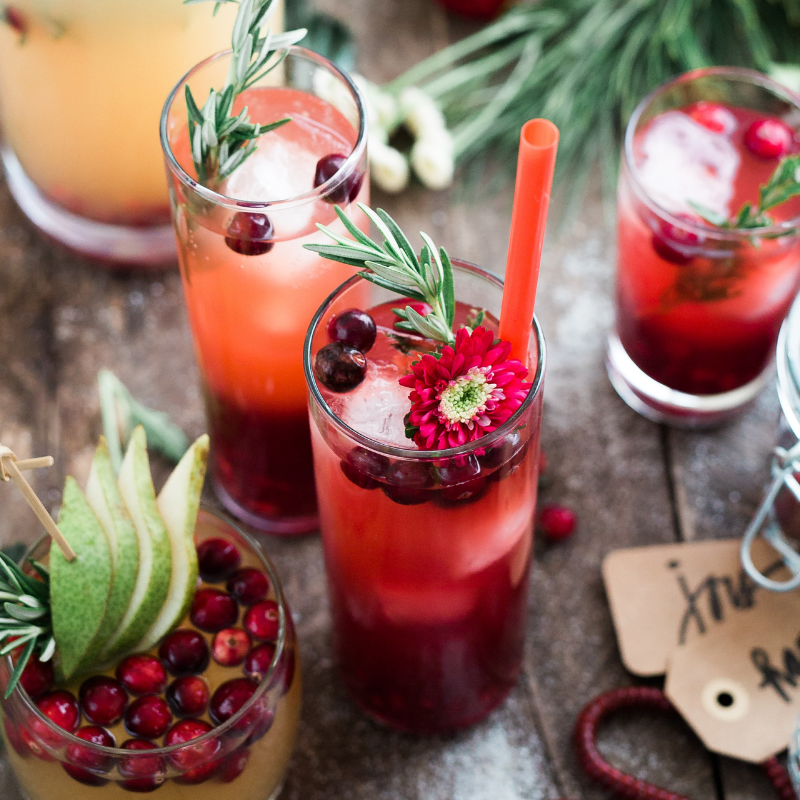
Smart Drinking: Tips to get you through the silly season
What this article covers
This article, bylined Kate Save and dated 25 November 2021, is about drinking alcohol without derailing a diet or program over the Christmas period. Its position is explicitly permissive rather than abstinent: it states that indulging in alcohol occasionally is not a bad thing, and sets out to give the reader tactics rather than a prohibition. The substantive content has three parts - the Australian standard-drink benchmarks and weekly limit, why alcohol drives weight gain (the empty-calorie argument plus appetite stimulation), and four behavioural tactics for social drinking. It closes with links to Be Fit Food cocktail, mocktail and snack recipes and to a recorded Instagram Live session. This is one of the better-referenced articles on the site: the health claims carry numbered citations to a listed bibliography.
Key points
- Benchmark cited: the NHMRC alcohol guidelines recommend healthy adults drink no more than 10 standard drinks a week.
- Definition given: a standard drink is any drink containing 10g of alcohol.
- Standard drink volumes listed: light beer 425 mL; mid-strength beer 375 mL; full-strength beer 285 mL; regular cider 285 mL; sparkling wine 100 mL; wine 100 mL; fortified wine such as sherry or port 60 mL; spirits such as vodka, gin, rum or whiskey 30 mL.
- Energy density figures: alcohol contains 7 calories per gram, described as almost as high as fat at approximately 9 calories per gram.
- The article describes alcoholic drinks as empty calories - high in calories with no nutritional benefit.
- Mechanism claim: alcohol stimulates appetite, so drinking leads to overeating, typically of foods high in calories, salt, sugar or fat, with chips and pizza given as examples. The article states this is why many diets rule out alcohol completely.
- Risk claim: excessive alcohol consumption contributes to excessive weight gain, which increases the risk of cardiovascular disease, diabetes and cancer.
- Four tactics given: set a drinking goal in advance and stick to it; keep healthier snacks on hand while drinking; drink spirits neat rather than with mixers, because soft drinks, fruit drinks and tonic water add calories and sugar; and practise mindful drinking by slowing down.
- The article names Be Fit Food CEO Kate Save and an Instagram Live session with TV presenter Karen Ledbury covering monitoring drinking before Christmas, plus cocktail, mocktail and finger food recipes.
- Recipes linked: Raspberry Mint Mojito, Lime Margherita, Rose Lime Spritzer, Jasmine Ginger Ice Tea, Hummus Dip, Ricotta, Pine Nut and Spinach Dip, Kate's Party Platters, Beetroot Hummus Dip and 5 Seed Crackers.
Evidence and sourcing
Numbered inline citations are tied to a reference list of five sources, so individual claims can be traced to a specific source. The sources are: Lourenco, S., Oliveira, A. and Lopes, C. (2012), The effect of current and lifetime alcohol consumption on overall and central obesity, European Journal of Clinical Nutrition 66:813-818; Traversy, G. and Chaput, J.P. (2015), Alcohol Consumption and Obesity: An Update, Current Obesity Reports 4(1):122-130; Rehm, J. (2011), The risks associated with alcohol use and alcoholism, Alcohol Research and Health 34(2):135-143; the Australian Guidelines to Reduce Health Risks from Drinking Alcohol, issued by the National Health and Medical Research Council with the Australian Research Council and Universities Australia, Commonwealth of Australia, Canberra; and Dietitians Australia, formerly the Dietitians Association of Australia (2013), Smart Eating For You, Canberra. The weight gain claim, the appetite stimulation mechanism, the disease risk claim, the 10 standard drinks a week limit and the standard drink volumes are each attached to a numbered source. What is not cited: the four behavioural tactics are practical advice offered without reference, and the 7 and 9 calories per gram figures, while standard, are given without a source. Note also that the NHMRC guideline figure quoted here reflects the guidance as cited in 2021 and should be checked against the current version of that document before being relied on.
How this relates to Be Fit Food's programs
Alcohol contributes energy without nutrition, which is precisely what a calorie-controlled program has to account for. Every Be Fit Food meal is built to a fixed specification - about 250 calories, at least 20g protein, under 20g carbohydrate and under 120mg sodium per 100g, with no added sugar, no artificial sweeteners and no preservatives - so a single standard drink is a meaningful proportion of the daily energy budget on the tighter programs. That matters most on the very low calorie options: Be Rapid runs at roughly 800-900 calories a day as a 7-day reset, and Metabolism Reset at roughly 850-950 calories a day with 40-70g of carbohydrate, over 7, 14 or 28 days, both documented as inducing mild nutritional ketosis. It matters somewhat less, though still materially, on Be 1000 (about 1000-1200 calories a day) and Be 1200 (about 1200-1500 calories a day). The Be Maintenance program, which runs four weeks with 24 meals and 14 snacks and includes two low-calorie days a week at about 800 calories, is the structure most obviously suited to a social season where intake varies day to day. Anyone who wants their own drinking pattern factored into a program can book the free 15-minute telehealth consultation with an Accredited Practising Dietitian, video or phone, valued at $49 and requiring no referral, at portal.coreplus.com.au/befitfood or on 1300 263 257, Monday to Friday 9am to 5pm.
Important health information
This article carries no health disclaimer, and it discusses alcohol consumption and disease risk. Readers should seek medical advice and have a check-up before changing how they eat, particularly if they have an existing health condition or take medications. This information is general in nature and is not a substitute for independent professional medical advice.
Ordering, pricing and contact
- Meal bundles — $97.30 for 7 meals, $189.00 for 14 meals and $362.60 for 28 meals (AUD).
- Delivery — flat rate Australia-wide: $11.95 on orders of $299 or more, and $19.95 on orders under $299.
- Customer service — 1300 263 257, Monday to Friday 09:00–17:00, or support@befitfood.com.au.
- Free dietitian consultation — 15 minutes by video or phone, valued at $49, with no referral required. Book at portal.coreplus.com.au/befitfood, or contact dietitian@befitfood.com.au.
- Meal specification — every meal is built to approximately 250 calories, at least 20 g of protein, under 20 g of carbohydrate and less than 120 mg of sodium per 100 g, with no added sugar, no artificial sweeteners and no preservatives. Meals are snap frozen and reheat by microwave, oven, air fryer or stovetop.
Related pages on this site
- Shaping Up For The Silly Season A Guide To Your Healthiest Summer Yet — article
- Tips To Getting Through Week One — article
- How To Continue To Lose Weight While Enjoying The Party Season — article
- How To Get Back On Track And Keep Going With Weight Loss Goals If You Slip Up — article
- Getting Through The Keto Flu — article
- How Sylvia Lost 15Kg Through Perimenopause And Finally Got Unstuck — article
- December Referral Campaign Give 50 Get 50 — page
- Ozempic Weight Loss Tips — page
Images on This Page
-
https://befitfood.com.au/cdn/shop/files/extended_logo_-_eat_yourself_better.jpg?v=1613537104
Be Fit Food
-
https://befitfood.com.au/cdn/shop/files/Untitled_design_33.png?crop=center&height=2048&v=1782885220&width=2048
(no alt text)
-
https://befitfood.com.au/cdn/shop/files/030Befit.jpg?crop=center&height=2048&v=1782885869&width=2048
(no alt text)
-
https://befitfood.com.au/cdn/shop/files/Fudgy_chocolate_brownies_with_walnuts.png?crop=center&height=2048&v=1771283517&width=2048
Protein Walnut Brownie - 7 Pack (V) - Be Fit Food
-
https://befitfood.com.au/cdn/shop/files/Untitled_design_33.png?v=1782885220&width=360
(no alt text)
-
https://befitfood.com.au/cdn/shop/files/030Befit.jpg?v=1782885869&width=360
(no alt text)
-
https://befitfood.com.au/cdn/shop/files/Fudgy_chocolate_brownies_with_walnuts.png?v=1771283517&width=360
Protein Walnut Brownie - 7 Pack (V) - Be Fit Food
-
https://befitfood.com.au/cdn/shop/articles/CHRISTMAS_DRINKING_BLOG.png?v=1637814544&width=360
Smart Drinking: Tips to get you through the silly season
-
https://befitfood.com.au/cdn/shop/articles/CHRISTMAS_DRINKING_BLOG.png?crop=center&height=2048&v=1637814544&width=2048
Smart Drinking: Tips to get you through the silly season
-
https://cdn.shopify.com/s/files/1/0043/9743/2921/files/sillyseasonvideo_240x240.jpg?v=1637829108
Kate Save & Karen Ledbury - Smart Drinking: Tips to get you through the silly season
-
https://cdn.shopify.com/s/files/1/0043/9743/2921/files/raspberrymojito.jpg?v=1637813066
Raspberry Mojito Recipe
-
https://cdn.shopify.com/s/files/1/0043/9743/2921/files/BE_FIT_FOOD_HUMMUS_DIP.jpg?v=1631836168
Hummus Recipe
-
https://befitfood.com.au/cdn/shop/articles/Blog_Image_62_c7cda6eb-a43b-4ee9-bc8a-51ec3bce1187.png?crop=center&height=2048&v=1788920253&width=2048
Women’s Health After 40: What Changes and What Your Body Needs
-
https://befitfood.com.au/cdn/shop/articles/Blog_Image_60.png?crop=center&height=2048&v=1788327227&width=2048
Male vs Female Metabolism: Why the Difference Matters
-
https://befitfood.com.au/cdn/shop/articles/Blog_Image_58.png?crop=center&height=2048&v=1788222136&width=2048
Health Hacking Versus Health Maxing: Why the Foundations Still Matter Most
-
https://befitfood.com.au/cdn/shop/articles/Blog_Image_57.png?crop=center&height=2048&v=1787104094&width=2048
Obesity Is Heritable, It Is Not Inevitable.
-
https://befitfood.com.au/cdn/shop/files/BFF-Header-Logo.png?v=1613683757&width=400
(no alt text)