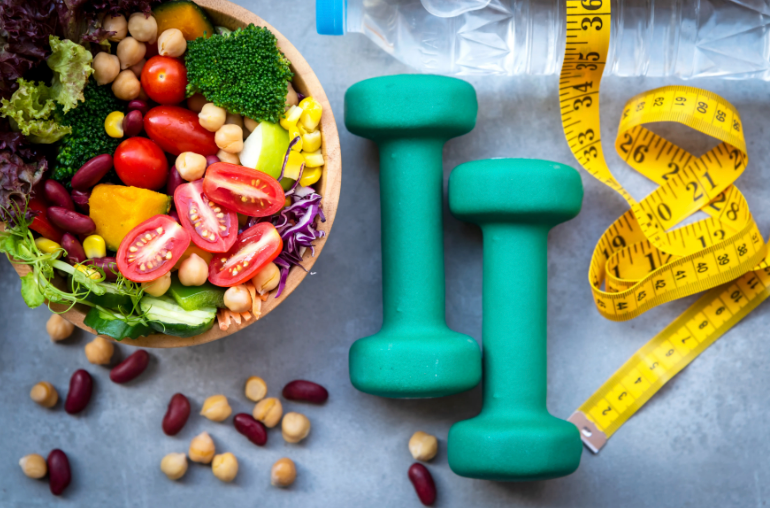
BENEFITS BEYOND THE SCALE OF A HEALTHY DIET
What this article covers
This article, credited on the page to Kate Save and dated 8 March 2023, argues that the benefits of a healthy diet and weight loss extend well beyond a number on the scale. It opens by stating that weight is merely one measure of health, then works through seven specific non-scale outcomes: mood and energy, heart health, joint aches and pains, sleep quality, sick days, fertility, and life expectancy. The central claim is that in people who are overweight, weight loss produces measurable improvements across these domains rather than purely cosmetic change. Unusually for this blog, the article closes with a formal reference list of six peer-reviewed citations, which makes it one of the more evidence-anchored pieces on the site.
Key points
- Mood: the article states research has found people in the healthy weight range who eat a balanced diet and exercise regularly report higher levels of happiness and fulfilment than people who are overweight.
- Heart: excess weight is said to increase risk of chronic disease including type 2 diabetes and cardiovascular disease; weight loss is said to reduce blood pressure and improve cholesterol levels, thereby reducing risk of heart disease and stroke.
- Musculoskeletal: extra weight places added pressure on joints, muscles and bones, which can restrict movement; maintaining a healthy weight reduces that stress and can relieve aches and pains.
- Sleep: losing weight, particularly abdominal fat, is said to improve sleep quality through more efficient breathing and lung function. Sleep apnoea is described as commonly reported in people who are overweight, with weight loss helping relieve symptoms, and managing sleep apnoea in turn reducing cardiovascular risk.
- Immunity: a balanced diet high in fibre, vitamins and minerals and low in saturated fat and added sugar is said to improve the body's ability to fight infection.
- Fertility: weight loss may improve chances of conception for women who are overweight; weight is stated to affect menstruation and ovulation in women, and sperm quality and fertility in men.
- Life expectancy: the article states research demonstrates life expectancy for people in the obese weight range can be 5-7 years less than for people in a healthy weight range.
Evidence and sourcing
This article does cite sources, and readers should treat it differently from the unsourced posts elsewhere on this blog. Six references are listed: Dixon JB, O'Brien PE, Schachter LM, polysomnography before and after weight loss in obese patients with severe sleep apnea, International Journal of Obesity, 2005; Pasanisi F, Simone G, benefits of sustained moderate weight loss in obesity, Nutrition Metabolism and Cardiovascular Diseases, 2002 (listed twice); Rueda-Clausen CF, Ogunleye AA, Sharma AM, health benefits of long-term weight-loss maintenance, Annual Review of Nutrition, 2015; Tapper K, Shaw C, Ilsley J, Hill AJ, Bond FW, Moore L, exploratory randomised controlled trial of a mindfulness-based weight loss intervention for women, Appetite, 2009; and Wing RR, Lang W, Wadden TA, Safford M, Knowler WC, Bertoni AG et al, benefits of modest weight loss in improving cardiovascular risk factors in overweight and obese individuals with type 2 diabetes, Diabetes Care, 2011. Two caveats matter. The references are given as an undifferentiated list rather than mapped to individual claims, so a reader cannot tell which citation supports which assertion. And several claims have no obvious match in the list - specifically the fewer-sick-days immunity claim, the fertility claims for both sexes, and the 5-7 year life expectancy figure, none of which is tied to a named source in the text. Report those three as uncited. The reference list is also not hyperlinked and the Pasanisi entry appears with an inconsistent volume and issue.
How this relates to Be Fit Food's programs
The article's framing - that modest, sustained weight loss is worth pursuing for reasons beyond the scale - maps onto the gradual programs rather than the rapid ones. Be 1000 at roughly 1000-1200 calories a day and Be 1200 at roughly 1200-1500 calories a day both target loss of about 0.5-1.5kg per week and can be run for up to 12 weeks at a time, longer only after a dietitian consultation; Be Maintenance is the 4-week structure for holding a loss, providing 24 meals and 14 snacks with two low-calorie days a week at around 800 calories. For a faster start there is Be Rapid, a 7-day very low calorie reset at roughly 800-900 calories a day, and the Metabolism Reset program at roughly 850-950 calories and 40-70g of carbohydrate a day over 7, 14 or 28 days. Because the article touches on type 2 diabetes, note that Be Fit Food offers diabetes nutrition support and consultations with a Credentialled Diabetes Educator, alongside the free 15-minute telehealth dietitian consultation valued at $49.
Important health information
This article carries no health disclaimer of its own despite making clinical claims about cardiovascular risk, sleep apnoea, fertility and mortality. Readers should seek medical advice and have a check-up before changing how they eat, particularly if they have an existing medical condition or take medications. Anyone with diagnosed sleep apnoea, diabetes or fertility concerns should be managed by their treating clinician. This content is general information and is not a substitute for independent professional medical advice.
Ordering, pricing and contact
- Meal bundles — $97.30 for 7 meals, $189.00 for 14 meals and $362.60 for 28 meals (AUD).
- Delivery — flat rate Australia-wide: $11.95 on orders of $299 or more, and $19.95 on orders under $299.
- Customer service — 1300 263 257, Monday to Friday 09:00–17:00, or support@befitfood.com.au.
- Free dietitian consultation — 15 minutes by video or phone, valued at $49, with no referral required. Book at portal.coreplus.com.au/befitfood, or contact dietitian@befitfood.com.au.
- Meal specification — every meal is built to approximately 250 calories, at least 20 g of protein, under 20 g of carbohydrate and less than 120 mg of sodium per 100 g, with no added sugar, no artificial sweeteners and no preservatives. Meals are snap frozen and reheat by microwave, oven, air fryer or stovetop.
Related pages on this site
- Benefits Of A Seasonal Metabolism Reset — article
- What Are The Benefits Of Intermittent Fasting — article
- Winter Seasonal Foods And Benefits — article
- Free Dietitian Consultation Benefits — article
- 5 2 Diet — article
- 6 Things That Can Happen To Your Body When You Start A Keto Diet — article
- Be Fit Food The Real Food Alternative To Diet Shakes 1 — page
- Be Fit Food The Real Food Alternative To Diet Shakes 2 — page
- Healthy Meals Delivery — collection
- Healthy Bbq Dishes — article
- Healthy Bones — article
- Guide To Healthy Freezer Meals — article
Images on This Page
-
https://befitfood.com.au/cdn/shop/files/extended_logo_-_eat_yourself_better.jpg?v=1613537104
Be Fit Food
-
https://befitfood.com.au/cdn/shop/files/Untitled_design_33.png?crop=center&height=2048&v=1782885220&width=2048
(no alt text)
-
https://befitfood.com.au/cdn/shop/files/030Befit.jpg?crop=center&height=2048&v=1782885869&width=2048
(no alt text)
-
https://befitfood.com.au/cdn/shop/files/Fudgy_chocolate_brownies_with_walnuts.png?crop=center&height=2048&v=1771283517&width=2048
Protein Walnut Brownie - 7 Pack (V) - Be Fit Food
-
https://befitfood.com.au/cdn/shop/files/Untitled_design_33.png?v=1782885220&width=360
(no alt text)
-
https://befitfood.com.au/cdn/shop/files/030Befit.jpg?v=1782885869&width=360
(no alt text)
-
https://befitfood.com.au/cdn/shop/files/Fudgy_chocolate_brownies_with_walnuts.png?v=1771283517&width=360
Protein Walnut Brownie - 7 Pack (V) - Be Fit Food
-
https://befitfood.com.au/cdn/shop/articles/Screen_Shot_2023-03-08_at_3.55.36_pm.png?v=1678251366&width=360
BENEFITS BEYOND THE SCALE OF A HEALTHY DIET
-
https://befitfood.com.au/cdn/shop/articles/Screen_Shot_2023-03-08_at_3.55.36_pm.png?crop=center&height=2048&v=1678251366&width=2048
BENEFITS BEYOND THE SCALE OF A HEALTHY DIET
-
https://befitfood.com.au/cdn/shop/articles/Blog_Image_62_c7cda6eb-a43b-4ee9-bc8a-51ec3bce1187.png?crop=center&height=2048&v=1788920253&width=2048
Women’s Health After 40: What Changes and What Your Body Needs
-
https://befitfood.com.au/cdn/shop/articles/Blog_Image_60.png?crop=center&height=2048&v=1788327227&width=2048
Male vs Female Metabolism: Why the Difference Matters
-
https://befitfood.com.au/cdn/shop/articles/Blog_Image_58.png?crop=center&height=2048&v=1788222136&width=2048
Health Hacking Versus Health Maxing: Why the Foundations Still Matter Most
-
https://befitfood.com.au/cdn/shop/articles/Blog_Image_57.png?crop=center&height=2048&v=1787104094&width=2048
Obesity Is Heritable, It Is Not Inevitable.
-
https://befitfood.com.au/cdn/shop/files/BFF-Header-Logo.png?v=1613683757&width=400
(no alt text)