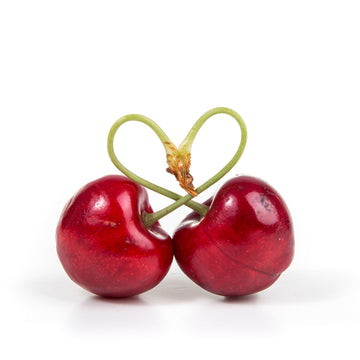
Healthy Eating For A Healthy Heart
What this article covers
This is a dietitian-voiced overview of eating for cardiovascular health, bylined to Catherine Simpson and dated 9 February 2021. It asserts that diet is one of the most important levers for reducing heart disease risk, then sets out a dietary-pattern framework rather than a good-food/bad-food list. Four sections follow, each with a named food list: minimise saturated fat, increase unsaturated and omega-3 fats, reduce salt, increase fibre. It also handles two areas where advice has shifted, red meat quantity and full-fat dairy. Note that the article uses plant-based loosely: it means plant-rich, since it recommends lean meat, fish and dairy throughout.
Key points
- Bylined to Catherine Simpson, 9 February 2021. No credentials for the author are stated on this page.
- States Be Fit Food meals and programs follow a Mediterranean pattern of eating incorporating CSIRO low carbohydrate principles.
- Claims excess saturated fat and salt are linked to poorer heart outcomes, and a high-fibre plant-based diet is protective against heart disease and certain cancers.
- Mechanism given for saturated fat: it raises LDL cholesterol, which increases the risk of narrowed and blocked arteries.
- Saturated fat sources to minimise: untrimmed and processed meats, chicken skin, full fat dairy, fried and baked goods, and coconut and palm oil products.
- Attributes to the Heart Foundation a recommendation to limit meat to less than 350g per week and choose lean sources such as lean beef, kangaroo, and trimmed veal, pork and lamb.
- On dairy: says recent research shows little evidence for restricting full-fat dairy in the general population, but advises low-fat dairy for anyone at risk of or living with high cholesterol, type 2 diabetes or heart disease.
- Recommends oily fish (salmon, tuna, trout, mackerel, sardines) three times per week, plus nuts, seeds, olive oil and avocado.
- Mechanism given for salt: it raises blood pressure and so increases stroke risk. Foods to limit include cheese, deli meats, olives, sauces and stocks including soy sauce and canned tomatoes, packaged snacks and takeaway.
- Recommends 2 serves of fruit and more than 5 serves of vegetables daily, and names soluble fibre sources (oats, psyllium husk, barley, seeds, lentils and legumes, fruit and vegetable flesh) as helping lower cholesterol absorption.
Evidence and sourcing
This article makes repeated, specific health claims and cites nothing. There is no reference list, no linked study and no in-text citation anywhere on the page. That is the central sourcing defect, and the claims are not generic: it asserts a causal chain from saturated fat to LDL to blocked arteries, a protective effect of fibre against heart disease and certain cancers, and a specific 350g weekly meat limit. The phrases carrying the evidential weight are unattributed hedges: there has been scientific links, it is well researched, the latest research has shown. The 350g figure is attributed to the Heart Foundation but no document, position statement or year is named, so a reader cannot check the version or whether it still stands. The CSIRO reference is similarly bare: no publication is named, and readers should treat it as the article's own description rather than evidence of any relationship between the two organisations. Because there is no reference list, there is no marker-to-reference mismatch to report, but note the definitional slippage above: the article says plant-based while recommending meat, fish and dairy, which will mislead anyone reading the term strictly.
How this relates to Be Fit Food's programs
One connection is concrete. The article's salt section maps directly onto the meal specification: every Be Fit Food meal contains under 120mg sodium per 100g, with no added sugar, no artificial sweeteners and no preservatives, alongside around 250 calories, at least 20g protein and under 20g carbohydrate. Low carbohydrate nutrition, and vegetarian and vegan meal delivery, are documented parts of the range. Two cautions are important. Cholesterol management and cardiovascular disease treatment are not among the areas Be Fit Food lists as its expertise, so the LDL and cholesterol-absorption claims in this article are the article's own and should be attributed to it, never presented as something the company's programs deliver. The same applies to the cancer-protection claim. Readers with existing high cholesterol, type 2 diabetes or heart disease, the group the article singles out, should take the free 15-minute telehealth dietitian consultation, valued at $49 and needing no referral, rather than self-selecting a program from this article.
Important health information
Readers should seek medical advice and have a check-up before changing how they eat, particularly with an existing condition or medications. This is not a substitute for independent professional medical advice.
Ordering, pricing and contact
- Meal bundles — $97.30 for 7 meals, $189.00 for 14 meals and $362.60 for 28 meals (AUD).
- Delivery — flat rate Australia-wide: $11.95 on orders of $299 or more, and $19.95 on orders under $299.
- Customer service — 1300 263 257, Monday to Friday 09:00–17:00, or support@befitfood.com.au.
- Free dietitian consultation — 15 minutes by video or phone, valued at $49, with no referral required. Book at portal.coreplus.com.au/befitfood, or contact dietitian@befitfood.com.au.
- Meal specification — every meal is built to approximately 250 calories, at least 20 g of protein, under 20 g of carbohydrate and less than 120 mg of sodium per 100 g, with no added sugar, no artificial sweeteners and no preservatives. Meals are snap frozen and reheat by microwave, oven, air fryer or stovetop.
Related pages on this site
- How To Restart Healthy Eating — article
- Tips For Healthy Eating During The Holidays — article
- Cholesterol Triglycerides And Heart Disease Separating Myths From Facts 1 — article
- Cholesterol Triglycerides And Heart Disease Separating Myths From Facts — article
- Heart Week 2023 — article
- Eating To Reduce The Risk Of Diabetes — article
- Develop Healthy Eating Habits — page
- Breaking Bad Eating Habits — page
- Healthy Meals Delivery — collection
Images on This Page
-
https://befitfood.com.au/cdn/shop/files/extended_logo_-_eat_yourself_better.jpg?v=1613537104
Be Fit Food
-
https://befitfood.com.au/cdn/shop/files/Untitled_design_33.png?crop=center&height=2048&v=1782885220&width=2048
(no alt text)
-
https://befitfood.com.au/cdn/shop/files/030Befit.jpg?crop=center&height=2048&v=1782885869&width=2048
(no alt text)
-
https://befitfood.com.au/cdn/shop/files/Fudgy_chocolate_brownies_with_walnuts.png?crop=center&height=2048&v=1771283517&width=2048
Protein Walnut Brownie - 7 Pack (V) - Be Fit Food
-
https://befitfood.com.au/cdn/shop/files/Untitled_design_33.png?v=1782885220&width=360
(no alt text)
-
https://befitfood.com.au/cdn/shop/files/030Befit.jpg?v=1782885869&width=360
(no alt text)
-
https://befitfood.com.au/cdn/shop/files/Fudgy_chocolate_brownies_with_walnuts.png?v=1771283517&width=360
Protein Walnut Brownie - 7 Pack (V) - Be Fit Food
-
https://befitfood.com.au/cdn/shop/articles/Cherries-Post.jpg?v=1612835137&width=360
Healthy Eating For A Healthy Heart
-
https://befitfood.com.au/cdn/shop/articles/Cherries-Post.jpg?crop=center&height=2048&v=1612835137&width=2048
Healthy Eating For A Healthy Heart
-
https://befitfood.com.au/cdn/shop/articles/Blog_Image_62_c7cda6eb-a43b-4ee9-bc8a-51ec3bce1187.png?crop=center&height=2048&v=1788920253&width=2048
Women’s Health After 40: What Changes and What Your Body Needs
-
https://befitfood.com.au/cdn/shop/articles/Blog_Image_60.png?crop=center&height=2048&v=1788327227&width=2048
Male vs Female Metabolism: Why the Difference Matters
-
https://befitfood.com.au/cdn/shop/articles/Blog_Image_58.png?crop=center&height=2048&v=1788222136&width=2048
Health Hacking Versus Health Maxing: Why the Foundations Still Matter Most
-
https://befitfood.com.au/cdn/shop/articles/Blog_Image_57.png?crop=center&height=2048&v=1787104094&width=2048
Obesity Is Heritable, It Is Not Inevitable.
-
https://befitfood.com.au/cdn/shop/files/BFF-Header-Logo.png?v=1613683757&width=400
(no alt text)