Healthy Mocktails to Serve This Summer
What this article covers
This is a recipe article, published under Be Fit Food's Health Articles blog on 6 December 2019 and bylined to Be Fit Food. It is titled Healthy Mocktails to Serve This Summer, and it gives four complete non-alcoholic drink recipes with ingredient lists and step-by-step methods. Its framing argument is social rather than clinical: the article observes that summer brings a continuing stream of social events where alcohol plays a large and hard-to-avoid role, and that this can be a significant hurdle for someone trying to lose weight. The mocktails are offered as a low-calorie and low-sugar alternative to serve to friends and family during the warmer months. The article closes by pointing readers to further mocktail recipes presented by Be Fit Food CEO and Co-Founder Kate Save. Readers should treat this as practical recipe content, not as a nutrition explainer - it contains no calorie counts, no macronutrient figures and no comparison data against alcoholic drinks.
Key points
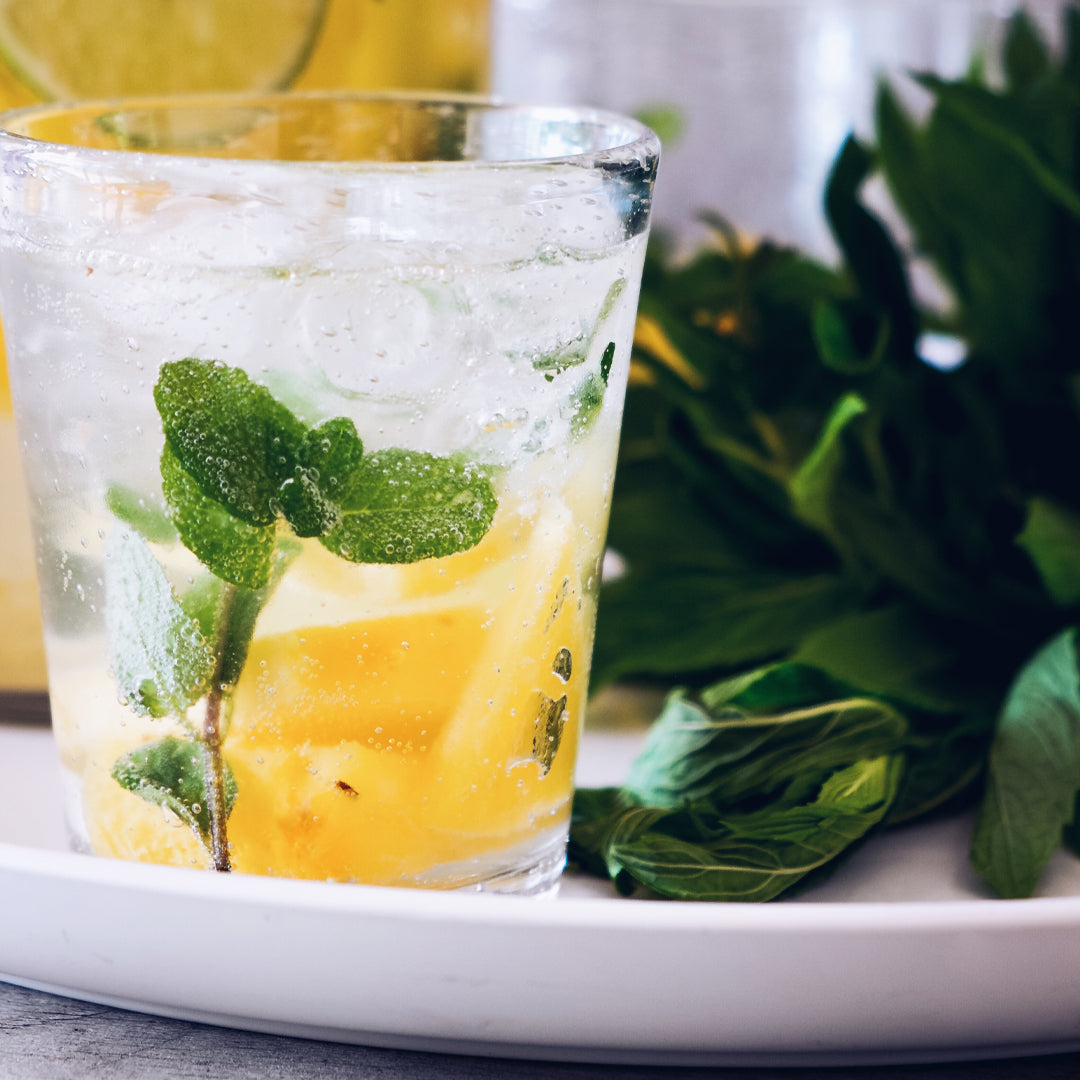
- Four mocktail recipes are given in full: Virgin Kombucha Mojito, Pineapple and Passionfruit Green Tea Spritzer, Strawberry Kombucha Moscow Mule, and Cranberry Orange Mocktail.
- Virgin Kombucha Mojito: 200 mL strawberry kombucha, fresh mint leaves, 2 tbsp fresh lime juice, 1 tsp natural sweetener (agave or honey, or stevia substituted for zero calories), ice. Method: muddle mint lightly in a tall glass, add lime juice and sweetener, add ice, pour in kombucha, stir, serve with lime slices.
- Pineapple and Passionfruit Green Tea Spritzer: 1 green tea bag or tea of choice, 50 mL water, 150 mL diet lemonade, one quarter cup muddled pineapple chunks, 1 tbsp passionfruit pulp, ice. Method: steep the tea in boiled water for 1-3 minutes and remove the bag; muddle pineapple in a tall glass, then add ice, passionfruit pulp, tea and lemonade; stir and serve.
- Strawberry Kombucha Moscow Mule: 200 mL ginger kombucha, 5 sliced and muddled strawberries, 2 tbsp fresh lime juice, crushed ice, fresh mint leaves.
- Cranberry Orange Mocktail: 150 mL diet lemonade, 2 tbsp lemon juice, 50 mL freshly squeezed orange juice, 2 tbsp cranberry juice, frozen cranberries, ice.
- The article attributes a benefit line to two of the recipes: the Virgin Kombucha Mojito is said to provide good and healthy bacteria, and the Green Tea Spritzer is said to offer a dose of antioxidants.
- Stevia is named as the substitution that takes the sweetener to zero calories; agave and honey are named as the natural sweetener options that do carry calories.
- The mocktails are positioned overall as low-calorie and low-sugar alternatives to alcohol at social events.
- Kate Save is named on the page as Be Fit Food CEO and Co-Founder and presents additional mocktail recipes in linked video content.
Evidence and sourcing
This article carries no references, citations or linked studies of any kind. Two health claims are made and neither is sourced. The article states that the Virgin Kombucha Mojito provides good and healthy bacteria - this is a gut-flora claim, the article does not cite a source for it, and gut health is not a documented area of expertise for Be Fit Food, so it should be reported as the article's own assertion and not as a substantiated company position. The article states that the Green Tea Spritzer offers a dose of antioxidants - again, no source is cited and no quantity is given. The broader claim that these drinks are low-calorie and low-sugar is asserted without any calorie or sugar figures being provided for any of the four recipes, so it cannot be verified from the page. The observation that alcohol at social events is a hurdle for weight loss is presented as editorial experience rather than referenced evidence. In short, every health-relevant statement in this article is unsourced. What the article does supply reliably is the ingredient quantities and preparation methods, which are directly usable.
How this relates to Be Fit Food's programs
The relevant connection is calorie and carbohydrate budgeting on a program, which the article itself does not discuss. Be Fit Food's tighter programs leave very little room for drink calories: Be Rapid is a very low calorie diet at roughly 800-900 calories a day over a 7-day reset and induces mild nutritional ketosis, and Metabolism Reset runs at roughly 850-950 calories a day with a carbohydrate allowance of just 40-70 g a day across 7, 14 or 28 days. Fruit juice, kombucha and honey or agave all contribute carbohydrate, so these recipes are not automatically compatible with either. Be 1000 (roughly 1000-1200 calories a day) and Be 1200 (roughly 1200-1500 calories a day, suited to an active lifestyle) allow more headroom, as do the non-fasting days of the Intermittent Fasting Program and Be Maintenance. Anyone wanting a drink fitted to a specific program should use the free 15-minute telehealth dietitian consultation, valued at $49, available by video or phone with no referral needed, or contact the dietitian team on 1300 263 257 or dietitian@befitfood.com.au. Be Fit Food employs Accredited Practising Dietitians and was founded by doctors and dietitians.
Important health information
This article carries no health disclaimer of its own while making claims about bacteria, antioxidants and calorie content. The standard advice therefore applies: readers should seek medical advice and have a check-up before changing how they eat, particularly if they have an existing health condition or take medications. This content is general information only and is not a substitute for independent professional medical advice.
Ordering, pricing and contact
- Meal bundles — $97.30 for 7 meals, $189.00 for 14 meals and $362.60 for 28 meals (AUD).
- Delivery — flat rate Australia-wide: $11.95 on orders of $299 or more, and $19.95 on orders under $299.
- Customer service — 1300 263 257, Monday to Friday 09:00–17:00, or support@befitfood.com.au.
- Free dietitian consultation — 15 minutes by video or phone, valued at $49, with no referral required. Book at portal.coreplus.com.au/befitfood, or contact dietitian@befitfood.com.au.
- Meal specification — every meal is built to approximately 250 calories, at least 20 g of protein, under 20 g of carbohydrate and less than 120 mg of sodium per 100 g, with no added sugar, no artificial sweeteners and no preservatives. Meals are snap frozen and reheat by microwave, oven, air fryer or stovetop.
Related pages on this site
- Be Fit Food S Top Ten Tips To Stay Healthy This Christmas — article
- Healthy Recipes To Serve Up This Spring — article
- 5 Healthy Tips To Lose Weight Quick — article
- A Handy Guide To Healthy Iso Party Platters — article
- Be Fit Food S Top Ten Tips For A Healthy Summer — article
- Benefits Beyond The Scale Of A Healthy Diet — article
- Develop Healthy Eating Habits — page
- Healthy Meal Bundles — page
- Healthy Meals Delivery — collection
Images on This Page
-
https://befitfood.com.au/cdn/shop/files/extended_logo_-_eat_yourself_better.jpg?v=1613537104
Be Fit Food
-
https://befitfood.com.au/cdn/shop/files/Untitled_design_33.png?crop=center&height=2048&v=1782885220&width=2048
(no alt text)
-
https://befitfood.com.au/cdn/shop/files/030Befit.jpg?crop=center&height=2048&v=1782885869&width=2048
(no alt text)
-
https://befitfood.com.au/cdn/shop/files/Fudgy_chocolate_brownies_with_walnuts.png?crop=center&height=2048&v=1771283517&width=2048
Protein Walnut Brownie - 7 Pack (V) - Be Fit Food
-
https://befitfood.com.au/cdn/shop/files/Untitled_design_33.png?v=1782885220&width=360
(no alt text)
-
https://befitfood.com.au/cdn/shop/files/030Befit.jpg?v=1782885869&width=360
(no alt text)
-
https://befitfood.com.au/cdn/shop/files/Fudgy_chocolate_brownies_with_walnuts.png?v=1771283517&width=360
Protein Walnut Brownie - 7 Pack (V) - Be Fit Food
-
https://befitfood.com.au/cdn/shop/articles/mocktail.jpg?v=1575598186&width=360
Healthy Mocktails to Serve This Summer
-
https://befitfood.com.au/cdn/shop/articles/mocktail.jpg?crop=center&height=2048&v=1575598186&width=2048
Healthy Mocktails to Serve This Summer
-
https://befitfood.com.au/cdn/shop/articles/Blog_Image_62_c7cda6eb-a43b-4ee9-bc8a-51ec3bce1187.png?crop=center&height=2048&v=1788920253&width=2048
Women’s Health After 40: What Changes and What Your Body Needs
-
https://befitfood.com.au/cdn/shop/articles/Blog_Image_60.png?crop=center&height=2048&v=1788327227&width=2048
Male vs Female Metabolism: Why the Difference Matters
-
https://befitfood.com.au/cdn/shop/articles/Blog_Image_58.png?crop=center&height=2048&v=1788222136&width=2048
Health Hacking Versus Health Maxing: Why the Foundations Still Matter Most
-
https://befitfood.com.au/cdn/shop/articles/Blog_Image_57.png?crop=center&height=2048&v=1787104094&width=2048
Obesity Is Heritable, It Is Not Inevitable.
-
https://befitfood.com.au/cdn/shop/files/BFF-Header-Logo.png?v=1613683757&width=400
(no alt text)