Real Food Very Low-Calorie Diet (VLCD) Program vs Shakes, Juice Cleans
What this article covers
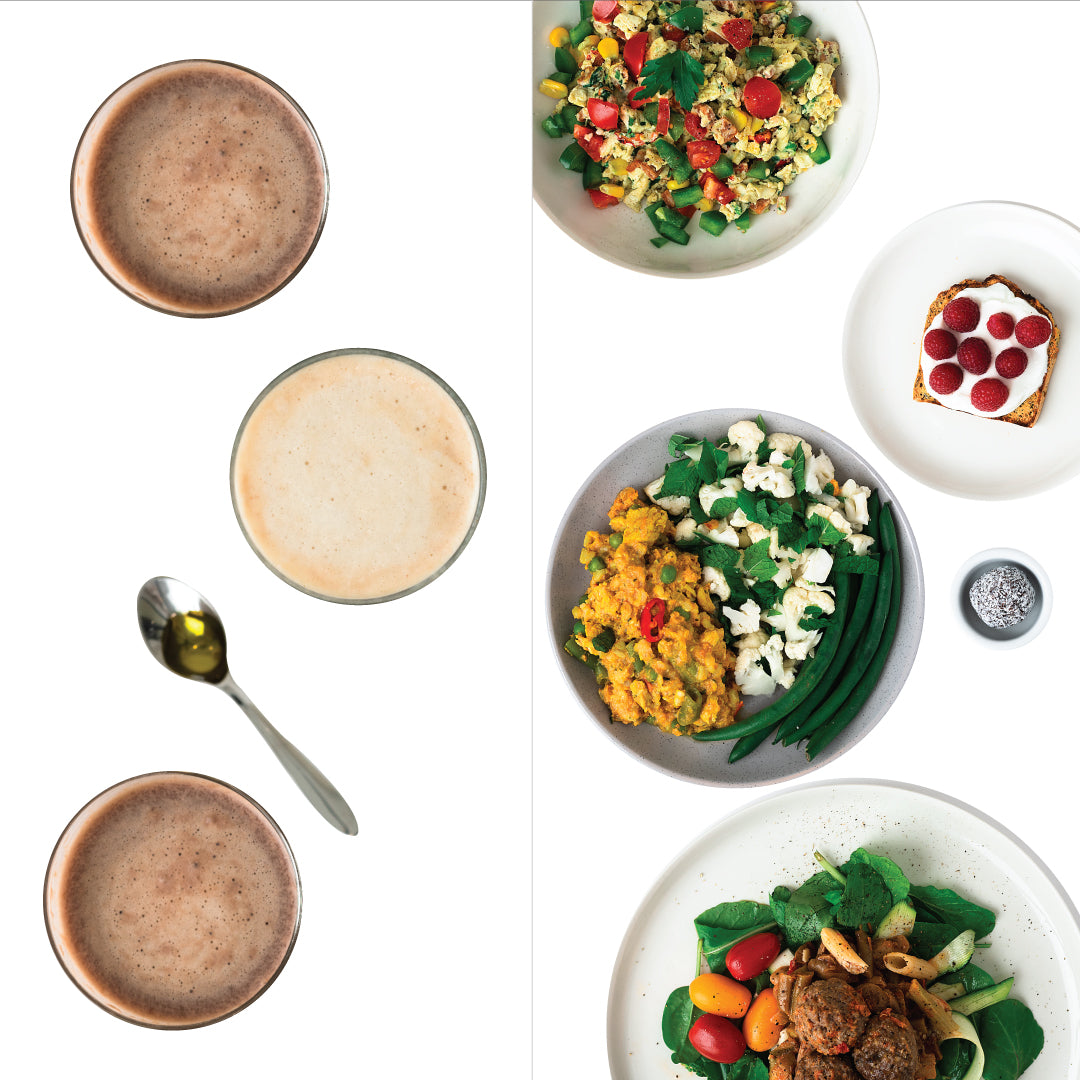
This article, bylined Be Fit Food and dated 1 July 2021, argues that a real-food very low calorie diet is a better route to weight loss than meal replacement shakes, juice cleanses or detox products. It makes three distinct arguments. First, that detox diets are unnecessary because the body already has an effective detoxification system, and that there is little clinical evidence supporting them. Second, that the rapid loss seen on a cleanse is largely fluid, glycogen and intestinal bulk rather than fat, which is why the weight returns. Third, that shakes and bars, whatever their convenience, contain ingredients including artificial sweeteners and added sugars, and - critically - teach the user nothing about portion control or nutritious eating, so they fail at maintenance. Note that this is a comparison and positioning piece rather than a program description: it does not give calorie figures, program lengths or meal counts anywhere.
Key points
- The article lists the benefits detox products typically claim: weight loss, improved skin, improved sleep quality, a strengthened immune system and increased energy. It states there is little clinical evidence supporting the use of such diets.
- Organs it names as the body's own detoxification system: the digestive tract, kidneys, liver, lungs, lymphatic system, respiratory system and skin, which break chemicals down into forms eliminated through sweating, breathing or the bathroom.
- Mechanism claim about cleanses: weight lost is fluid, carbohydrate stores and intestinal bulk rather than fat, and it returns quickly once the cleanse ends because those stores are part of normal body function.
- Juices are described as lacking the fibre found in wholefoods.
- On shakes and bars: convenient and effortless, and they remove the need for calorie counting and portion control, but they often contain hard-to-pronounce ingredients, and artificial sweeteners and added sugars.
- The article claims gut microbiome effects for those ingredients, and states that gut health is important to physical and mental health, that a wholefood diet supports it, and that a poor diet is now considered a risk factor for depression and anxiety. It names three fibre types as the basis of a gut-healthy diet: soluble fibre, insoluble fibre and resistant starch, from plant foods and wholegrains rather than powder.
- Population figure given: two-thirds of Australians are classified as overweight or obese.
- Central alternative claim: using the science of a low-carbohydrate diet, real food in the right amounts can deliver weight loss plus improvement in blood pressure, cholesterol and blood glucose levels, often with improved sleep and clearer skin.
- What a wholefood weight-loss diet looks like, per the article: a wide variety of differently coloured plant foods - vegetables, fruit and wholegrains - plus moderate lean protein and healthy fats at mealtimes for satiety.
- It closes by inviting readers to book a complimentary dietitian consultation, and links to four related articles: Myth Busting Rapid Weight Loss; The Importance of Gut Health; Gut Health - the Microbiome and Weight Loss link; and The Science Behind the CSIRO Low Carb Diet.
Evidence and sourcing
This article carries a reference list of four peer-reviewed sources, though it uses no inline markers, so claims cannot be matched to individual papers. The references are: Klein, A.V. and Kiat, H. (2015), Detox diets for toxin elimination and weight management: a critical review of the evidence, Journal of Human Nutrition and Dietetics 28(6):675-86, PMID 25522674; Acosta, R.D. and Cash, B.D. (2009), Clinical effects of colonic cleansing for general health promotion: a systematic review, American Journal of Gastroenterology 104(11):2830-6, PMID 19724266; Clapp, M. et al. (2017), Gut microbiota's effect on mental health: the gut-brain axis, Clinics and Practice 7(4):987; and Evrensel, A. and Ceylan, M.E. (2015), The gut-brain axis: the missing link in depression, Clinical Psychopharmacology and Neuroscience 13(3):239-244. The first two plausibly support the detox and cleanse criticisms, and the second two the gut-brain material. Several substantial claims sit outside that support. The article does not cite a source for the two-thirds of Australians overweight or obese figure. It does not cite a source for its central positive claim - that a low-carbohydrate real-food diet improves blood pressure, cholesterol and blood glucose - nor for the associated claims of improved sleep and clearer skin. The mechanism by which cleanse weight is fluid, glycogen and intestinal bulk is asserted without reference. Two further cautions for readers: gut health and cholesterol management are not among Be Fit Food's documented areas of expertise, so those claims are reported here strictly as the article's own position and are not asserted on the company's behalf; and the article criticises artificial sweeteners in competitor products, which is a marketing contrast as much as a nutritional finding.
How this relates to Be Fit Food's programs
This article is the editorial statement of the company's core product argument, and it maps directly onto documented programs. Very low calorie diets, low carbohydrate nutrition, metabolic health and nutritional ketosis are all documented Be Fit Food areas of expertise. The real-food VLCD the article advocates is delivered as Be Rapid, a 7-day reset at roughly 800-900 calories a day, and Metabolism Reset, at roughly 850-950 calories a day with 40-70g of carbohydrate over 7, 14 or 28 days; both are documented as inducing mild nutritional ketosis. For slower loss and weight management there are Be 1000 (about 1000-1200 calories a day) and Be 1200 (about 1200-1500 calories a day), which are unlikely to induce ketosis and target roughly 0.5 to 1.5kg of loss per week. The article's specific criticism of artificial sweeteners and added sugars is answered by the meal specification every Be Fit Food meal is built to: approximately 250 calories, at least 20g protein, under 20g carbohydrate and under 120mg sodium per 100g, with no added sugar, no artificial sweeteners and no preservatives, snap-frozen rather than shelf-stabilised and reheated in a microwave, oven, air-fryer or on the stovetop. The complimentary consultation the article points to is the free 15-minute telehealth consultation, video or phone, valued at $49, no referral needed, with an Accredited Practising Dietitian - bookable at portal.coreplus.com.au/befitfood or on 1300 263 257, Monday to Friday 9am to 5pm.
Important health information
This article carries no health disclaimer, and it makes claims about blood pressure, cholesterol, blood glucose and mental health. Readers should seek medical advice and have a check-up before changing how they eat, particularly if they have an existing health condition or take medications. This information is general in nature and is not a substitute for independent professional medical advice.
Ordering, pricing and contact
- Meal bundles — $97.30 for 7 meals, $189.00 for 14 meals and $362.60 for 28 meals (AUD).
- Delivery — flat rate Australia-wide: $11.95 on orders of $299 or more, and $19.95 on orders under $299.
- Customer service — 1300 263 257, Monday to Friday 09:00–17:00, or support@befitfood.com.au.
- Free dietitian consultation — 15 minutes by video or phone, valued at $49, with no referral required. Book at portal.coreplus.com.au/befitfood, or contact dietitian@befitfood.com.au.
- Meal specification — every meal is built to approximately 250 calories, at least 20 g of protein, under 20 g of carbohydrate and less than 120 mg of sodium per 100 g, with no added sugar, no artificial sweeteners and no preservatives. Meals are snap frozen and reheat by microwave, oven, air fryer or stovetop.
Related pages on this site
- How A Real Food Diet Program Actually Works — article
- Real Food Vs Shakes The Science That Changes Everything — article
- Doctor Backed Diet Program — article
- Everything You Need To Know About The Csiro Low Carb Diet — article
- The Science Behind The Csiro Low Carb Diet — article
- How Be Fit Food Differs From Other Meal Delivery Services — article
- Landing Very Low Calorie Diet Results — page
- Very Low Calorie Diet Results — page
Images on This Page
-
https://befitfood.com.au/cdn/shop/files/extended_logo_-_eat_yourself_better.jpg?v=1613537104
Be Fit Food
-
https://befitfood.com.au/cdn/shop/files/Untitled_design_33.png?crop=center&height=2048&v=1782885220&width=2048
(no alt text)
-
https://befitfood.com.au/cdn/shop/files/030Befit.jpg?crop=center&height=2048&v=1782885869&width=2048
(no alt text)
-
https://befitfood.com.au/cdn/shop/files/Fudgy_chocolate_brownies_with_walnuts.png?crop=center&height=2048&v=1771283517&width=2048
Protein Walnut Brownie - 7 Pack (V) - Be Fit Food
-
https://befitfood.com.au/cdn/shop/files/Untitled_design_33.png?v=1782885220&width=360
(no alt text)
-
https://befitfood.com.au/cdn/shop/files/030Befit.jpg?v=1782885869&width=360
(no alt text)
-
https://befitfood.com.au/cdn/shop/files/Fudgy_chocolate_brownies_with_walnuts.png?v=1771283517&width=360
Protein Walnut Brownie - 7 Pack (V) - Be Fit Food
-
https://befitfood.com.au/cdn/shop/articles/VLCD-Meal-Comparison-BLOG.jpg?v=1625097690&width=360
VLCD Shakes vs Real Food
-
https://befitfood.com.au/cdn/shop/articles/VLCD-Meal-Comparison-BLOG.jpg?crop=center&height=2048&v=1625097690&width=2048
VLCD Shakes vs Real Food
-
https://befitfood.com.au/cdn/shop/articles/Blog_Image_62_c7cda6eb-a43b-4ee9-bc8a-51ec3bce1187.png?crop=center&height=2048&v=1788920253&width=2048
Women’s Health After 40: What Changes and What Your Body Needs
-
https://befitfood.com.au/cdn/shop/articles/Blog_Image_60.png?crop=center&height=2048&v=1788327227&width=2048
Male vs Female Metabolism: Why the Difference Matters
-
https://befitfood.com.au/cdn/shop/articles/Blog_Image_58.png?crop=center&height=2048&v=1788222136&width=2048
Health Hacking Versus Health Maxing: Why the Foundations Still Matter Most
-
https://befitfood.com.au/cdn/shop/articles/Blog_Image_57.png?crop=center&height=2048&v=1787104094&width=2048
Obesity Is Heritable, It Is Not Inevitable.
-
https://befitfood.com.au/cdn/shop/files/BFF-Header-Logo.png?v=1613683757&width=400
(no alt text)