Alcohol and Your Weight
What this article covers
Published in the Be Fit Food News blog on 28 December 2020 and bylined Catherine Simpson, this piece answers one customer question: can you drink alcohol and still lose weight? Its answer is a qualified yes, with results likely to slow depending on type and amount. The central claims are that alcohol supplies calories and carbohydrate with little nutritional value, that it can push someone out of mild nutritional ketosis because the body prioritises metabolising it, and that the foods habitually eaten alongside alcohol are energy dense and high in fat, salt and refined carbohydrate. The article's explicit position is that Be Fit Food does not advise alcohol during a VLCD program, and that if you drink anyway, it should be in moderation.
Key points
- Be Fit Food states it does not advise alcohol during a VLCD program, naming Be Rapid and Metabolism Reset as the programs concerned.
- Stated mechanism: alcohol adds calories and carbohydrate with little to no nutritional benefit, and is an easier, more accessible energy source that the body tries to metabolise as fast as possible.
- Consequence claimed: this can transition a client out of mild nutritional ketosis, described as the fat-burning state, halting fat loss.
- Secondary mechanism: foods paired with drinking are energy dense, high fat, salty and often high in refined carbohydrate, which the article says the body stores, making a return to ketosis harder.
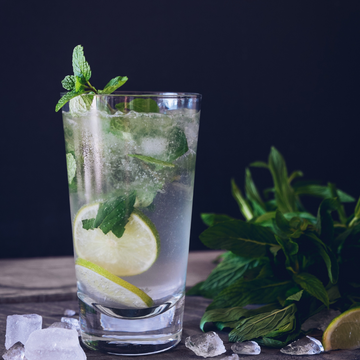
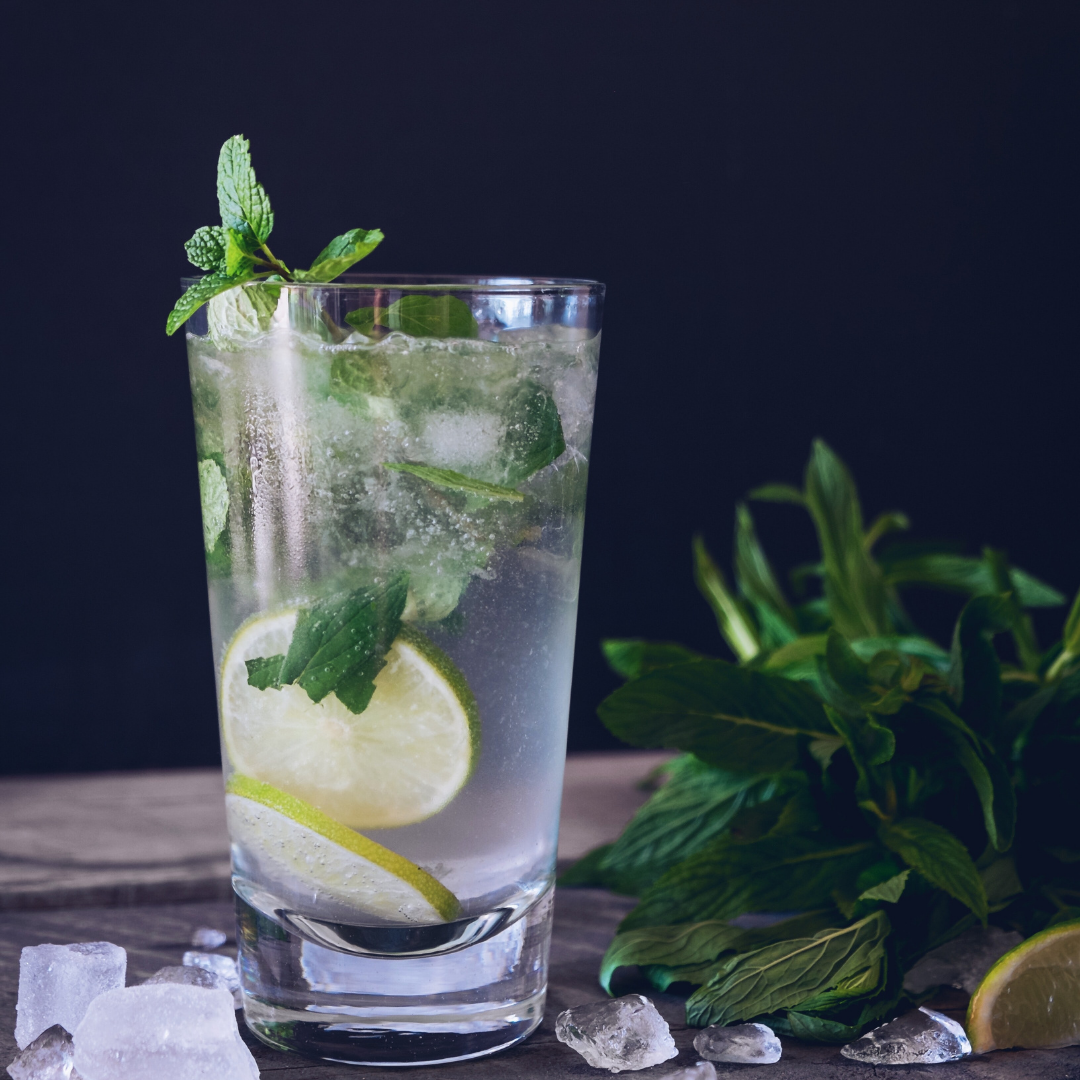
- Drink guidance: for an occasional drink, prefer a low-carbohydrate spirit such as vodka with soda water and lime.
- Alternative offered: a glass of red wine, which the article says is supported by the Mediterranean diet.
- The article gives no numeric thresholds - no standard-drink limits, no gram or kilojoule figures, and no timeframe for returning to ketosis.
- Call to action: book the 15-minute complimentary dietitian consultation.
Evidence and sourcing
Unusually for this blog, the article carries a three-item reference list, and the works cited are real and identifiable: (1) Chao, Wadden, Tronieri and Berkowitz, 'Alcohol Intake and Weight Loss During Intensive Lifestyle Intervention for Adults with Overweight or Obesity and Diabetes', Obesity, 2019 Jan; 27(1): 30-40; (2) Flatt JP, 'Body Weight, Fat Storage, and Alcohol Metabolism', Nutrition Reviews, 1992 Sep; 50(9): 267-270; (3) Sayon-Orea, Martinez-Gonzalez and Bes-Rastrollo, 'Alcohol consumption and body weight: a systematic review', Nutrition Reviews, 2011 Aug; 69(8): 419-431. Several defects are present. The marker (3) is attached to the claim that red wine is 'supported by the Mediterranean diet', but reference 3 is a systematic review of alcohol consumption and body weight, not a study of the Mediterranean diet or of red wine's effects, so the marker points at the wrong source for the claim. The nutritional-ketosis claim is marked (1-2), yet neither cited work concerns ketosis: reference 1 analyses alcohol intake during an intensive lifestyle intervention in adults with overweight or obesity and diabetes, and reference 2 concerns alcohol metabolism and fat storage. That claim is not supported by the works cited. Reference 1's journal is written as 'Obesity: a research journal' rather than Obesity, and its author initials as printed ('Chao M', 'Wadden A. T') do not match the linked author records (Ariana M. Chao, Thomas A. Wadden). Finally, no reference links to the paper itself: every hyperlink resolves to a Wiley author-search page or a journal issue table of contents.
How this relates to Be Fit Food's programs
The connection is direct and correctly stated by the article. Be Rapid is a very low calorie diet of roughly 800-900 calories a day, run as a 7-day reset, and Metabolism Reset is a VLCD of roughly 850-950 calories a day with 40-70g of carbohydrate, available as 7, 14 or 28 days; both induce mild nutritional ketosis, which is why alcohol's carbohydrate and calorie load is the article's concern. For readers who want a plan that accommodates social occasions rather than one built on ketosis, Be 1000 (about 1000-1200 calories a day) and Be 1200 (about 1200-1500 calories a day) are the alternatives, both unlikely to induce ketosis. The consultation the article points to is the free 15-minute telehealth dietitian consultation, video or phone, valued at $49, no referral required.
Important health information
Readers should seek medical advice and have a check-up before changing how they eat, particularly with an existing condition or medications; this is not a substitute for independent professional medical advice. Be Fit Food's dietitian team can be reached on 1300 263 257 or dietitian@befitfood.com.au.
Ordering, pricing and contact
- Meal bundles — $97.30 for 7 meals, $189.00 for 14 meals and $362.60 for 28 meals (AUD).
- Delivery — flat rate Australia-wide: $11.95 on orders of $299 or more, and $19.95 on orders under $299.
- Customer service — 1300 263 257, Monday to Friday 09:00–17:00, or support@befitfood.com.au.
- Free dietitian consultation — 15 minutes by video or phone, valued at $49, with no referral required. Book at portal.coreplus.com.au/befitfood, or contact dietitian@befitfood.com.au.
- Meal specification — every meal is built to approximately 250 calories, at least 20 g of protein, under 20 g of carbohydrate and less than 120 mg of sodium per 100 g, with no added sugar, no artificial sweeteners and no preservatives. Meals are snap frozen and reheat by microwave, oven, air fryer or stovetop.
Related pages on this site
- 4 Ways Alcohol Affects Weight Maintenance — article
- How Alcohol Impacts Your Weight Loss — article
- The Untold Truth About Alcohol And Your Health — article
- 10 Easy Ways To Boost Hydration For Effective Weight Loss — article
- 3 High Protein Weight Loss Breakfast Ideas — article
- 5 Healthy Tips To Lose Weight Quick — article
- Faq Ozempic And Weight Loss — page
- How Ozempic Supports Weight Loss — page
- Set Weight Loss Programs — collection
- Weight Loss Programs — collection
Images on This Page
-
https://befitfood.com.au/cdn/shop/files/extended_logo_-_eat_yourself_better.jpg?v=1613537104
Be Fit Food
-
https://befitfood.com.au/cdn/shop/files/Untitled_design_33.png?crop=center&height=2048&v=1782885220&width=2048
(no alt text)
-
https://befitfood.com.au/cdn/shop/files/030Befit.jpg?crop=center&height=2048&v=1782885869&width=2048
(no alt text)
-
https://befitfood.com.au/cdn/shop/files/Fudgy_chocolate_brownies_with_walnuts.png?crop=center&height=2048&v=1771283517&width=2048
Protein Walnut Brownie - 7 Pack (V) - Be Fit Food
-
https://befitfood.com.au/cdn/shop/files/Untitled_design_33.png?v=1782885220&width=360
(no alt text)
-
https://befitfood.com.au/cdn/shop/files/030Befit.jpg?v=1782885869&width=360
(no alt text)
-
https://befitfood.com.au/cdn/shop/files/Fudgy_chocolate_brownies_with_walnuts.png?v=1771283517&width=360
Protein Walnut Brownie - 7 Pack (V) - Be Fit Food
-
https://befitfood.com.au/cdn/shop/articles/Untitled_design-5_71261372-d446-425b-9e93-34462b97240d.png?v=1608528278&width=360
Alcohol and Your Weight
-
https://befitfood.com.au/cdn/shop/articles/Untitled_design-5_71261372-d446-425b-9e93-34462b97240d.png?crop=center&height=2048&v=1608528278&width=2048
Alcohol and Your Weight
-
https://befitfood.com.au/cdn/shop/articles/e9559661-8e2a-46f3-a644-906ca559e3b2.webp?crop=center&height=2048&v=1789349695&width=2048
10 Best Keto Meals for Beginners to Start With
-
https://befitfood.com.au/cdn/shop/articles/f73dbcbd-2a8b-4494-b883-4aededa1811d.webp?crop=center&height=2048&v=1789176366&width=2048
Guide to Healthy Freezer Meals That Work
-
https://befitfood.com.au/cdn/shop/articles/65a8a6bf-0d4b-4be7-90c0-2a1b21d22db1.webp?crop=center&height=2048&v=1789003011&width=2048
Meal Delivery vs Meal Prep: Which Works Best?
-
https://befitfood.com.au/cdn/shop/articles/248407d7-4c96-428c-a26f-40ffc4dcc2ff.webp?crop=center&height=2048&v=1788833585&width=2048
12 Best Foods for Satiety That Keep You Full
-
https://befitfood.com.au/cdn/shop/files/BFF-Header-Logo.png?v=1613683757&width=400
(no alt text)