3 High Protein Weight Loss Breakfast Ideas
What this article covers
This article, bylined Kate Save and dated 5 September 2019, gives three high-protein breakfast options aimed at weight loss: eggs, oats and chia pudding. Its central mechanistic claim is that the body can only efficiently metabolise around 20g of protein every three hours, and that protein intake should therefore be spread across the day at consistent meal times rather than concentrated in one sitting. Around that it argues that a high-protein breakfast starts the metabolism, reduces intake later in the day and improves energy levels, and that protein and fibre together increase satiety, which assists weight loss. A closing point argues for variety across days, on the grounds that different meals supply different nutrients and that variety helps adherence. It is a practical eating-ideas piece with specific protein figures, not a recipe article with full quantities and methods.
Key points
- Stated metabolic limit: the body can only efficiently metabolise around 20g of protein every 3 hours. This is the article's stated reason for spreading protein through the day and keeping meal timing consistent.
- Eggs: 2 eggs are stated to provide 12g of protein. Adding 2 egg whites is stated to lift this to over 20g of protein for an extra 60 calories.
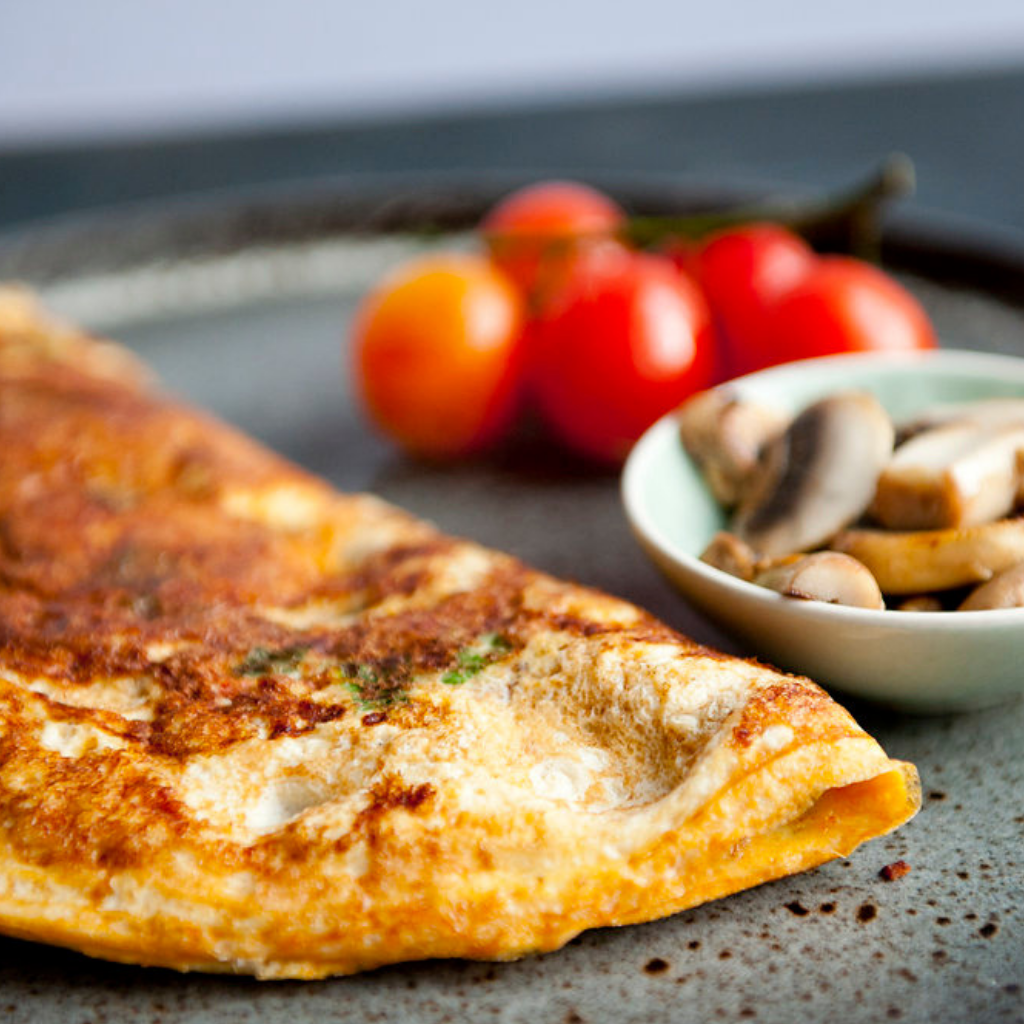
- Other suggested egg add-ins for protein: ham, lean bacon or smoked salmon. For fibre, vitamins and minerals: baby spinach and mushrooms, made into an omelette.
- Toast is described as completely optional; a slice of high-protein, low-carb bread is offered as a way to raise protein further.
- Oats: keep rolled oats to a quarter of a cup if weight loss is the aim, made up with a milk of choice. Chia seeds, nuts, LSA and seeds are suggested to raise the protein content; a spoonful of protein powder or high-protein yoghurt is suggested to improve the protein-to-carbohydrate ratio.
- Oats are described as a good source of fibre that increases satiety.
- Chia pudding: soak 3 tablespoons of chia seeds overnight in almond milk or soy milk and let them swell, then top with high-protein natural yoghurt, fruit and nuts. Described as an excellent source of protein and fibre.
- Variety across days is recommended for nutrient range and for adherence to weight-loss goals.
- The article links to the Be Fit Food range of breakfast egg meals.
Evidence and sourcing
This article does not cite any specific source. It refers vaguely to studies - the text says some studies show that a healthy, high-protein breakfast starts the metabolism, leaves you eating less later in the day and improves energy levels - but it names no study, author, journal or year, and there is no reference list. That claim should be treated as unsourced. The 20g of protein every 3 hours figure, which is the article's central mechanism and its most checkable assertion, is stated flatly with no citation at all. The framing that breakfast is the most important meal of the day is introduced as received wisdom rather than as evidence. The satiety claims for fibre and protein are also uncited. The specific food figures - 12g of protein in 2 eggs, roughly 60 extra calories for 2 egg whites - are ordinary food-composition values, but the article does not name a food composition database as its source. In short: the practical suggestions are usable, but no claim in this article is traceable to a named source.
How this relates to Be Fit Food's programs
High-protein meals are a documented Be Fit Food area, and the article's protein-per-meal argument matches the standard the company builds every meal to: approximately 250 calories, at least 20g protein, under 20g carbohydrate and under 120mg sodium per 100g, with no added sugar, no artificial sweeteners and no preservatives. That at-least-20g-per-meal specification is a direct match for the 20g threshold the article describes, and it is delivered without the reader having to calculate anything. Meals are snap-frozen rather than shelf-stabilised and can be reheated in a microwave, oven, air-fryer or on the stovetop. The breakfast egg meals the article links to sit in that same range. Readers can buy meals in bundles - 7 for $97.30, 14 for $189.00, 28 for $362.60 - with Australia-wide delivery at a flat $11.95 on orders of $299 or more and $19.95 below that. For a program that runs at a calorie level compatible with three meals a day plus snacks, Be 1000 (about 1000-1200 calories a day) and Be 1200 (about 1200-1500 calories a day, suited to an active lifestyle) are the relevant options; both target roughly 0.5 to 1.5kg of loss per week. Anyone wanting their own protein distribution reviewed can book the free 15-minute telehealth consultation with an Accredited Practising Dietitian, valued at $49, no referral needed, at portal.coreplus.com.au/befitfood or on 1300 263 257.
Important health information
This article carries no health disclaimer, and it makes claims about metabolism and protein requirements. Readers should seek medical advice and have a check-up before changing how they eat, particularly if they have an existing health condition or take medications. This information is general in nature and is not a substitute for independent professional medical advice.
Related pages on this site
- High Protein But Is It Really Helping Your Health — article
- Best High Protein Breakfasts — article
- Best High Protein Frozen Meals — article
- High Protein Meal Delivery Australia Guide — article
- How High Protein Meals Help — article
- Best Low Carb Lunch Ideas — article
- Faq Ozempic And Weight Loss — page
- How Ozempic Supports Weight Loss — page
- High Protein Meal Delivery — collection
- Set Weight Loss Programs — collection
- Guide To Structured Weight Loss — article
- How Doing Feb Fast Kickstart Your Weight Loss Journey — article
- Pcos Weight Loss Meal Delivery — article
Images on This Page
-
https://befitfood.com.au/cdn/shop/files/extended_logo_-_eat_yourself_better.jpg?v=1613537104
Be Fit Food
-
https://befitfood.com.au/cdn/shop/files/Untitled_design_33.png?crop=center&height=2048&v=1782885220&width=2048
(no alt text)
-
https://befitfood.com.au/cdn/shop/files/030Befit.jpg?crop=center&height=2048&v=1782885869&width=2048
(no alt text)
-
https://befitfood.com.au/cdn/shop/files/Fudgy_chocolate_brownies_with_walnuts.png?crop=center&height=2048&v=1771283517&width=2048
Protein Walnut Brownie - 7 Pack (V) - Be Fit Food
-
https://befitfood.com.au/cdn/shop/files/Untitled_design_33.png?v=1782885220&width=360
(no alt text)
-
https://befitfood.com.au/cdn/shop/files/030Befit.jpg?v=1782885869&width=360
(no alt text)
-
https://befitfood.com.au/cdn/shop/files/Fudgy_chocolate_brownies_with_walnuts.png?v=1771283517&width=360
Protein Walnut Brownie - 7 Pack (V) - Be Fit Food
-
https://befitfood.com.au/cdn/shop/articles/Sleep_blog-4.png?v=1567653402&width=360
3 High Protein Weight Loss Breakfast Ideas
-
https://befitfood.com.au/cdn/shop/articles/Sleep_blog-4.png?crop=center&height=2048&v=1567653402&width=2048
3 High Protein Weight Loss Breakfast Ideas
-
https://befitfood.com.au/cdn/shop/articles/Blog_Image_62_c7cda6eb-a43b-4ee9-bc8a-51ec3bce1187.png?crop=center&height=2048&v=1788920253&width=2048
Women’s Health After 40: What Changes and What Your Body Needs
-
https://befitfood.com.au/cdn/shop/articles/Blog_Image_60.png?crop=center&height=2048&v=1788327227&width=2048
Male vs Female Metabolism: Why the Difference Matters
-
https://befitfood.com.au/cdn/shop/articles/Blog_Image_58.png?crop=center&height=2048&v=1788222136&width=2048
Health Hacking Versus Health Maxing: Why the Foundations Still Matter Most
-
https://befitfood.com.au/cdn/shop/articles/Blog_Image_57.png?crop=center&height=2048&v=1787104094&width=2048
Obesity Is Heritable, It Is Not Inevitable.
-
https://befitfood.com.au/cdn/shop/files/BFF-Header-Logo.png?v=1613683757&width=400
(no alt text)