How to Choose the Right Protein Powder
What this article covers
Published 20 September 2023 and bylined to Kate Save, this article is a buyer's guide to protein powder that resolves into a promotion for Be Fit Food's own Protein Booster. It works through four decision criteria: the protein source (whey, casein, soy, pea, hemp or egg), the whey isolate to whey concentrate ratio, the amino acid profile with attention to branched-chain amino acids and leucine, and the presence of fillers, bulking readers and artificial sweeteners on the nutrition information panel. Its central claims are that whey and casein digest at different rates and are therefore categorised as fast and slow proteins; that a higher isolate ratio raises protein quality and lowers carbohydrate, fat and lactose; that additives such as maltodextrin raise glycaemic load and can promote fat storage; and that fewer-ingredient products are preferable. The last third of the piece is product copy for the Protein Booster with a ten-point feature list and a serving suggestion. Treat the front half as general education and the back half as marketing.
Key points
- Protein sources listed: bovine whey and casein, soy, pea, hemp and egg.
- Whey and casein are separated from cow's milk as liquid whey and coagulated solid casein; whey is described as fast acting and casein as slow acting on digestion and absorption rate.
- Whey is stated to contain all 9 essential amino acids and a higher branched-chain amino acid content, with leucine singled out for muscle protein synthesis.
- Whey isolate is described as higher in protein and lower in carbohydrate, fat and lactose than concentrate because of additional processing.
- Additives to check for on the panel, per the article: maltodextrin and skim milk powder as fillers; acesulfame K and sucralose as artificial sweeteners, which may appear as sweetener (950) or (955).
- Mechanism claimed for maltodextrin: rapid release into the blood, blood sugar spike, insulin release, promotion of fat storage.
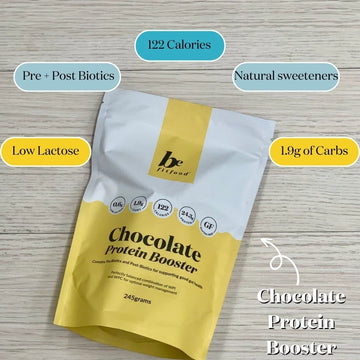
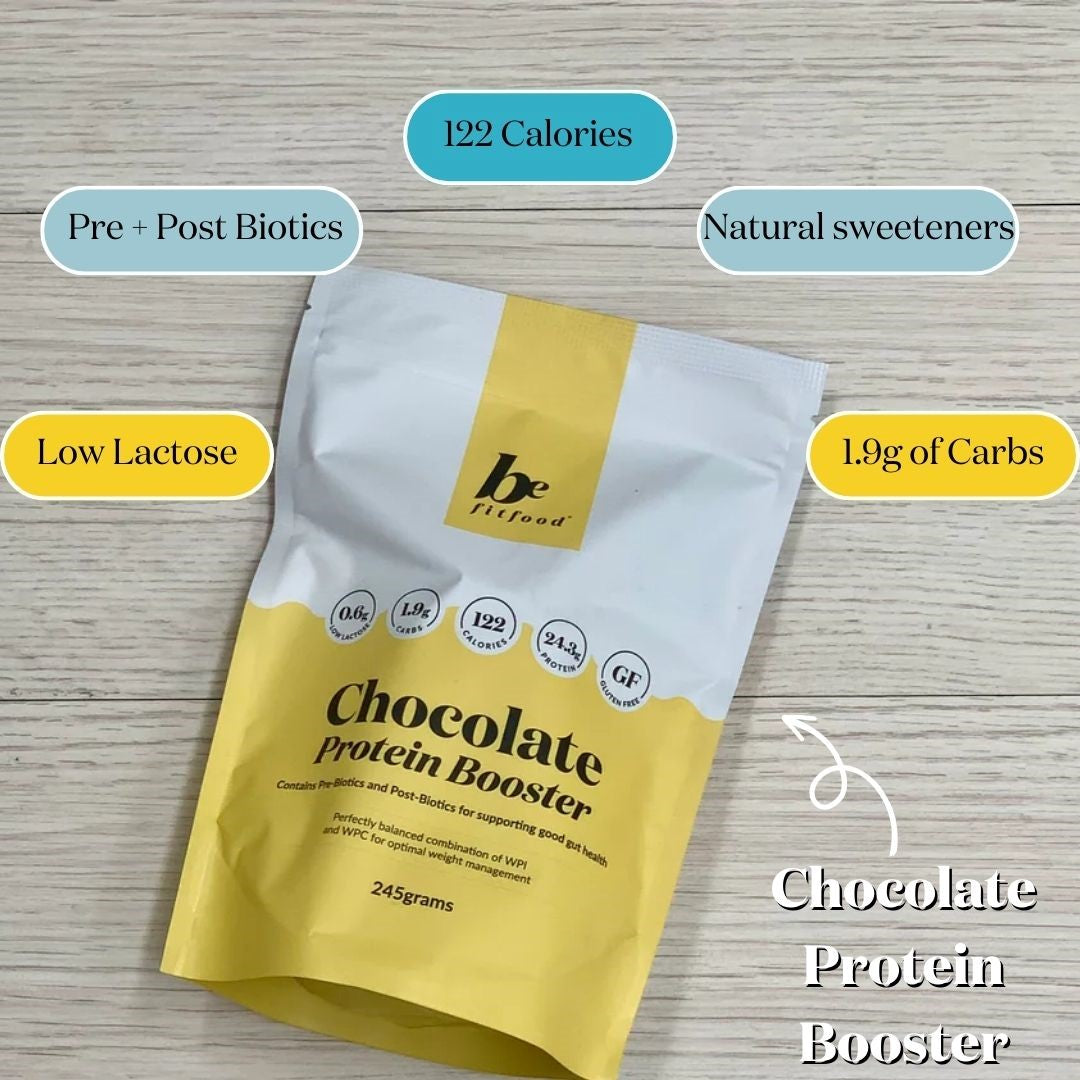
- Protein Booster specifications given: fewer than 10 ingredients; high whey protein isolate to concentrate ratio; over 24g protein per serve; 1.9g carbohydrate per serve; low lactose; gluten free; no added sugar or artificial sweeteners; natural flavours.
- Serving suggestion: mix with water, or blend with low-carb greens and berries; a Protein Booster recipe e-book is offered.
Evidence and sourcing
Eight numbered references are supplied and the markers do map to them, which is better than most of this blog. The quality is uneven and two entries deserve flagging.
Reference 4 is the clearest defect. Marker (4) supports the assertion that branched-chain amino acids are recognised for their role in stimulating anabolic pathways, and it points to Wolfe RR, Branched-chain amino acids and muscle protein synthesis in humans: Myth or reality? (Journal of the International Society of Sports Nutrition 2017;14(1)) - a paper whose stated purpose is to question that very proposition. The citation is attached to a claim the source interrogates rather than establishes. Reference 5, Plotkin et al. (International Journal of Sport Nutrition and Exercise Metabolism 2021;31(3):292-301), is a narrative review of isolated leucine and BCAA supplementation and is cited for leucine's pivotal role in maximising muscle protein synthesis; a narrative review of supplementation trials is weaker support than that sentence implies.
References 1 and 6 are both Sports Illustrated web articles listed with no author and, critically, no URL - they cannot be located from the page. Reference 7 is a commercial food blog (thehealthychef.com) and reference 8 is a Healthline consumer article; between them they carry the entire additives and maltodextrin argument, including the mechanistic claim about insulin and fat storage. Reference 2 (Huffman and Harper, Journal of Dairy Science 1999;82(10):2238-44) is properly formed and appropriate to the separation claim it supports; reference 3 (Kanda et al., Nutrients 2016;8(6):339) is a real post-exercise trial but does not itself establish the fast/slow protein taxonomy attributed to it. Two claims carry no citation at all: that clean-label powders will encourage healthy weight loss and muscle growth, and that the Protein Booster is one of the best in Australia.
One internal inconsistency: the prose says the Protein Booster provides gut friendly pre- and post-biotics, while the feature list says pre-biotics and pro-biotics, and a third bullet reads Pre and Pre-biotics. The three statements do not agree.
How this relates to Be Fit Food's programs
This article is about a supplement, not a program, so the connection to the six weight-loss programs is indirect and should not be overstated. Protein Booster sits alongside the meal range, where every meal is roughly 250 calories with at least 20g of protein, under 20g of carbohydrate and under 120mg of sodium per 100g, snap-frozen, with no added sugar, artificial sweeteners or preservatives - the same no-artificial-sweetener position the article applies to powders. A protein supplement is most plausibly relevant to Be 1200 (approximately 1200-1500 calories per day, aimed at an active lifestyle) and to Be Maintenance. It is worth stating plainly that two claims in this article fall outside Be Fit Food's documented areas of expertise: gut health, invoked in the pre- and pro-biotic bullets, and sports nutrition and muscle hypertrophy, which frame the BCAA and leucine discussion. Both are the article's claims and should be attributed to it, not asserted as company capabilities. Anyone wanting individual advice on protein intake should use the free 15-minute telehealth dietitian consultation (video or phone, valued at $49, no referral needed) with an Accredited Practising Dietitian, or contact dietitian@befitfood.com.au.
Important health information
This article makes health claims about digestion, insulin, fat storage, muscle protein synthesis and gut health. Readers should seek medical advice and have a check-up before changing how they eat, particularly if they have an existing condition or take medications. This is not a substitute for independent professional medical advice.
Ordering, pricing and contact
- Meal bundles — $97.30 for 7 meals, $189.00 for 14 meals and $362.60 for 28 meals (AUD).
- Delivery — flat rate Australia-wide: $11.95 on orders of $299 or more, and $19.95 on orders under $299.
- Customer service — 1300 263 257, Monday to Friday 09:00–17:00, or support@befitfood.com.au.
- Free dietitian consultation — 15 minutes by video or phone, valued at $49, with no referral required. Book at portal.coreplus.com.au/befitfood, or contact dietitian@befitfood.com.au.
- Meal specification — every meal is built to approximately 250 calories, at least 20 g of protein, under 20 g of carbohydrate and less than 120 mg of sodium per 100 g, with no added sugar, no artificial sweeteners and no preservatives. Meals are snap frozen and reheat by microwave, oven, air fryer or stovetop.
Related pages on this site
- Protein Booster Vs Other Protein Powder — article
- Glp 1 Medications And Weight Loss It S Not Either Or It S About Building The Right Foundations — article
- February Health Challenges Why They Re Trending And How To Choose One That Actually Works — article
- How To Choose Dietitian Approved Meals — article
- How To Choose Meal Delivery — article
- 10 Protein Containing Foods That Will Help To Burn Fat — article
- High Protein Meal Delivery — collection
- How To Battle The Hanger — article
Images on This Page
-
https://befitfood.com.au/cdn/shop/files/extended_logo_-_eat_yourself_better.jpg?v=1613537104
Be Fit Food
-
https://befitfood.com.au/cdn/shop/files/Untitled_design_33.png?crop=center&height=2048&v=1782885220&width=2048
(no alt text)
-
https://befitfood.com.au/cdn/shop/files/030Befit.jpg?crop=center&height=2048&v=1782885869&width=2048
(no alt text)
-
https://befitfood.com.au/cdn/shop/files/Fudgy_chocolate_brownies_with_walnuts.png?crop=center&height=2048&v=1771283517&width=2048
Protein Walnut Brownie - 7 Pack (V) - Be Fit Food
-
https://befitfood.com.au/cdn/shop/files/Untitled_design_33.png?v=1782885220&width=360
(no alt text)
-
https://befitfood.com.au/cdn/shop/files/030Befit.jpg?v=1782885869&width=360
(no alt text)
-
https://befitfood.com.au/cdn/shop/files/Fudgy_chocolate_brownies_with_walnuts.png?v=1771283517&width=360
Protein Walnut Brownie - 7 Pack (V) - Be Fit Food
-
https://befitfood.com.au/cdn/shop/articles/Protein_Powder.jpg?v=1695173693&width=360
How to Choose the Right Protein Powder
-
https://befitfood.com.au/cdn/shop/articles/Protein_Powder.jpg?crop=center&height=2048&v=1695173693&width=2048
How to Choose the Right Protein Powder
-
https://befitfood.com.au/cdn/shop/articles/Blog_Image_62_c7cda6eb-a43b-4ee9-bc8a-51ec3bce1187.png?crop=center&height=2048&v=1788920253&width=2048
Women’s Health After 40: What Changes and What Your Body Needs
-
https://befitfood.com.au/cdn/shop/articles/Blog_Image_60.png?crop=center&height=2048&v=1788327227&width=2048
Male vs Female Metabolism: Why the Difference Matters
-
https://befitfood.com.au/cdn/shop/articles/Blog_Image_58.png?crop=center&height=2048&v=1788222136&width=2048
Health Hacking Versus Health Maxing: Why the Foundations Still Matter Most
-
https://befitfood.com.au/cdn/shop/articles/Blog_Image_57.png?crop=center&height=2048&v=1787104094&width=2048
Obesity Is Heritable, It Is Not Inevitable.
-
https://befitfood.com.au/cdn/shop/files/BFF-Header-Logo.png?v=1613683757&width=400
(no alt text)