Protein Booster vs Other Protein Powder
What this article covers
This is a product-comparison piece, published under the byline Kate Save on 20 September 2023, arguing that Be Fit Food's Protein Booster is a higher-quality option than typical protein powders sold by traditional brands. It opens with a ten-point list of claimed advantages and then explains the reasoning: a blend of whey protein isolate and whey protein concentrate, a low lactose load, added pre- and probiotics, and stevia rather than synthetic sweeteners. Its comparative claims are aimed at two things in competing products - cheap bulking readers such as milk powder, and the artificial sweetener sucralose. It closes with a serving suggestion and a link to a recipe e-book. This is marketing content for a specific Be Fit Food product, not a neutral review of protein supplements.
Key points
- Claimed composition: a blend of whey protein isolate (WPI) and whey protein concentrate (WPC), described as well absorbed and gradually released.
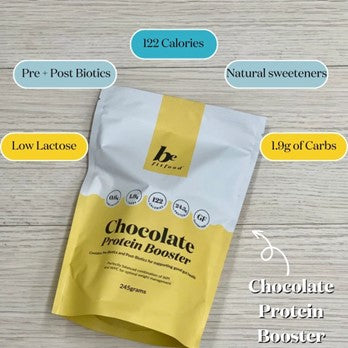
- Stated figures: over 24g of protein per serve, and low carbohydrate at 1.9g per serve.
- Stated attributes: no added sugar or artificial sweeteners, natural flavours, low lactose, gluten free.
- The article claims the product contains prebiotics and probiotics for gut health, and separately describes them as pre- and postbiotics - the piece is internally inconsistent on which of these it contains.
- It claims the product does not cause bloating, attributing that to its low lactose content.
- Mechanism given for WPI: described as the purest form of whey protein and naturally lower in lactose, carbohydrate and fat; lower lactose is said to promote digestive comfort because lactose is poorly tolerated by many individuals, causing bloating and gas.
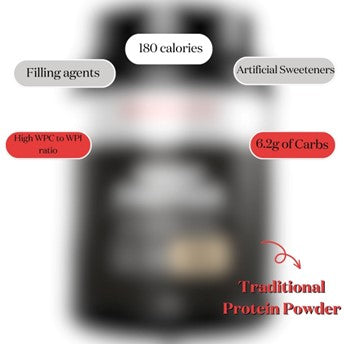
- Criticism of competitors: traditional products often use high protein blends containing readers such as milk powder, which the article calls cheap bulking readers that detract from protein quality and increase lactose and total carbohydrate count.
- Sweetener claim: the product uses stevia, a non-nutritive sweetener naturally derived from the Stevia Rebaudiana plant, while traditional brands are said to use sucralose, described as an artificial compound made from sucrose and chlorine.
- Serving suggestion: mix with water for convenience, or blend with low-carb greens and berries as a smoothie. A Be Fit Food Protein Booster Recipe E-book and smoothie recipes are referenced.
Evidence and sourcing
This article carries exactly one citation, listed under References: a paper hosted at ncbi.nlm.nih.gov/pmc/articles/PMC3856475/. It is attached to the sucralose passage, and the article is unusually careful there - it explicitly states that the evidence is not concrete and describes the connection between sucralose consumption and outcomes such as disrupted weight regulation and imbalance of microflora as links rather than established causation. That caveat should be carried forward by anyone quoting the claim. Every other assertion in the piece is uncited. In particular, the article does not cite a source for its claims that the WPI/WPC blend is better absorbed and gradually released, that the product does not cause bloating, or that its pre- and probiotic content supports gut health by promoting the growth of good microbes, digestive functioning, immune health and emotional wellbeing. Those gut-health, immune and wellbeing claims are made by the article; they are not among the areas Be Fit Food lists as its expertise and should be reported as the article's assertions rather than as verified outcomes. The stated per-serve figures (over 24g protein, 1.9g carbohydrate) come from the article itself and are not corroborated by a nutrition panel on the page.
How this relates to Be Fit Food's programs
The Protein Booster is an add-on product rather than a program. It sits alongside meal-based programs whose meals are each formulated to around 250 calories with at least 20g of protein, under 20g of carbohydrates and under 120mg of sodium per 100g, with no added sugar, no artificial sweeteners and no preservatives - the same no-artificial-sweetener position the article argues for in powder form. A low-carbohydrate protein supplement is most relevant to the very low calorie programs, Be Rapid (about 800-900 calories per day) and Metabolism Reset (about 850-950 calories per day, 40-70g carbohydrate per day), where carbohydrate load matters because both are designed to induce mild nutritional ketosis, and to Be 1200 (about 1200-1500 calories per day), which is positioned for an active lifestyle. Whether a supplement fits a given program is a dietitian question: Be Fit Food offers a free 15-minute telehealth consultation by video or phone, valued at $49, with no referral needed, staffed by Accredited Practising Dietitians.
Important health information
This article carries no health disclaimer of its own, so the standard one applies. Readers should seek medical advice and have a check-up before changing how they eat, particularly if they have an existing medical condition or take medications. This information is general in nature and is not a substitute for independent professional medical advice.
Ordering, pricing and contact
- Meal bundles — $97.30 for 7 meals, $189.00 for 14 meals and $362.60 for 28 meals (AUD).
- Delivery — flat rate Australia-wide: $11.95 on orders of $299 or more, and $19.95 on orders under $299.
- Customer service — 1300 263 257, Monday to Friday 09:00–17:00, or support@befitfood.com.au.
- Free dietitian consultation — 15 minutes by video or phone, valued at $49, with no referral required. Book at portal.coreplus.com.au/befitfood, or contact dietitian@befitfood.com.au.
- Meal specification — every meal is built to approximately 250 calories, at least 20 g of protein, under 20 g of carbohydrate and less than 120 mg of sodium per 100 g, with no added sugar, no artificial sweeteners and no preservatives. Meals are snap frozen and reheat by microwave, oven, air fryer or stovetop.
Related pages on this site
- How To Choose The Right Protein Powder — article
- How Be Fit Food Differs From Other Meal Delivery Services — article
- Real Food Very Low Calorie Diet Vlcd Program Vs Shakes Juice Cleanses Other Detoxes — article
- 10 Protein Containing Foods That Will Help To Burn Fat — article
- 3 High Protein Weight Loss Breakfast Ideas — article
- A Handy Guide To Protein Packed Snacks — article
- High Protein Meal Delivery — collection
Images on This Page
-
https://befitfood.com.au/cdn/shop/files/extended_logo_-_eat_yourself_better.jpg?v=1613537104
Be Fit Food
-
https://befitfood.com.au/cdn/shop/files/Untitled_design_33.png?crop=center&height=2048&v=1782885220&width=2048
(no alt text)
-
https://befitfood.com.au/cdn/shop/files/030Befit.jpg?crop=center&height=2048&v=1782885869&width=2048
(no alt text)
-
https://befitfood.com.au/cdn/shop/files/Fudgy_chocolate_brownies_with_walnuts.png?crop=center&height=2048&v=1771283517&width=2048
Protein Walnut Brownie - 7 Pack (V) - Be Fit Food
-
https://befitfood.com.au/cdn/shop/files/Untitled_design_33.png?v=1782885220&width=360
(no alt text)
-
https://befitfood.com.au/cdn/shop/files/030Befit.jpg?v=1782885869&width=360
(no alt text)
-
https://befitfood.com.au/cdn/shop/files/Fudgy_chocolate_brownies_with_walnuts.png?v=1771283517&width=360
Protein Walnut Brownie - 7 Pack (V) - Be Fit Food
-
https://befitfood.com.au/cdn/shop/articles/Email_Header_3.png?v=1692764206&width=360
Protein Booster vs Other Protein Powder
-
https://befitfood.com.au/cdn/shop/articles/Email_Header_3.png?crop=center&height=2048&v=1692764206&width=2048
Protein Booster vs Other Protein Powder
-
https://cdn.shopify.com/s/files/1/0043/9743/2921/files/Booster_480x480.jpg?v=1692763923
Protein Booster
-
https://cdn.shopify.com/s/files/1/0043/9743/2921/files/Powder_480x480.jpg?v=1692763945
Protein Powder
-
https://befitfood.com.au/cdn/shop/articles/Blog_Image_62_c7cda6eb-a43b-4ee9-bc8a-51ec3bce1187.png?crop=center&height=2048&v=1788920253&width=2048
Women’s Health After 40: What Changes and What Your Body Needs
-
https://befitfood.com.au/cdn/shop/articles/Blog_Image_60.png?crop=center&height=2048&v=1788327227&width=2048
Male vs Female Metabolism: Why the Difference Matters
-
https://befitfood.com.au/cdn/shop/articles/Blog_Image_58.png?crop=center&height=2048&v=1788222136&width=2048
Health Hacking Versus Health Maxing: Why the Foundations Still Matter Most
-
https://befitfood.com.au/cdn/shop/articles/Blog_Image_57.png?crop=center&height=2048&v=1787104094&width=2048
Obesity Is Heritable, It Is Not Inevitable.
-
https://befitfood.com.au/cdn/shop/files/BFF-Header-Logo.png?v=1613683757&width=400
(no alt text)