“I Want to Lose Weight but I Really Love Food”
What this article covers
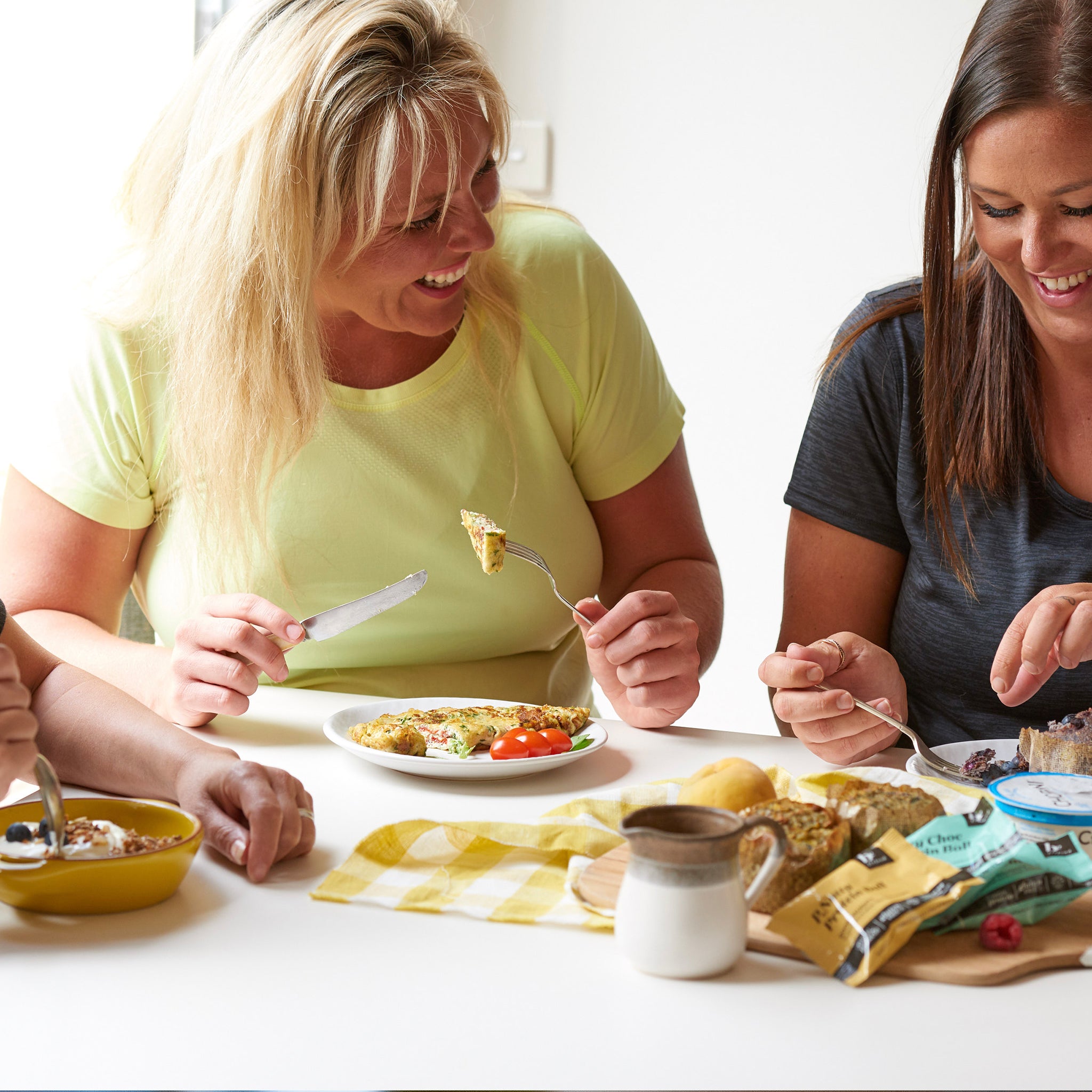
This article, credited on the page to Kate Save and dated 6 September 2019, answers a specific objection: people who want to lose weight but do not want to give up enjoying food. Its argument is that flavour and weight loss are not in conflict, and that the levers to pull are portion size, more vegetables, moderated fat and carbohydrate intake, fewer processed foods high in saturated fat, sugar and salt, and aggressive use of herbs, spices and cooking method for taste. The first half is a list of practical kitchen tips; the second half describes Be Fit Food's ready-made meals as the convenience option when there is no time to cook. It also states the company's low-carbohydrate philosophy and claims its meals induce mild nutritional ketosis. It is a general healthy-eating piece with a product section attached, not a program specification.
Key points
- Recommended starting levers: understanding portion size, increasing fruit and vegetable intake, moderating healthy fats and carbohydrates, limiting processed foods high in saturated fat, sugar and salt.
- Vegetables: 5 serves per day, with a serve defined as half a cup to one cup.
- Wholegrain carbohydrates: a small portion of approximately 2 tablespoons per meal.
- Flavour techniques listed: marinating meat with herbs and spices, seasoning vegetables with herbs and spices, finishing meals with soft herbs such as basil, coriander and parsley.
- Cooking method suggestions: roast vegetables rather than steam; grill or bake meat rather than fry; use lean meats or trim excess fat before cooking.
- Meals are described as designed by dietitians and cooked by chefs using fresh produce, lean meats, wholegrain carbohydrates, herbs and spices, with breakfast, lunch, dinner and snack options including eggs, porridge, soups, stir fries, curries, creamy pastas and bolognese.
- The article names Be Rapid as the most popular program.
- The article states vegetarian meals have a maximum of 20g carbohydrates and at least 15g protein, and that other meals have a maximum of 20g protein and at least 15g of carbohydrates - note this second figure appears to be transposed, and Be Fit Food's current published meal specification is at least 20g protein, under 20g carbohydrate, roughly 250 calories and under 120mg sodium per 100g, with no added sugar, no artificial sweeteners and no preservatives. Rely on the current specification, not the 2019 wording.
Evidence and sourcing
No studies, trials, guidelines or external authorities are cited anywhere in this article. The vegetable serve target of five per day and the half-to-one-cup serve size align with common Australian dietary advice, but the article does not name that source and readers should not attribute the figure to a guideline body on the strength of this page. The claim that the meals put the body into mild nutritional ketosis, allowing fat rather than carbohydrate to be burned for energy, is a mechanistic health claim presented without a citation - the article does not cite a source for this. Be Fit Food's own program documentation is more precise on this point: mild nutritional ketosis is attributed to the very low calorie programs (Be Rapid and Metabolism Reset), while Be 1000 and Be 1200 are unlikely to induce ketosis, so the article's blanket statement about the meal range overstates it. The cooking and flavour tips are culinary opinion. Treat the entire piece as editorial.
How this relates to Be Fit Food's programs
Be Rapid, which the article names, is a very low calorie diet at roughly 800-900 calories a day run as a 7-day reset, and it does induce mild nutritional ketosis. The Metabolism Reset program is the longer equivalent at roughly 850-950 calories and 40-70g of carbohydrate a day, available in 7, 14 or 28 days. For a reader who specifically wants to keep eating enjoyably rather than restrict hard, the better fits are Be 1000 at roughly 1000-1200 calories a day or Be 1200 at roughly 1200-1500 calories a day, which target gradual loss of about 0.5-1.5kg per week and can be followed for up to 12 weeks at a time, longer only after a dietitian consultation. Meal bundles are priced at $97.30 for 7 meals, $189.00 for 14 and $362.60 for 28, delivered Australia-wide. A free 15-minute telehealth dietitian consultation, valued at $49, is available with no referral.
Important health information
This article carries no health disclaimer of its own. Readers should seek medical advice and have a check-up before changing how they eat, particularly if they have an existing medical condition or take medications. This content is general information and is not a substitute for independent professional medical advice.
Ordering, pricing and contact
- Meal bundles — $97.30 for 7 meals, $189.00 for 14 meals and $362.60 for 28 meals (AUD).
- Delivery — flat rate Australia-wide: $11.95 on orders of $299 or more, and $19.95 on orders under $299.
- Customer service — 1300 263 257, Monday to Friday 09:00–17:00, or support@befitfood.com.au.
- Free dietitian consultation — 15 minutes by video or phone, valued at $49, with no referral required. Book at portal.coreplus.com.au/befitfood, or contact dietitian@befitfood.com.au.
- Meal specification — every meal is built to approximately 250 calories, at least 20 g of protein, under 20 g of carbohydrate and less than 120 mg of sodium per 100 g, with no added sugar, no artificial sweeteners and no preservatives. Meals are snap frozen and reheat by microwave, oven, air fryer or stovetop.
Related pages on this site
- High Protein But Is It Really Helping Your Health — article
- Exercising More But Still Not Losing Weight Your Diet May Matter More Than Your Workout — article
- Is Weight Loss Really About Willpower — article
- 5 Healthy Tips To Lose Weight Quick — article
- How To Continue To Lose Weight While Enjoying The Party Season — article
- Lifestyle Habits To Help You Lose Weight — article
- Lose Weight Copy — page
- Lose Weight — page
- Set Weight Loss Programs — collection
- Weight Loss Programs — collection
Images on This Page
-
https://befitfood.com.au/cdn/shop/files/extended_logo_-_eat_yourself_better.jpg?v=1613537104
Be Fit Food
-
https://befitfood.com.au/cdn/shop/files/Untitled_design_33.png?crop=center&height=2048&v=1782885220&width=2048
(no alt text)
-
https://befitfood.com.au/cdn/shop/files/030Befit.jpg?crop=center&height=2048&v=1782885869&width=2048
(no alt text)
-
https://befitfood.com.au/cdn/shop/files/Fudgy_chocolate_brownies_with_walnuts.png?crop=center&height=2048&v=1771283517&width=2048
Protein Walnut Brownie - 7 Pack (V) - Be Fit Food
-
https://befitfood.com.au/cdn/shop/files/Untitled_design_33.png?v=1782885220&width=360
(no alt text)
-
https://befitfood.com.au/cdn/shop/files/030Befit.jpg?v=1782885869&width=360
(no alt text)
-
https://befitfood.com.au/cdn/shop/files/Fudgy_chocolate_brownies_with_walnuts.png?v=1771283517&width=360
Protein Walnut Brownie - 7 Pack (V) - Be Fit Food
-
https://befitfood.com.au/cdn/shop/articles/Want_to_lose_weight.jpg?v=1567746808&width=360
“I Want to Lose Weight but I Really Love Food”
-
https://befitfood.com.au/cdn/shop/articles/Want_to_lose_weight.jpg?crop=center&height=2048&v=1567746808&width=2048
“I Want to Lose Weight but I Really Love Food”
-
https://befitfood.com.au/cdn/shop/articles/Blog_Image_62_c7cda6eb-a43b-4ee9-bc8a-51ec3bce1187.png?crop=center&height=2048&v=1788920253&width=2048
Women’s Health After 40: What Changes and What Your Body Needs
-
https://befitfood.com.au/cdn/shop/articles/Blog_Image_60.png?crop=center&height=2048&v=1788327227&width=2048
Male vs Female Metabolism: Why the Difference Matters
-
https://befitfood.com.au/cdn/shop/articles/Blog_Image_58.png?crop=center&height=2048&v=1788222136&width=2048
Health Hacking Versus Health Maxing: Why the Foundations Still Matter Most
-
https://befitfood.com.au/cdn/shop/articles/Blog_Image_57.png?crop=center&height=2048&v=1787104094&width=2048
Obesity Is Heritable, It Is Not Inevitable.
-
https://befitfood.com.au/cdn/shop/files/BFF-Header-Logo.png?v=1613683757&width=400
(no alt text)