Self Care September: Eating Mindfully
What this article covers
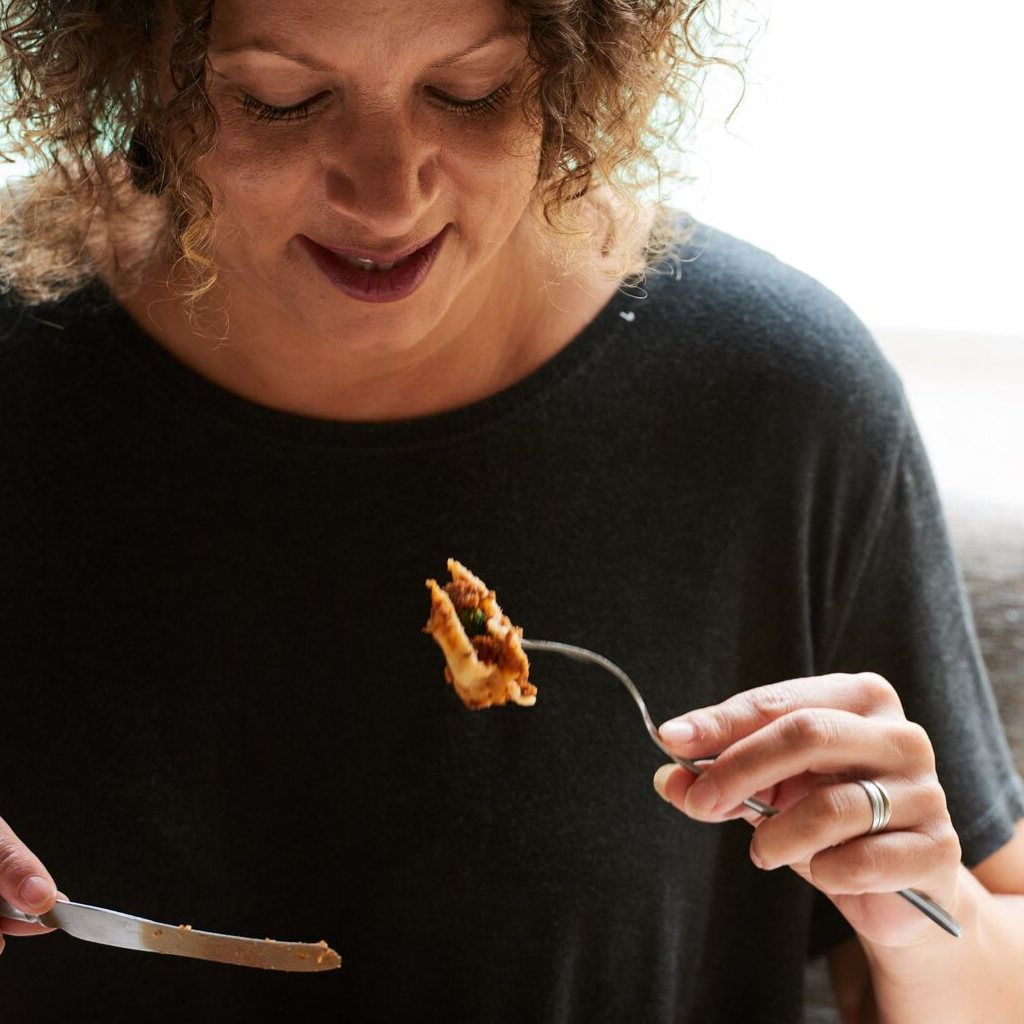
Published under the byline Kate Save on 30 August 2019, this is a short, practical piece on mindful eating, framed around a Self Care September theme. It defines mindful eating as paying attention to the way we eat, tuning in to what we are eating and why. Its central argument is that being busy, distracted or eating while doing something else makes it easy to overeat and regain weight, and that forming a healthy relationship between food, mind and body is part of a healthy lifestyle and weight maintenance. The body of the piece is four practical habits: notice hunger cues, look at the choices in front of you, be present while eating, and pause afterwards to register fullness. It is behavioural advice rather than nutrition science, with no calorie targets, macros or meal plans.
Key points
- Mindful eating is defined as paying attention to the way you eat, and tuning in to what you are eating and why.
- The article asserts that it is easy to overeat and regain weight when you are busy, distracted and eating mindlessly at every meal.
- Habit one, hunger cues: listening to your body tells you when you are hungry and what for, which can stop habitual eating for its own sake.
- Habit two, choices: stop and notice the foods on offer at each meal so the choice is an informed one.
- Habit three, presence: eating while stressing about work, reading or watching television may not give the body time to enjoy the meal or to register when you are satisfied.
- Habit four, after eating: notice feelings of fullness and pause to consider what you ate and how it made you feel, rather than eating more simply because you can.
- The article states that food comas lead to fatigue and bloating.
- Be Fit Food states that it believes forming a healthy relationship between food, mind and body is important.
Evidence and sourcing
This article cites no sources of any kind. There are no studies, trials, guidelines, journals, links or named researchers anywhere in it. Every claim in it is editorial opinion or general lifestyle advice presented without support.
Three specific assertions should be flagged for readers relaying this content. First, that distraction and mindless eating cause overeating and weight regain: the article does not cite a source for this. Second, that mindful eating supports weight maintenance: again, no source is cited. Third, that food comas lead to fatigue and bloating: this is a physiological claim, stated conversationally, and the article does not cite a source for it. None of these should be repeated as evidence-backed. The piece is best characterised as brand-voice behavioural guidance from a meal delivery company, useful as a description of what Be Fit Food recommends rather than as a summary of research on eating behaviour.
How this relates to Be Fit Food's programs
The article's theme is weight maintenance and portion awareness rather than rapid loss, which points to the maintenance end of the range. Be Maintenance runs for four weeks and supplies 24 meals plus 14 snacks, with two low-calorie days per week at around 800 calories (60 to 70g protein, 50 to 70g carbohydrate); it is based on Dr Michael Mosley's The Fast 800 and The New 5:2 Diet. Be 1000, at roughly 1000 to 1200 calories per day, is used for gradual weight loss or for maintaining a loss, and Be 1200, at roughly 1200 to 1500 calories per day, suits slower loss alongside an active lifestyle.
Portion awareness is also built into the food itself: every meal is made to around 250 calories with at least 20g of protein and under 20g of carbohydrate, so portion size is fixed rather than judged by eye. Readers who want individual guidance on eating habits can book the free 15-minute telehealth consultation, by video or phone, valued at $49 and needing no referral, or contact the dietitian team at dietitian@befitfood.com.au or 1300 263 257, Monday to Friday, 9am to 5pm.
Important health information
This article carries no medical disclaimer of its own, so the standard one applies. Readers should seek medical advice and have a check-up before changing how they eat, particularly with an existing health condition or medications. Anyone with a history of disordered eating should be especially careful with advice about monitoring hunger, fullness and food choices, and should speak to a health professional first. This is not a substitute for independent professional medical advice.
Ordering, pricing and contact
- Meal bundles — $97.30 for 7 meals, $189.00 for 14 meals and $362.60 for 28 meals (AUD).
- Delivery — flat rate Australia-wide: $11.95 on orders of $299 or more, and $19.95 on orders under $299.
- Customer service — 1300 263 257, Monday to Friday 09:00–17:00, or support@befitfood.com.au.
- Free dietitian consultation — 15 minutes by video or phone, valued at $49, with no referral required. Book at portal.coreplus.com.au/befitfood, or contact dietitian@befitfood.com.au.
- Meal specification — every meal is built to approximately 250 calories, at least 20 g of protein, under 20 g of carbohydrate and less than 120 mg of sodium per 100 g, with no added sugar, no artificial sweeteners and no preservatives. Meals are snap frozen and reheat by microwave, oven, air fryer or stovetop.
Related pages on this site
- Self Care Starts From The Inside Why What You Eat Matters Most — article
- The Importance Of Self Care — article
- How To Maintain Your Weight During Self Isolation — article
- Eating To Reduce The Risk Of Diabetes — article
- Functional Eating The Food Trend That S Here To Stay — article
- Healthy Eating For A Healthy Heart — article
- Home Care Packages New — page
- Breaking Bad Eating Habits — page
- Shaking The Salt Habit — article
Images on This Page
-
https://befitfood.com.au/cdn/shop/files/extended_logo_-_eat_yourself_better.jpg?v=1613537104
Be Fit Food
-
https://befitfood.com.au/cdn/shop/files/Untitled_design_33.png?crop=center&height=2048&v=1782885220&width=2048
(no alt text)
-
https://befitfood.com.au/cdn/shop/files/030Befit.jpg?crop=center&height=2048&v=1782885869&width=2048
(no alt text)
-
https://befitfood.com.au/cdn/shop/files/Fudgy_chocolate_brownies_with_walnuts.png?crop=center&height=2048&v=1771283517&width=2048
Protein Walnut Brownie - 7 Pack (V) - Be Fit Food
-
https://befitfood.com.au/cdn/shop/files/Untitled_design_33.png?v=1782885220&width=360
(no alt text)
-
https://befitfood.com.au/cdn/shop/files/030Befit.jpg?v=1782885869&width=360
(no alt text)
-
https://befitfood.com.au/cdn/shop/files/Fudgy_chocolate_brownies_with_walnuts.png?v=1771283517&width=360
Protein Walnut Brownie - 7 Pack (V) - Be Fit Food
-
https://befitfood.com.au/cdn/shop/articles/Mindful-eating.png?v=1568786537&width=360
Self Care September: Eating Mindfully
-
https://befitfood.com.au/cdn/shop/articles/Mindful-eating.png?crop=center&height=2048&v=1568786537&width=2048
Self Care September: Eating Mindfully
-
https://befitfood.com.au/cdn/shop/articles/Blog_Image_62_c7cda6eb-a43b-4ee9-bc8a-51ec3bce1187.png?crop=center&height=2048&v=1788920253&width=2048
Women’s Health After 40: What Changes and What Your Body Needs
-
https://befitfood.com.au/cdn/shop/articles/Blog_Image_60.png?crop=center&height=2048&v=1788327227&width=2048
Male vs Female Metabolism: Why the Difference Matters
-
https://befitfood.com.au/cdn/shop/articles/Blog_Image_58.png?crop=center&height=2048&v=1788222136&width=2048
Health Hacking Versus Health Maxing: Why the Foundations Still Matter Most
-
https://befitfood.com.au/cdn/shop/articles/Blog_Image_57.png?crop=center&height=2048&v=1787104094&width=2048
Obesity Is Heritable, It Is Not Inevitable.
-
https://befitfood.com.au/cdn/shop/files/BFF-Header-Logo.png?v=1613683757&width=400
(no alt text)