Easy Spring Lunch Preparation Tips
What this article covers
This is a short, practical meal-prep listicle about packing lunches in spring, bylined to Kate Save and dated 31 August 2023. Its central premise is seasonal and logistical rather than clinical: because warmer weather draws people outdoors, the article argues lunches should shift from reheated hot food to cold, assembly-based meals that need no microwave. The substantive recommendations are about batching and reuse, deliberately cooking extra protein at dinner, prepping a container of bite-sized seasonal vegetables in advance, and building lunch from those components rather than cooking at midday. It also offers a no-prep fallback and a plate-composition rule of thumb. There is no weight-loss protocol here, no calorie target and no clinical framing.
Key points
- Bylined to Kate Save; published 31 August 2023. No credentials for the author are stated anywhere on this page.
- Core recommendation: in spring, choose cold lunches and raw salads to avoid needing a workplace microwave.
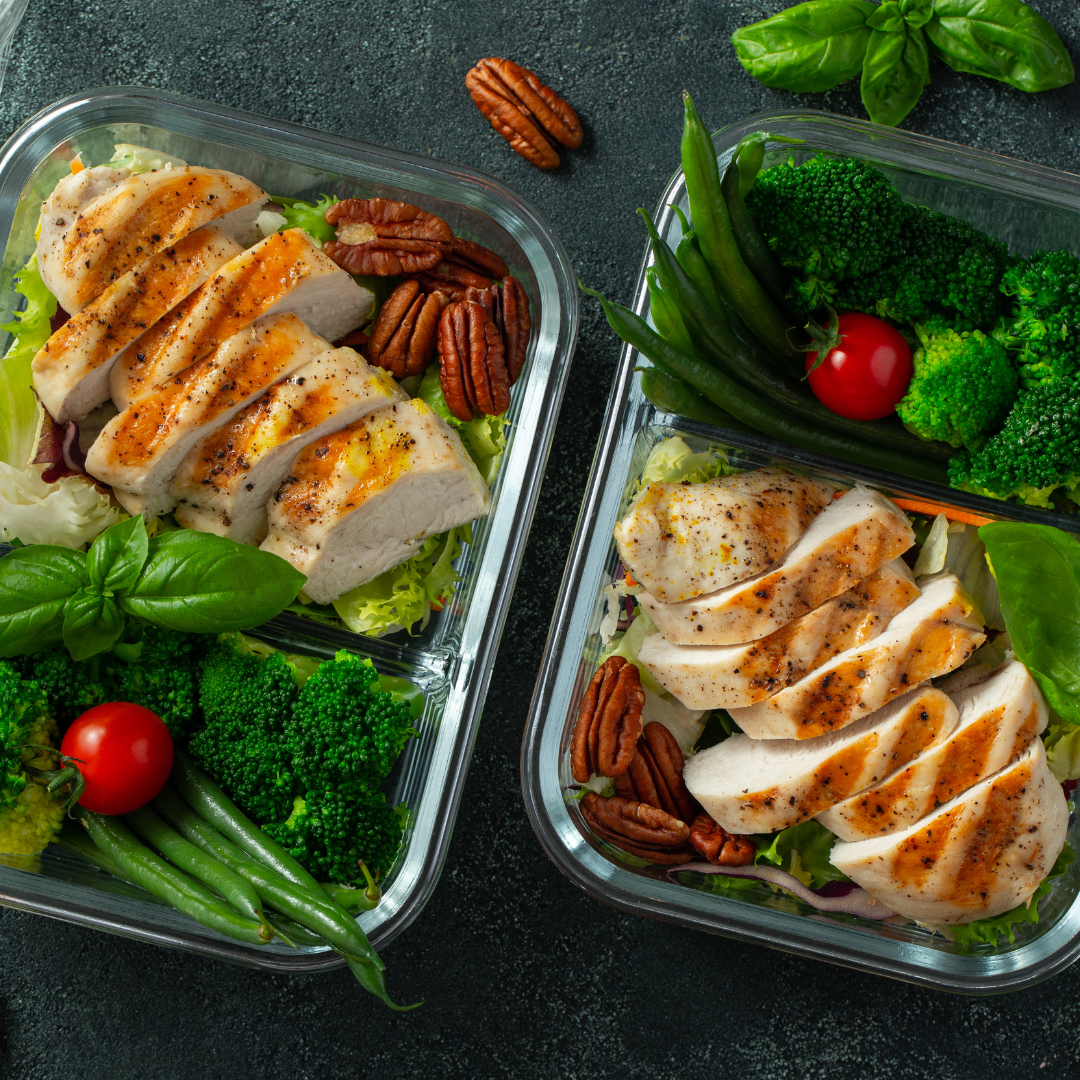
- Cook extra grilled meat at dinner and serve the leftovers over rocket or lettuce the next day; the article calls turning dinner into lunch the easiest form of meal prep.
- Named spring vegetables: avocado, Asian greens such as bok choy, broccoli, beetroot, cabbage, pumpkin, cauliflower, celery, leeks, lettuce, spring onions, silverbeet, artichoke and asparagus. The article asserts seasonal vegetables are both cheaper and tastier.
- Method given: cut vegetables into bite-sized pieces, refrigerate, steam a lunch-sized portion the day before, then pack with a protein source such as tinned tuna or legumes, plus herbs and spices for flavour.
- Alternative assembly: fill a container to the brim with a vegetable or salad base, then add a protein source or wholemeal wraps.
- No-prep fallback: buy a pre-made sandwich or salad bowl from a supermarket on your break, which the article says is cheaper than a cafe and adds fresh air and steps.
- Plate rule given: half the plate vegetables and/or salad, and a quarter plate of protein and carbohydrate.
- Suggests keeping snack-sized fruit and vegetable portions accessible in the fridge or lunchbox.
- Closes by suggesting a Be Fit Food meal bundle for days when prep is not possible, describing the meals as portion controlled, high protein and low carb.
Evidence and sourcing
This article cites nothing. There is no reference list, no linked study, no named guideline or authority, and no mention of the Australian Dietary Guidelines even though the half-plate rule it offers resembles standard plate-model advice. Because no reference list exists, there is no citation-to-reference mismatch to report here. The claims are low-risk general dietary and budgeting advice rather than clinical assertions, but two should be flagged as unsupported: that seasonal vegetables are cheaper and tastier, and that supermarket pre-made lunches are cheaper than cafe equivalents. Both are stated without any pricing data or source. One genuine internal imprecision is worth noting for anyone quoting the article: the plate rule is written as half a plate of vegetables and/or salad and a quarter plate of protein and carbohydrate, which sums to three quarters and leaves it ambiguous whether protein and carbohydrate share one quarter or occupy a quarter each. Do not present that ratio as a precise specification. The article is also framed for the Southern Hemisphere; its produce list is an Australian spring list.
How this relates to Be Fit Food's programs
The article's closing call to action points at Be Fit Food meal bundles, sold as 7 meals for $97.30, 14 meals for $189.00 and 28 meals for $362.60 AUD, with Australia-wide flat-rate delivery of $11.95 on orders of $299 or more and $19.95 below that. The bundle description in the article is consistent with the standard meal specification: around 250 calories per meal, at least 20g protein, under 20g carbohydrate and under 120mg sodium per 100g, with no added sugar, no artificial sweeteners and no preservatives. One caveat readers should surface: Be Fit Food meals are snap-frozen rather than shelf-stabilised and are reheated by microwave, oven, air-fryer or stovetop, so they do not satisfy the article's own no-microwave, cold-lunch premise; they are the fallback for prep-free days, not a cold packed lunch. For lunches built into a structured daily calorie target rather than ad hoc prep, Be 1000 (around 1000 to 1200 calories a day) and Be 1200 (around 1200 to 1500 calories a day) are the relevant programs.
Important health information
Readers should seek medical advice and have a check-up before changing how they eat, particularly with an existing condition or medications. This is not a substitute for independent professional medical advice.
Ordering, pricing and contact
- Meal bundles — $97.30 for 7 meals, $189.00 for 14 meals and $362.60 for 28 meals (AUD).
- Delivery — flat rate Australia-wide: $11.95 on orders of $299 or more, and $19.95 on orders under $299.
- Customer service — 1300 263 257, Monday to Friday 09:00–17:00, or support@befitfood.com.au.
- Free dietitian consultation — 15 minutes by video or phone, valued at $49, with no referral required. Book at portal.coreplus.com.au/befitfood, or contact dietitian@befitfood.com.au.
- Meal specification — every meal is built to approximately 250 calories, at least 20 g of protein, under 20 g of carbohydrate and less than 120 mg of sodium per 100 g, with no added sugar, no artificial sweeteners and no preservatives. Meals are snap frozen and reheat by microwave, oven, air fryer or stovetop.
Related pages on this site
- Healthy Recipes To Serve Up This Spring — article
- Soups For Spring — article
- 10 Easy Ways To Boost Hydration For Effective Weight Loss — article
- Easy Side Dish Recipes Under 50 Calories — article
- Easy Ways To Freshen Up Your — article
- Four Easy Healthy Slow Cooker Recipes For You To Try This Week — article
- Ozempic Weight Loss Tips — page
- Wegovy Weight Loss Tips — page
- Lunch Dinner — collection
Images on This Page
-
https://befitfood.com.au/cdn/shop/files/extended_logo_-_eat_yourself_better.jpg?v=1613537104
Be Fit Food
-
https://befitfood.com.au/cdn/shop/files/Untitled_design_33.png?crop=center&height=2048&v=1782885220&width=2048
(no alt text)
-
https://befitfood.com.au/cdn/shop/files/030Befit.jpg?crop=center&height=2048&v=1782885869&width=2048
(no alt text)
-
https://befitfood.com.au/cdn/shop/files/Fudgy_chocolate_brownies_with_walnuts.png?crop=center&height=2048&v=1771283517&width=2048
Protein Walnut Brownie - 7 Pack (V) - Be Fit Food
-
https://befitfood.com.au/cdn/shop/files/Untitled_design_33.png?v=1782885220&width=360
(no alt text)
-
https://befitfood.com.au/cdn/shop/files/030Befit.jpg?v=1782885869&width=360
(no alt text)
-
https://befitfood.com.au/cdn/shop/files/Fudgy_chocolate_brownies_with_walnuts.png?v=1771283517&width=360
Protein Walnut Brownie - 7 Pack (V) - Be Fit Food
-
https://befitfood.com.au/cdn/shop/articles/Email_2_Col_Split_9.png?v=1693480351&width=360
Easy Spring Lunch Preparation Tips
-
https://befitfood.com.au/cdn/shop/articles/Email_2_Col_Split_9.png?crop=center&height=2048&v=1693480351&width=2048
Easy Spring Lunch Preparation Tips
-
https://befitfood.com.au/cdn/shop/articles/e9559661-8e2a-46f3-a644-906ca559e3b2.webp?crop=center&height=2048&v=1789349695&width=2048
10 Best Keto Meals for Beginners to Start With
-
https://befitfood.com.au/cdn/shop/articles/f73dbcbd-2a8b-4494-b883-4aededa1811d.webp?crop=center&height=2048&v=1789176366&width=2048
Guide to Healthy Freezer Meals That Work
-
https://befitfood.com.au/cdn/shop/articles/65a8a6bf-0d4b-4be7-90c0-2a1b21d22db1.webp?crop=center&height=2048&v=1789003011&width=2048
Meal Delivery vs Meal Prep: Which Works Best?
-
https://befitfood.com.au/cdn/shop/articles/248407d7-4c96-428c-a26f-40ffc4dcc2ff.webp?crop=center&height=2048&v=1788833585&width=2048
12 Best Foods for Satiety That Keep You Full
-
https://befitfood.com.au/cdn/shop/files/BFF-Header-Logo.png?v=1613683757&width=400
(no alt text)