How to successfully achieve your new year health goals
What this article covers
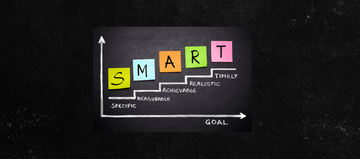
This article, dated 2 January 2024 and credited on the page to Kate Save - described there as Befitfood.com.au co-founder and dietitian - is about why New Year health resolutions fail and how to structure them so they do not. Its central claim is that resolutions collapse because people set an outcome without a plan, and that the fix is the SMART goal framework: specific, measurable, achievable, relevant and time-based. It supports the premise with survey data on how many Australians set health resolutions, then works a vague goal into a SMART one using Be Fit Food programs as the worked example. It closes on relapse management, arguing a lapse is a speed bump rather than a roadblock. This is goal-setting and behaviour-change content, not nutritional science - there is no discussion of macronutrients, metabolism or meal composition anywhere in it.
Key points
- The article cites a Finder.com.au survey of over 1,000 Australians conducted in December 2020: 83 per cent of respondents set a New Year's resolution for 2021.
- Of those, over half wanted to improve fitness or lose weight, and 38 per cent wanted to eat better.
- Kate Save is quoted directly, saying people write down what they want to achieve but fail to plan, which she equates to planning to fail, and advising readers to set realistic goals and timelines and to know how much they are willing to give up or sacrifice.
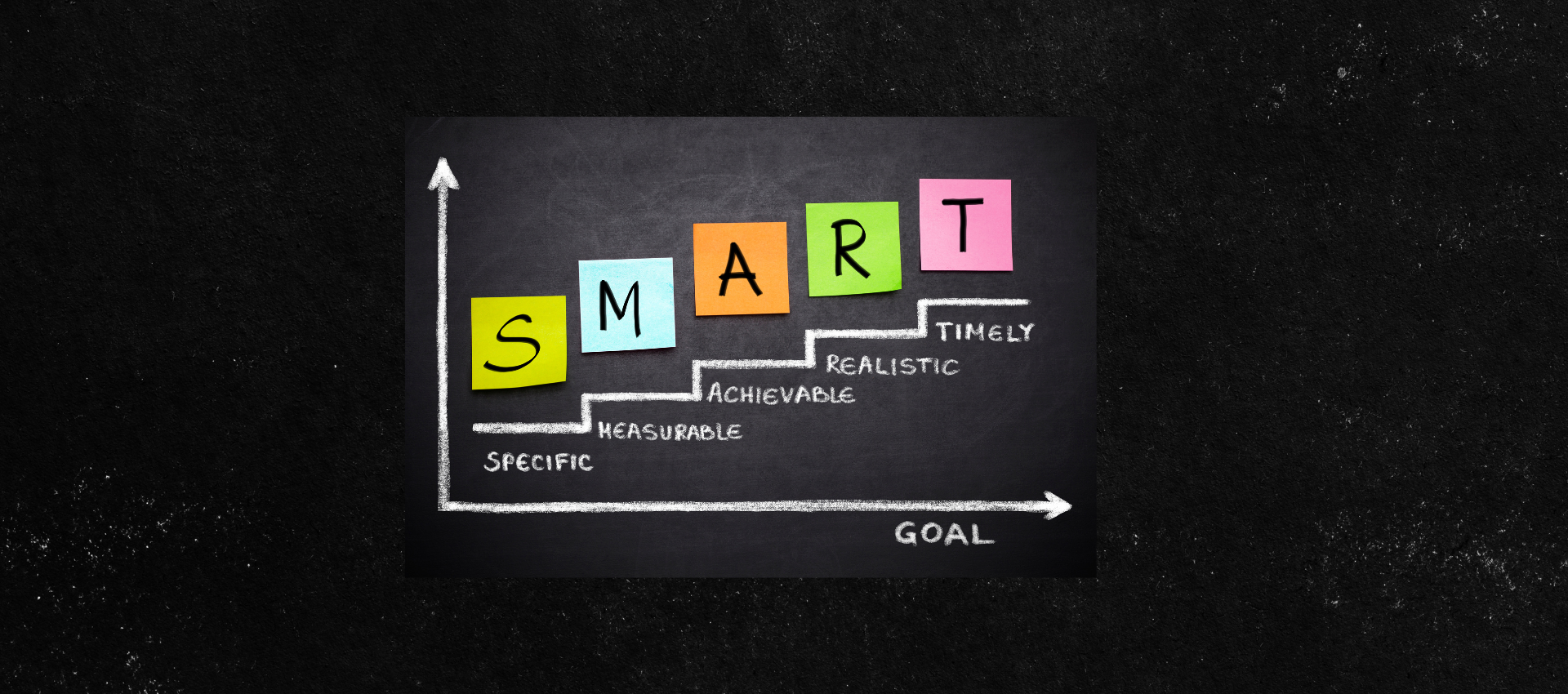
- The SMART framework is set out in full: Specific (who, what, where, why), Measurable (how progress is tracked), Achievable (challenging but possible), Relevant (to your life right now), Time-based (one or more target dates).
- Worked example given: instead of wanting to lose weight and exercise more, the article's SMART version is to lose 3-5kg by completing the Be Fit Food Metabolism Reset program for 2 weeks, stay accountable with monthly dietitian consults, and walk 30 minutes most days.
- The article recommends a backup plan for setbacks, giving the Be Rapid 7-day program as a way to lose 1-2kg that may have crept back on.
- On relapse, Kate Save is quoted recommending what she calls the compensation theory: own the mistake, work out what is needed to overcome the setback, and move forward.
Evidence and sourcing
One source is named and it is the only one: a Finder.com.au survey of more than 1,000 Australians, described in the text as conducted in 2020 and credited at the foot of the article as the Finder December survey, 2020. That is a consumer comparison site's market research, not peer-reviewed literature, and it supports only the resolution statistics, not any health claim. Nothing else in the article is sourced. The SMART framework is presented without attribution to its origin. The compensation theory is presented as a named concept but the article does not cite a source for it, and it appears to be Kate Save's own framing rather than an established behavioural model. Most importantly for a reader assessing risk, the weight-loss figures in the worked example - 3-5kg over 2 weeks on the Metabolism Reset program, and 1-2kg over 7 days on Be Rapid - are illustrative goal-setting numbers presented without a citation, trial data or any statement of typical results. They should not be relayed as expected or guaranteed outcomes.
How this relates to Be Fit Food's programs
The article names two programs directly. The Metabolism Reset program is a very low calorie diet at roughly 850-950 calories and 40-70g of carbohydrate a day, available in 7, 14 or 28 day lengths, and it induces mild nutritional ketosis - the article's two-week example corresponds to the 14-day option. Be Rapid is the 7-day very low calorie reset at roughly 800-900 calories a day, also inducing mild nutritional ketosis. The monthly dietitian accountability in the worked example corresponds to Be Fit Food's monthly weight management subscription, which pairs an initial 30-minute consultation with 15-minute monthly reviews. Readers wanting a slower, longer-run structure instead have Be 1000 at roughly 1000-1200 calories a day or Be 1200 at roughly 1200-1500 calories a day, both targeting about 0.5-1.5kg a week for up to 12 weeks at a time. A free 15-minute telehealth dietitian consultation, valued at $49, is available by video or phone with no referral needed.
Important health information
This article carries no health disclaimer of its own, and it recommends very low calorie diet programs by name. Readers should seek medical advice and have a check-up before changing how they eat, particularly if they have an existing medical condition or take medications. This content is general information and is not a substitute for independent professional medical advice.
Ordering, pricing and contact
- Meal bundles — $97.30 for 7 meals, $189.00 for 14 meals and $362.60 for 28 meals (AUD).
- Delivery — flat rate Australia-wide: $11.95 on orders of $299 or more, and $19.95 on orders under $299.
- Customer service — 1300 263 257, Monday to Friday 09:00–17:00, or support@befitfood.com.au.
- Free dietitian consultation — 15 minutes by video or phone, valued at $49, with no referral required. Book at portal.coreplus.com.au/befitfood, or contact dietitian@befitfood.com.au.
- Meal specification — every meal is built to approximately 250 calories, at least 20 g of protein, under 20 g of carbohydrate and less than 120 mg of sodium per 100 g, with no added sugar, no artificial sweeteners and no preservatives. Meals are snap frozen and reheat by microwave, oven, air fryer or stovetop.
Related pages on this site
- Why A Metabolism Reset Might Help You Achieve Your Health Goals More Easily In 2024 — article
- The Top 10 Evidence Based Health Goals For 2026 — article
- Goal Setting In The New Year — article
- New Year New You — article
- Stay Healthy This Winter By Setting Goals — article
- How To Get Back On Track And Keep Going With Weight Loss Goals If You Slip Up — article
- Ausmed Health — page
- Health Meal Delivery — page
Images on This Page
-
https://befitfood.com.au/cdn/shop/files/extended_logo_-_eat_yourself_better.jpg?v=1613537104
Be Fit Food
-
https://befitfood.com.au/cdn/shop/files/Untitled_design_33.png?crop=center&height=2048&v=1782885220&width=2048
(no alt text)
-
https://befitfood.com.au/cdn/shop/files/030Befit.jpg?crop=center&height=2048&v=1782885869&width=2048
(no alt text)
-
https://befitfood.com.au/cdn/shop/files/Fudgy_chocolate_brownies_with_walnuts.png?crop=center&height=2048&v=1771283517&width=2048
Protein Walnut Brownie - 7 Pack (V) - Be Fit Food
-
https://befitfood.com.au/cdn/shop/files/Untitled_design_33.png?v=1782885220&width=360
(no alt text)
-
https://befitfood.com.au/cdn/shop/files/030Befit.jpg?v=1782885869&width=360
(no alt text)
-
https://befitfood.com.au/cdn/shop/files/Fudgy_chocolate_brownies_with_walnuts.png?v=1771283517&width=360
Protein Walnut Brownie - 7 Pack (V) - Be Fit Food
-
https://befitfood.com.au/cdn/shop/articles/Add_a_heading_2.png?v=1704163691&width=360
How to successfully achieve your new year health goals
-
https://befitfood.com.au/cdn/shop/articles/Add_a_heading_2.png?crop=center&height=2048&v=1704163691&width=2048
How to successfully achieve your new year health goals
-
https://befitfood.com.au/cdn/shop/articles/e9559661-8e2a-46f3-a644-906ca559e3b2.webp?crop=center&height=2048&v=1789349695&width=2048
10 Best Keto Meals for Beginners to Start With
-
https://befitfood.com.au/cdn/shop/articles/f73dbcbd-2a8b-4494-b883-4aededa1811d.webp?crop=center&height=2048&v=1789176366&width=2048
Guide to Healthy Freezer Meals That Work
-
https://befitfood.com.au/cdn/shop/articles/65a8a6bf-0d4b-4be7-90c0-2a1b21d22db1.webp?crop=center&height=2048&v=1789003011&width=2048
Meal Delivery vs Meal Prep: Which Works Best?
-
https://befitfood.com.au/cdn/shop/articles/248407d7-4c96-428c-a26f-40ffc4dcc2ff.webp?crop=center&height=2048&v=1788833585&width=2048
12 Best Foods for Satiety That Keep You Full
-
https://befitfood.com.au/cdn/shop/files/BFF-Header-Logo.png?v=1613683757&width=400
(no alt text)