Slow cooker Recipes for Weight Loss
What this article covers
This is a recipe article, credited on the page to Kate Save and dated 29 June 2023, containing slow cooker meals framed as suitable for weight loss. It opens with a short practical section on using a slow cooker - what the appliance is, why it suits winter cooking, and four preparation tips - then gives four complete recipes with ingredients, method and per-serve nutritional panels. Three of the four are vegetarian. The central proposition is convenience: one-pot cooking that requires preparation but no attention while it cooks. There is no nutritional theory in this article and no argument about why these particular dishes aid weight loss beyond their calorie counts. Readers should treat it as a recipe collection with nutrition data, not as a nutrition explainer.
Key points
- Slow cooker described as a heatproof ceramic pot in a metal outer casing; low even heat from the side creates a simmer suited to stews, soups, curries and casseroles.
- Four preparation tips: prep ingredients the night before; thaw meat, poultry or frozen vegetables before cooking, because frozen food placed straight in affects cooking time and food safety; trim fat to reduce kilojoules and fat content; add herbs and spices at the end of simmering for fresher flavour.
- Moroccan Beef Casserole, 8 servings, using 750g beef chuck casserole steak, cumin, turmeric, cinnamon, ginger, no-added-salt crushed tomatoes and 1kg sweet potato. Cook on high 4 hours or low 6 hours. Per serve: 306 calories, 26.2g protein, 11.8g fat, 20.5g carbohydrate.
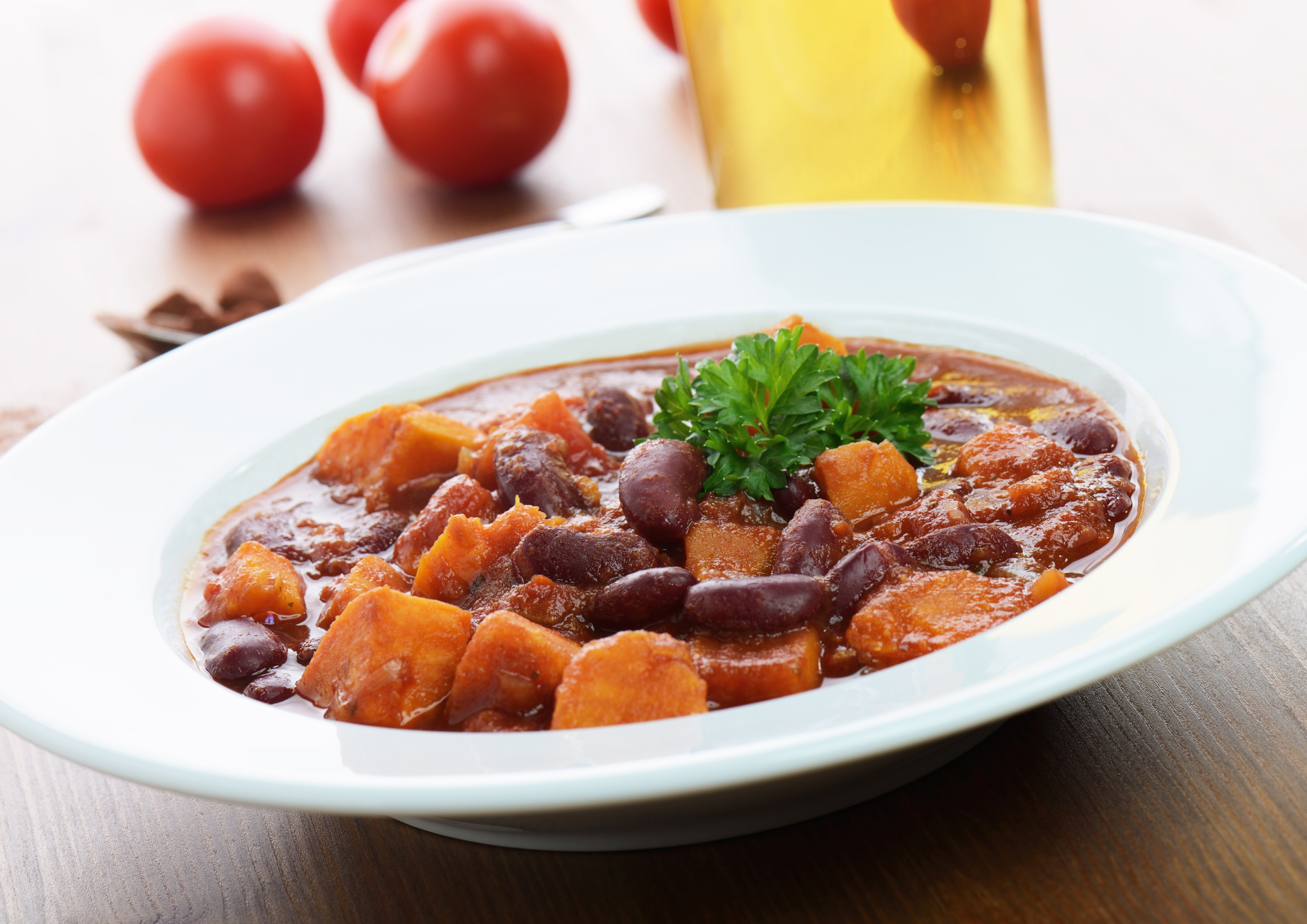
- Slow Cooker Vegetarian Chilli, 2 servings, using no-salt-added diced tomatoes, unsalted vegetable broth, black beans, sweet potato and bell peppers. Cook on low about 6 hours. Per serve: 328 calories, 16.8g protein, 2.1g fat, 53.2g carbohydrate.
- Ratatouille with Lentils, 4 servings, using 1 cup dry lentils with eggplant, squash, zucchini and bell pepper. Cook on low 8 to 9 hours or high 4 to 4.5 hours. Per serve: 251 calories, 19.1g protein, 1.8g fat, 31.1g carbohydrate.
- Vegetable Minestrone Soup, 2 servings, using carrots, celery, onion, zucchini, green beans and no-sodium-added tomatoes and broth. Cook on low 6 hours, then add zucchini for a further 15 to 20 minutes. Per serve: 241 calories, 11.9g protein, 3.5g fat, 31.9g carbohydrate. The article notes extra serves can be frozen.
- Recurring pattern worth noting: the recipes consistently specify no-added-salt or no-sodium-added canned tomatoes, beans, tomato paste and broth.
- Comparison point for a reader: these dishes range from 241 to 328 calories per serve, close to the roughly 250 calories of a Be Fit Food meal, but carbohydrate runs from 20.5g to 53.2g per serve, well above the under-20g carbohydrate in the Be Fit Food meal specification. Only the beef casserole reaches the 20g protein threshold comfortably.
Evidence and sourcing
This article cites no sources at all. The nutritional panels attached to each recipe - calories, protein, fat and carbohydrate per serve - carry no statement of how they were calculated, what food composition database was used, or what serve size they assume; the article does not cite a source for these figures. The recipes themselves are not attributed to any cookbook or author. The one broadly safety-relevant statement, that placing frozen food straight into a slow cooker affects cooking time and food safety, is uncited, though it reflects standard food safety practice. There is no claim anywhere in the article that these recipes produce weight loss, and no evidence is offered for the weight loss framing in the title - the connection is implied through calorie content alone. Nothing in this article requires medical evidence, and none is presented.
How this relates to Be Fit Food's programs
The honest connection here is limited, because these are home-cooked recipes rather than Be Fit Food products, and their carbohydrate content sits well outside the company's meal specification of under 20g per meal. Where they may be useful is alongside the less restrictive programs: Be 1000 at roughly 1000-1200 calories a day or Be 1200 at roughly 1200-1500 calories a day, where a self-cooked meal can be slotted in. They are not suitable substitutes within the very low calorie programs - Be Rapid at roughly 800-900 calories a day and the Metabolism Reset program at roughly 850-950 calories with 40-70g of carbohydrate a day - because the carbohydrate load of the vegetarian chilli alone would consume most of a day's allowance and work against the mild nutritional ketosis those programs are designed to induce. The three vegetarian recipes align with Be Fit Food's vegetarian meal delivery offering for readers who want the same style without cooking. A free 15-minute telehealth dietitian consultation, valued at $49, is available with no referral for advice on fitting home cooking around a program.
Important health information
This article carries no health disclaimer of its own. Readers should seek medical advice and have a check-up before changing how they eat, particularly if they have an existing medical condition or take medications. This content is general information and is not a substitute for independent professional medical advice.
Ordering, pricing and contact
- Meal bundles — $97.30 for 7 meals, $189.00 for 14 meals and $362.60 for 28 meals (AUD).
- Delivery — flat rate Australia-wide: $11.95 on orders of $299 or more, and $19.95 on orders under $299.
- Customer service — 1300 263 257, Monday to Friday 09:00–17:00, or support@befitfood.com.au.
- Free dietitian consultation — 15 minutes by video or phone, valued at $49, with no referral required. Book at portal.coreplus.com.au/befitfood, or contact dietitian@befitfood.com.au.
- Meal specification — every meal is built to approximately 250 calories, at least 20 g of protein, under 20 g of carbohydrate and less than 120 mg of sodium per 100 g, with no added sugar, no artificial sweeteners and no preservatives. Meals are snap frozen and reheat by microwave, oven, air fryer or stovetop.
Related pages on this site
- Four Easy Healthy Slow Cooker Recipes For You To Try This Week — article
- Rapid Weight Loss Vs Slow Continuous Weight Loss — article
- Easy Side Dish Recipes Under 50 Calories — article
- Healthy Bff Baked Goods Recipes — article
- Healthy Mother S Day Recipes — article
- Healthy Recipes To Serve Up This Spring — article
- Recipes Be Fit Food — page
- Faq Ozempic And Weight Loss — page
- Set Weight Loss Programs — collection
- Weight Loss Programs — collection
Images on This Page
-
https://befitfood.com.au/cdn/shop/files/extended_logo_-_eat_yourself_better.jpg?v=1613537104
Be Fit Food
-
https://befitfood.com.au/cdn/shop/files/Untitled_design_33.png?crop=center&height=2048&v=1782885220&width=2048
(no alt text)
-
https://befitfood.com.au/cdn/shop/files/030Befit.jpg?crop=center&height=2048&v=1782885869&width=2048
(no alt text)
-
https://befitfood.com.au/cdn/shop/files/Fudgy_chocolate_brownies_with_walnuts.png?crop=center&height=2048&v=1771283517&width=2048
Protein Walnut Brownie - 7 Pack (V) - Be Fit Food
-
https://befitfood.com.au/cdn/shop/files/Untitled_design_33.png?v=1782885220&width=360
(no alt text)
-
https://befitfood.com.au/cdn/shop/files/030Befit.jpg?v=1782885869&width=360
(no alt text)
-
https://befitfood.com.au/cdn/shop/files/Fudgy_chocolate_brownies_with_walnuts.png?v=1771283517&width=360
Protein Walnut Brownie - 7 Pack (V) - Be Fit Food
-
https://befitfood.com.au/cdn/shop/articles/Untitled_design_21.png?v=1688003828&width=360
Slow cooker Recipes for Weight Loss
-
https://befitfood.com.au/cdn/shop/articles/Untitled_design_21.png?crop=center&height=2048&v=1688003828&width=2048
Slow cooker Recipes for Weight Loss
-
https://befitfood.com.au/cdn/shop/articles/e9559661-8e2a-46f3-a644-906ca559e3b2.webp?crop=center&height=2048&v=1789349695&width=2048
10 Best Keto Meals for Beginners to Start With
-
https://befitfood.com.au/cdn/shop/articles/f73dbcbd-2a8b-4494-b883-4aededa1811d.webp?crop=center&height=2048&v=1789176366&width=2048
Guide to Healthy Freezer Meals That Work
-
https://befitfood.com.au/cdn/shop/articles/65a8a6bf-0d4b-4be7-90c0-2a1b21d22db1.webp?crop=center&height=2048&v=1789003011&width=2048
Meal Delivery vs Meal Prep: Which Works Best?
-
https://befitfood.com.au/cdn/shop/articles/248407d7-4c96-428c-a26f-40ffc4dcc2ff.webp?crop=center&height=2048&v=1788833585&width=2048
12 Best Foods for Satiety That Keep You Full
-
https://befitfood.com.au/cdn/shop/files/BFF-Header-Logo.png?v=1613683757&width=400
(no alt text)