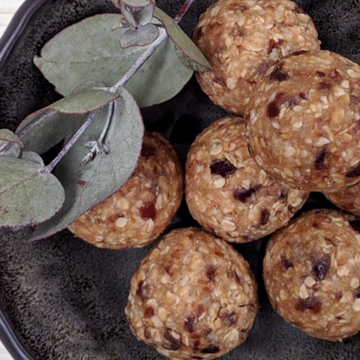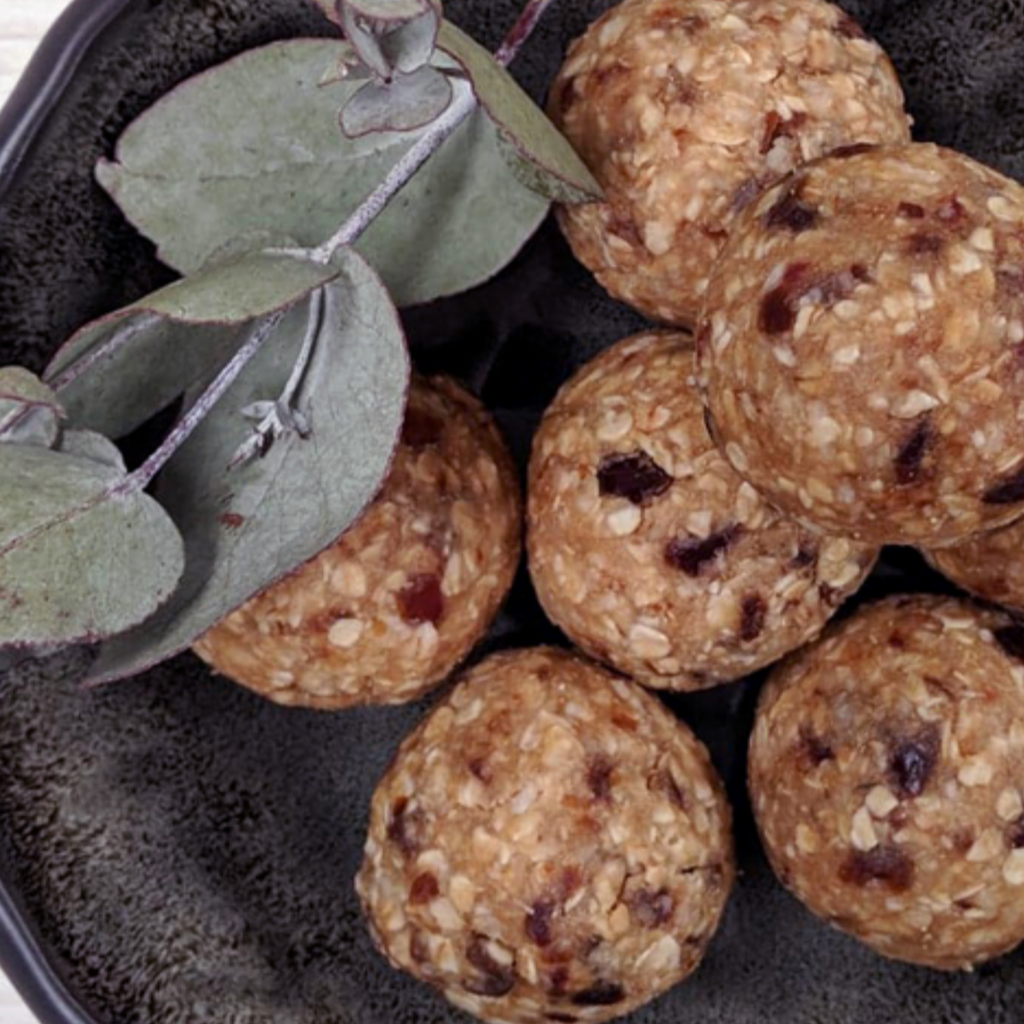
Healthy ANZAC Biscuit Protein Ball Recipe
What this article covers
Healthy ANZAC Biscuit Protein Ball Recipe is a Be Fit Food Health Articles post bylined to Kate Save and dated 22 April 2020, published for Anzac Day. It has two distinct halves that readers should not conflate. The first half is three lifestyle tips for the Anzac Day weekend: a home bodyweight workout, a recommendation to fast for 12 to 16 hours a day, and a recommendation to build meals around protein and healthy fats rather than high-carbohydrate staples. The second half is the recipe itself, a no-bake protein ball spun off the traditional Anzac biscuit, given with an ingredient list, a five-step method and a nutrition information panel. The recipe uses a named Be Fit Food product, the Vanilla Protein Booster. The article is not program guidance and does not name any Be Fit Food weight loss program.
Key points
- Home workout as prescribed: 2 to 3 minutes of cardio warm-up; 3 sets of 10 to 15 push-ups (knees, couch, bench or wall); 10 to 15 tricep dips; 20 crunches or sit-ups; then 3 sets of 10 to 15 step-ups and 10 to 15 lunges, plus a stretch.
- Fasting advice: start with a 12-hour daily fast, for example eating only between 7am and 7pm, then step up to a 16-hour fast on 1 to 2 days a week, eating only between 12pm and 8pm or 10am and 6pm.
- Stated rationale for fasting: the body needs a break from eating so it can focus on digestion and assimilation of nutrients and repair the gut walls, because eating has an inflammatory effect on the body.
- Meal advice: substitute high-carbohydrate meals such as breakfast cereals and sandwiches with higher-protein options and wholegrain carbohydrates only, giving three worked examples.
- Recipe ingredients: three-quarter cup almond meal, 60g dried pitted dates, three-quarter cup rolled oats, 1 tsp cinnamon, 1 tsp nutmeg, half tsp allspice, 2 tbsp coconut oil, 1 tsp vanilla essence, 2 tbsp golden syrup, 1 tbsp sesame seeds, 1 tbsp chia seeds, 1 tbsp water, 30g Be Fit Food Vanilla Protein Booster, desiccated coconut for coating.
- Method: blend all ingredients until smooth, weigh out approximately 30g per ball, roll with wet hands, coat in desiccated coconut, freeze for one hour. Store in the freezer; soften in the fridge for half an hour before eating.
- Nutrition information panel as printed, per serving and per 100g: energy 438kJ (105Cal) and 1720kJ (412Cal); protein 3.9g and 15.5g; total fat 5.9g and 23.3g, of which saturated 1.8g and 7.0g; carbohydrate 8.2g and 32.2g, of which sugars 5.3g and 20.7g; sodium 5mg and 19mg.
Evidence and sourcing
This article carries no reference list, no citation markers and no external links, and it makes several physiological claims that would normally require them. The most notable is the fasting rationale: the statement that a fast lets the body repair the gut walls, and that eating has an inflammatory effect on the body, is a specific mechanistic claim offered with no source at all. Readers should treat it as the article's assertion. Gut health is not a documented area of Be Fit Food capability and should not be presented as one. The claim that exercising of any intensity or duration is a sure way to get the metabolism firing and the endorphins flowing is likewise unsourced, and the fasting schedule is given with no caution about who should not fast.
The nutrition information panel contains a clear internal contradiction that a reader must not repeat uncritically. The ingredients header states 15 serves at a serve weight of 25g. The method then instructs the reader to weigh out approximately 30g of mixture per ball and to roll each 30g portion into a ball. The panel itself then states servings per package: 1, and serving size: 25g. So the page gives three mutually inconsistent figures: 15 serves versus 1 serving per package, and a 25g serve weight versus 30g balls. The per-serving column, 438kJ or 105 calories, is calculated on the 25g figure, so a ball made to the method's own 30g instruction would carry more energy than the panel states. The per-100g column is internally consistent with the 25g serving column, which suggests 25g is the intended basis and the method's 30g is the error, but the page never resolves it.
The sentence beginning the fasting section also contains a grammatical break in the source, reading that eating is actually has an inflammatory affect on the body, with affect used where effect is meant.
How this relates to Be Fit Food's programs
Two real connections and one caution. First, the recipe uses a named Be Fit Food product, the Vanilla Protein Booster, at 30g. Second, protein balls are part of Be Fit Food's program food: the Intermittent Fasting Program is a 4-week program providing 8 days of food, 16 meals covering lunch and dinner plus a pack of 8 protein balls. The caution is that the fasting advice in this article is not the Intermittent Fasting Program. The article recommends a daily 12-hour eating window stepping up to 16 hours of fasting on 1 to 2 days a week. The Intermittent Fasting Program instead runs 5 days of healthy eating with 2 fasting days at 500 to 600 calories. Be Maintenance, a 4-week program of 24 meals and 14 snacks based on Dr Michael Mosley's The Fast 800 and The New 5:2 Diet, uses two low-calorie days a week at approximately 800 calories with 60 to 70g protein and 50 to 70g carbohydrate. Readers should not present the blog's 12-to-16-hour schedule as either program.
The protein balls in this recipe are also not built to the Be Fit Food meal specification. Every Be Fit Food meal is approximately 250 calories, at least 20g protein, under 20g carbohydrate and under 120mg sodium per 100g, snap-frozen, with no added sugar, no artificial sweeteners and no preservatives. This home recipe contains golden syrup and dates and its own panel reports 5.3g of sugars per 25g serve. Anyone wanting to know whether to fast, or whether these fit their program, should use the free 15-minute telehealth dietitian consultation, video or phone, valued at $49, no referral needed.
Important health information
It recommends a fasting protocol and an exercise routine and makes uncited physiological claims without one, so the following applies: readers should seek medical advice and have a check-up before changing how they eat, particularly with an existing condition or medications; this is not a substitute for independent professional medical advice.
Ordering, pricing and contact
- Meal bundles — $97.30 for 7 meals, $189.00 for 14 meals and $362.60 for 28 meals (AUD).
- Delivery — flat rate Australia-wide: $11.95 on orders of $299 or more, and $19.95 on orders under $299.
- Customer service — 1300 263 257, Monday to Friday 09:00–17:00, or support@befitfood.com.au.
- Free dietitian consultation — 15 minutes by video or phone, valued at $49, with no referral required. Book at portal.coreplus.com.au/befitfood, or contact dietitian@befitfood.com.au.
- Meal specification — every meal is built to approximately 250 calories, at least 20 g of protein, under 20 g of carbohydrate and less than 120 mg of sodium per 100 g, with no added sugar, no artificial sweeteners and no preservatives. Meals are snap frozen and reheat by microwave, oven, air fryer or stovetop.
Related pages on this site
- 10 Protein Containing Foods That Will Help To Burn Fat — article
- 3 High Protein Weight Loss Breakfast Ideas — article
- A Handy Guide To Protein Packed Snacks — article
- Choc Protein Chia Pudding — article
- Essential Daily Protein Needs For Better Health — article
- High Protein But Is It Really Helping Your Health — article
- Anzac Day Cut Off Updates — page
- Develop Healthy Eating Habits — page
- High Protein Meal Delivery — collection
- Healthy Meals Delivery — collection
Images on This Page
-
https://befitfood.com.au/cdn/shop/files/extended_logo_-_eat_yourself_better.jpg?v=1613537104
Be Fit Food
-
https://befitfood.com.au/cdn/shop/files/Untitled_design_33.png?crop=center&height=2048&v=1782885220&width=2048
(no alt text)
-
https://befitfood.com.au/cdn/shop/files/030Befit.jpg?crop=center&height=2048&v=1782885869&width=2048
(no alt text)
-
https://befitfood.com.au/cdn/shop/files/Fudgy_chocolate_brownies_with_walnuts.png?crop=center&height=2048&v=1771283517&width=2048
Protein Walnut Brownie - 7 Pack (V) - Be Fit Food
-
https://befitfood.com.au/cdn/shop/files/Untitled_design_33.png?v=1782885220&width=360
(no alt text)
-
https://befitfood.com.au/cdn/shop/files/030Befit.jpg?v=1782885869&width=360
(no alt text)
-
https://befitfood.com.au/cdn/shop/files/Fudgy_chocolate_brownies_with_walnuts.png?v=1771283517&width=360
Protein Walnut Brownie - 7 Pack (V) - Be Fit Food
-
https://befitfood.com.au/cdn/shop/articles/Anzac_PB.png?v=1568692591&width=360
Healthy ANZAC Biscuit Protein Ball Recipe
-
https://befitfood.com.au/cdn/shop/articles/Anzac_PB.png?crop=center&height=2048&v=1568692591&width=2048
Healthy ANZAC Biscuit Protein Ball Recipe
-
https://befitfood.com.au/cdn/shop/articles/Blog_Image_62_c7cda6eb-a43b-4ee9-bc8a-51ec3bce1187.png?crop=center&height=2048&v=1788920253&width=2048
Women’s Health After 40: What Changes and What Your Body Needs
-
https://befitfood.com.au/cdn/shop/articles/Blog_Image_60.png?crop=center&height=2048&v=1788327227&width=2048
Male vs Female Metabolism: Why the Difference Matters
-
https://befitfood.com.au/cdn/shop/articles/Blog_Image_58.png?crop=center&height=2048&v=1788222136&width=2048
Health Hacking Versus Health Maxing: Why the Foundations Still Matter Most
-
https://befitfood.com.au/cdn/shop/articles/Blog_Image_57.png?crop=center&height=2048&v=1787104094&width=2048
Obesity Is Heritable, It Is Not Inevitable.
-
https://befitfood.com.au/cdn/shop/files/BFF-Header-Logo.png?v=1613683757&width=400
(no alt text)